
Rio Times
Brazil Clears an Alleged Russian Spy’s Path Home. The US Objects
Security
Key Facts
—The order. Portaria 6.737, published in the official gazette on Monday, expels Cherkasov and bars his return for thirty years.
—The sentence. He is serving five years for identity fraud, reduced from an original fifteen.
—The cover. Investigators say he lived twelve years as the Brazilian Victor Muller Ferreira, entering the country around 2010.
—The network. Federal Police identified at least nine suspected Russian agents using Brazilian documents.
—The reaction. The State Department said on Wednesday it was deeply concerned by the decision.
—The precedent. Brazil rejected an American extradition request for him in 2023, having already accepted Russia’s.
For twelve years the alleged Russian spy Brazil is now expelling called himself Victor Muller Ferreira. He had a birth certificate, a passport, a four-page biography of an invented childhood, and, according to three governments, a job with Russian military intelligence.
On Monday the Brazilian government published an order expelling him. The man Washington calls a Kremlin operative will be free to go home, and the United States is not pleased about it.
His real name is Sergey Vladimirovich Cherkasov. He is forty-one, and he has been in a federal prison in Brasília since 2022.
The order was signed by Alessandra Teixeira de Araújo, who coordinates migration cases at the Justice Ministry. It bars him from re-entering Brazil for thirty years.
How the Russian spy Brazil sheltered was caught
He was not caught in Brazil at all. In April 2022 Dutch officers stopped him at Amsterdam airport, travelling on a Brazilian passport, on his way to an internship at the International Criminal Court.
The court was then opening investigations into war crimes in Ukraine. Dutch intelligence concluded he intended to gather material on those cases and pass it to Moscow.
They did not arrest him. They put him on a plane to Brazil, where the documents said he came from, and Brazilian police were waiting.
The paperwork that undid him was, in an important sense, real. Investigators found the birth certificate had been genuinely issued by a Brazilian registry office, not forged, and they still do not fully know how he obtained it.
Nine names, one nursery
Cherkasov was not alone. Federal Police investigators identified at least nine suspected Russian operatives who built Brazilian identities before deploying elsewhere.
One surfaced in Norway as a researcher near the Arctic border, another in Greece, a third having quietly bought property in Rio near the American consulate. Intelligence services call such agents illegals, meaning officers who spend decades inside an assumed life rather than operating from an embassy.
What made Brazil attractive was administrative rather than political. A birth certificate opens the way to every other document, and a Brazilian passport travels well.
Moscow has never acknowledged the network. It came closest in August 2024, when one of the nine was quietly included in a prisoner exchange with Washington.
Why Washington is angry
Two countries wanted him. Russia asked for his extradition in August 2022, saying he was wanted at home for drug trafficking, a charge Brazilian and American officials read as a device to bring an agent in from the cold.
The United States asked in April 2023, charging him with acting as an unregistered foreign agent. By then Brazil’s Supreme Court had already authorised the Russian request, and the Justice Ministry turned Washington down.
This week’s order is the last administrative step in a choice made three years ago. A spokesman said the United States was deeply concerned that a man with known links to Russian intelligence would be allowed to leave, and asked Brazil to weigh the precedent it was setting.
Expulsion is not extradition, and the distinction matters. Under Brazil’s migration law, expulsion is an administrative act removing a foreigner who has committed a crime, and the order names no destination.
What the Russian spy Brazil case means for investors
Nothing moves markets here directly. What moves is the temperature of a relationship that already governs tariffs, sanctions and a widening argument over organised crime.
Brasília is simultaneously fielding American pressure over its Russian diesel purchases and an American designation of two Brazilian gangs as terrorist organisations. This week a congressional committee summoned the foreign minister to explain the risk of American military action on Brazilian soil.
Into that, a decision that hands Moscow a favour. Whether calculated or merely procedural, the timing invites the reading Washington has given it.
Nothing is final. Cherkasov’s lawyers will take the order to the Supreme Court, and he denies being a spy at all.
When will Cherkasov actually leave Brazil?
Not immediately. The order takes effect only once he finishes his sentence or a court authorises early release, and his defence intends to challenge it before the Supreme Court, so no departure date has been set.
Did he spy on Brazil?
Investigators found no evidence that he did, and the Brazilian espionage inquiry was archived. His targets were understood to be the United States and European institutions, and he was convicted only of using fraudulently obtained Brazilian documents.
Why did Brazil refuse the American request?
Because Russia had asked first and the Supreme Court had already ratified that request. When Washington filed its own extradition demand in 2023, the Justice Ministry declined it on the grounds that a Russian claim was already validated and pending.
The Rio Times · Power Map
See who really holds power in Latin America
Click to open the Power Map →
View original source — Rio Times ↗
Related stories
ABC News
PoliticsJul 9, 2026 · 1 min
Iran targets US military sites in Gulf as Israel warns it could 'strike again'
ABC News

South China Morning Post
PoliticsJul 9, 2026 · 1 min
Turkish president’s ‘unusual’ gift to Nato leaders: 1 revolver, 6 bullets
South China Morning Post
The Guardian
PoliticsJul 9, 2026 · 1 min
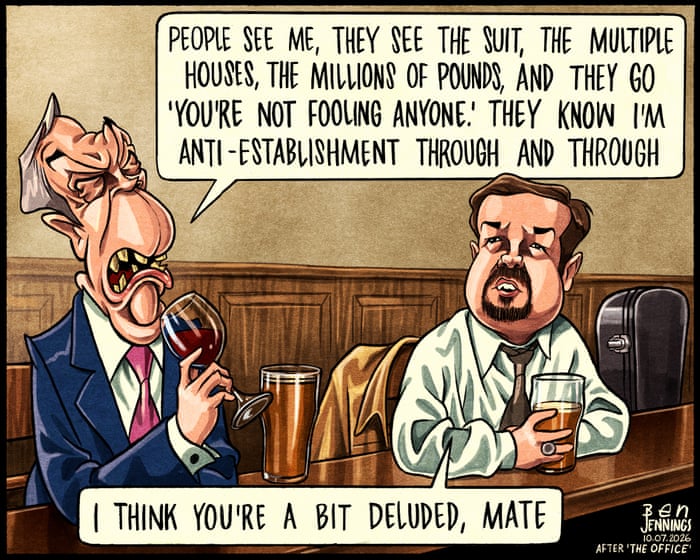
Ben Jennings on Nigel Farage’s byelection announcement – cartoon
The Guardian

AllAfrica
PoliticsJul 9, 2026 · 1 min
Kenya: Violence, Bribery Claims Put Ol Kalou By-Election in Jeopardy
AllAfrica