Indian Express
High Court junks plea challenging Haryana move to modify UGC norms to recruit 123 Assistant Professor
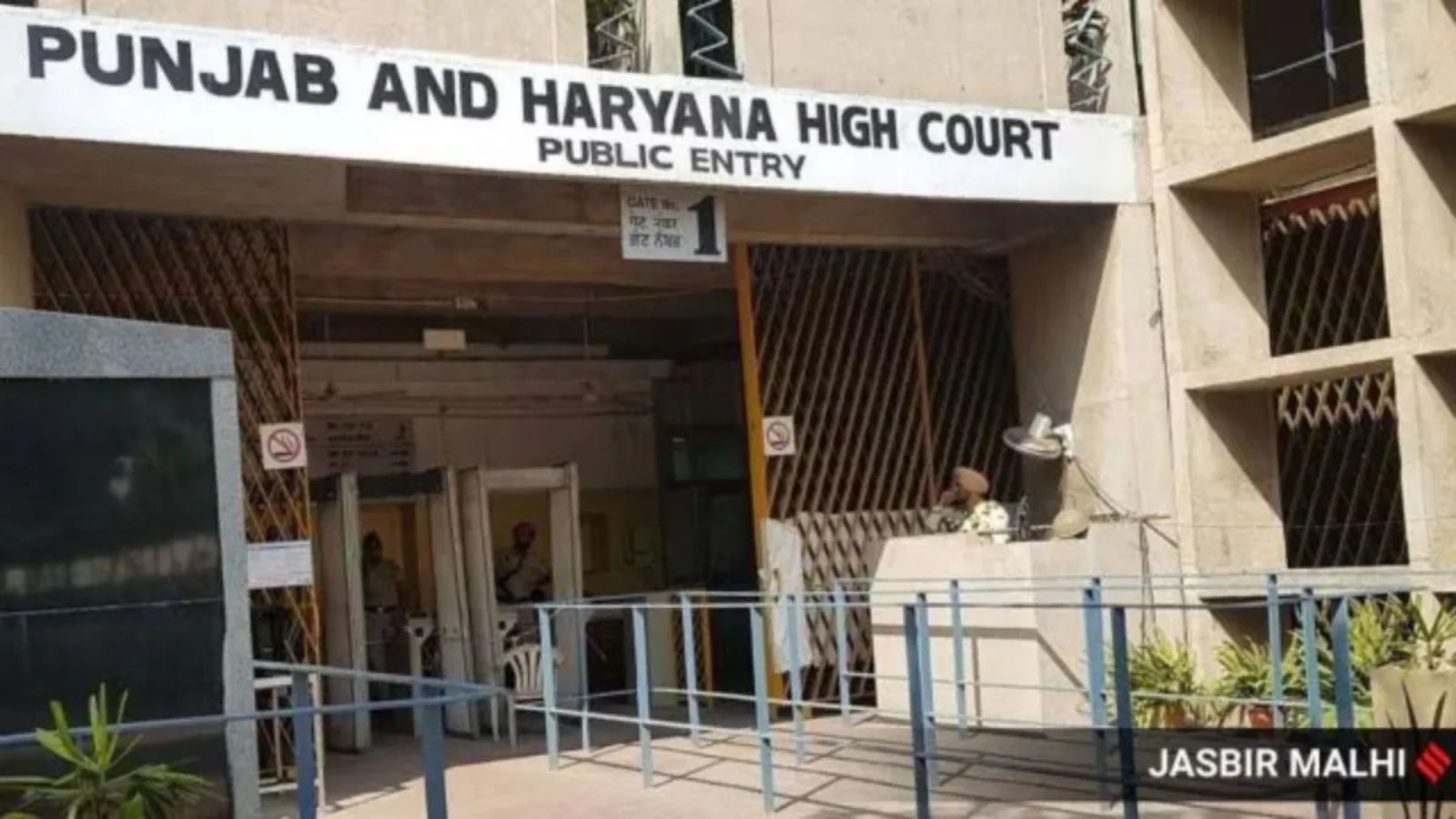
The Punjab and Haryana High Court has dismissed a petition challenging Haryana’s recruitment process for 123 Assistant Professor (Chemistry) posts, while holding that the State is empowered to prescribe higher qualifications than the minimum standards laid down under the University Grants Commission (UGC) regulations, provided these do not dilute the norms. However, noticing an apparent conflict with an earlier coordinate Bench judgment, the court referred the legal issues involved to a larger Bench.
Dismissing a petition seeking quashing of the Haryana Public Service Commission’s (HPSC) advertisement issued in August 2024 and the subsequent selection process for 123 Assistant Professor (College Cadre) posts in Chemistry, a bench of Justice Harpreet Singh Brar observed that “it is the prerogative of the employer to recruit the best available talent and not merely those who satisfy the base minimum”.
The petitioner, Renu Kumari Rohal, had qualified the Screening Test but failed to clear the Subject Knowledge Test after scoring 52 marks against the qualifying benchmark of 52.5 marks.
Appearing for the petitioner, Advocate R N Lohan argued that appointments to the post of Assistant Professor were governed by the UGC Regulations, 2018, which had also been adopted by the Haryana government. It was submitted that while the UGC Regulations required a selection committee to undertake the recruitment process, the state government had modified the regulations by empowering the HPSC to frame the selection criteria, contrary to law. Relying on the Supreme Court’s judgment in Mandeep Singh, the petitioner contended that the UGC Regulations were binding on the State.
The counsel further argued that “the UGC Regulations do not envisage conducting of an examination for the post of Assistant Professor in the first place.”
It was submitted that “the knowledge of a candidate with respect to a particular subject has already been evaluated by the TGC by holding an all India level exam, thus, there is no need to conduct a Subject Knowledge Test.”
The counsel also contended that fixing a 35 per cent qualifying cut-off in the Subject Knowledge Test was arbitrary and had already been set aside by the high court in Asha Rani versus State of Haryana.
Story continues below this ad
Opposing the plea, Haryana’s counsel, Deputy Advocate General Harish Nain argued that the petitioner had not challenged the State government’s notification dated November 11, 2022, by which the UGC Regulations were adopted with modifications, and had approached the court only after failing to qualify the Subject Knowledge Test.
He submitted that “the petitioner has only laid challenge to the selection process because she was unsuccessful therein.”
Rejecting the petition, the bench held that an unsuccessful candidate who had participated in the selection process without objection could not subsequently challenge it merely because the outcome was unfavourable.
It added that “participation in the process without protest amounts to acquiescence” and that a candidate “is deemed to have waived the right to question the methodology or procedure adopted for selection.”
Story continues below this ad
The court also held that the petition was not maintainable as the petitioner had not challenged the November 11, 2022 government memo adopting the UGC Regulations with modifications.
On the central issue, the bench ruled that the UGC Regulations prescribe only the minimum standards and do not prevent a State from introducing additional measures to ensure merit.
“The UGC Regulations provide for a minimum benchmark and not a restrictive upper limit on institutional excellence,” the court observed.
The bench further held that “the impugned advertisement has not dispensed with the interview process… rather a test of qualifying nature followed by the Subject Knowledge Test has been added to promote the cause of meritocracy.”
Story continues below this ad
Holding that the State’s recruitment process strengthened rather than diluted the UGC framework, the court observed that it “only supplements the UGC Regulations, especially since it does not diminish the eligibility criteria laid down in the latter.”
Summarising its conclusions, the high court held that “conducting a screening test or Subject Knowledge Test does not amount to violation of the UGC Regulations” and that “the State government is empowered to prescribe higher, more rigorous qualifications than those provided in the UGC Regulations so long as the criteria provided in the latter is not diluted.”
While dismissing the petition, Justice Brar referred two questions to a larger Bench, including whether a State government can prescribe qualifications higher than those provided under the UGC Regulations, including Screening and Subject Knowledge Tests, and whether the State is legally bound to adopt the UGC Regulations in their entirety. The Registry was directed to place the matter before the Acting Chief Justice for constitution of an appropriate Bench.
View original source — Indian Express ↗
Related stories

Euronews
WorldJul 9, 2026 · 1 min
OPCW reinstates Syria’s voting rights, citing 'significant change in circumstances'
Euronews

Rio Times
WorldJul 9, 2026 · 1 min
Humpback Whales Return to Rio, and the Boats Follow
Rio Times

Philippine Daily Inquirer
WorldJul 9, 2026 · 1 min
Mimaropa under blue alert as Inday strengthens ‘habagat’
Philippine Daily Inquirer
Straits Times
WorldJul 9, 2026 · 1 min
Russia subjecting 1.6 million Ukraine children to military brainwashing: OSCE report
Straits Times