Philippine Daily Inquirer
SC lifts TRO, dismisses 3 petitions vs NCAP
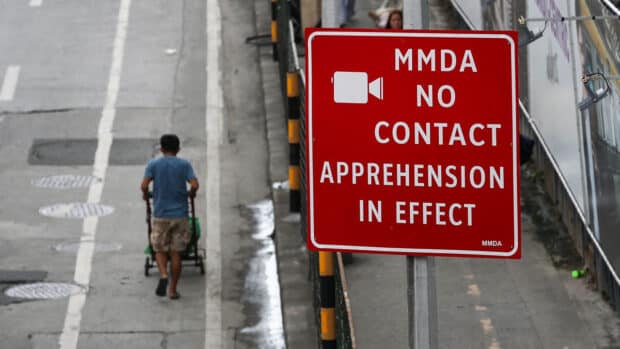
Inquirer file photo
MANILA, Philippines — The Supreme Court has dismissed three consolidated petitions questioning the legality of the No Contact Apprehension Policy (NCAP) in five cities in Metro Manila, a move that may revive the blanket implementation of the apprehension technique that uses digital cameras installed on major roads to record traffic violations.
In a 33-page en banc decision dated June 3 that was released on Thursday, the high tribunal lifted the temporary restraining order (TRO) on the policy’s implementation in Manila, Quezon City, Valenzuela, Parañaque and Muntinlupa.
Article continues after this advertisement
The TRO was issued after transport groups, public utility drivers and motorists questioned the legality of the respective NCAP ordinances approved by the five cities.
FEATURED STORIES
NEWSINFO
NEWSINFO
NEWSINFO
READ: MMDA assures public: NCAP-recorded violations are manually validated
The Supreme Court, however, noted in its ruling that the city ordinances had since been revised to adhere to the Metro Manila Traffic Code of 2023, which centralized the enforcement of NCAP and harmonized the fines and penalties for violators in the National Capital Region (NCR).
Constitutional boundaries
The consolidated petitions, according to the high tribunal, are therefore dismissed for being “fraught with defects” as there was no actual “case or controversy,” thus preventing it from exercising its power of judicial review.
READ: NCAP to soon cover improper waste disposal — MMDA
Article continues after this advertisement
“[W]here no genuine dispute exists between adversarial parties with real and substantial interests at stake, this court is without jurisdiction to act. To do otherwise would be to transgress the constitutional boundaries of judicial power and to render an advisory opinion—a function this court does not possess,” the high tribunal said.
The Kilusan sa Pagbabago ng Industriya ng Transportasyon, Inc. (Kapit) and three other associations of drivers and operators had filed a petition for certiorari and prohibition on Aug. 2, 2022. The second petition was filed by lawyer Juman Paa on Aug. 16, 2022, followed by a third one submitted to the court in October by the Philippine National Taxi Operators Association (PNTOA).
Article continues after this advertisement
The petitioners had argued that the policy implemented on major thoroughfares by the Metropolitan Manila Development Authority (MMDA) and in the five cities “violate due process.” Motorists, they told the court, were penalized allegedly without notice and stripped of a chance to contest their supposed violations.
Paa, for his part, said he was fined more than P20,000 for traffic violations in 2021 but he did not receive any notices. He added that he only found out when he had his vehicle registered the next year.
In his petition, Paa called NCAP an “error-prone and burdensome” policy that also violates a person’s right to due process and privacy.
The PNTOA, on the other hand, said that granting exclusive jurisdiction to resolve NCAP-related violations to the respective traffic adjudication boards of the five Metro cities infringes on the functions of the judiciary under the constitution and Batas Pambansa Blg. 129.
The high court, however, found their petitions moot after the five cities revised their respective NCAP ordinances.
The changes were in response to the TRO issued by the Supreme Court in 2022 on the policy’s implementation not only in the five cities but also on the busiest roads in NCR. The TRO was partially lifted in May last year, restoring NCAP only on major thoroughfares.
‘Functionally abrogated’
“It necessarily follows that the ordinances subject of the challenges have been, for all intents and purposes, functionally abrogated,” read part of the decision penned by Associate Justice Rodil Zalameda.
“To engage in a resolution of the constitutional and legal challenges leveled against the assailed NCAP city ordinances would be, at this juncture, a patently futile judicial exercise,” it said.
The Supreme Court, however, said that it does not take lightly the concerns of petitioners about their rights to due process and privacy being violated.
“These invoked rights are real, anchored in the Constitution, and worthy of judicial solicitude. Nonetheless, the crucial inquiry at this point is not whether these rights were violated under the superseded ordinances, but whether a ruling by this Court on the constitutionality of those now-defunct ordinances would still serve any constitutional purpose,” it pointed out.
The dismissal of the case also does not mean that the current policy is valid, the high court stressed. But it said that courts would not declare a law or ordinance unconstitutional “unless there is a clear and unequivocal breach of the Constitution,” and not just mere “bare allegations or speculative claims.”
Concurring, dissenting opinions
This was also the position of Senior Associate Justice Marvic Leonen, who said in his 66-page concurring and dissenting opinion that the issue regarding the manner by which traffic violators are apprehended under NCAP has yet to be resolved by the Supreme Court.
Associate Justice Japar Dimaampao, in his 171-page concurring and dissenting opinion, agreed with the decision not to nullify the ordinances, but noted that the issues had not become moot. “The concerns of thousands of motorists regarding the validity of fines imposed … are neither illusory nor theoretical. They are real, concrete and continuing,” he said.
Associate Justice Amy Lazaro-Javier also said in her separate opinion that deciding on the validity of the NCAP ordinances is “both justified and necessary” as these issues may arise again.
Reached for comment, Paa said he hopes the NCAP will not be revived immediately, as there should be a law on its implementation to serve as the basis for local ordinances.
Your subscription could not be saved. Please try again.
Your subscription has been successful.
“Otherwise, the intention of (the policy) would really be just for fundraising,” he told the Inquirer in a text message. /cb
View original source — Philippine Daily Inquirer ↗
Related stories

Philippine Daily Inquirer
WorldJul 9, 2026 · 1 min
DOE orders swift repairs to restabilize Visayas grid
Philippine Daily Inquirer

Philippine Daily Inquirer
WorldJul 9, 2026 · 1 min
No, Conor McGregor does not deserve to make a comeback
Philippine Daily Inquirer

Philippine Daily Inquirer
WorldJul 9, 2026 · 1 min
Shoe factory fire kills 28 in one of China's deadliest blazes in years
Philippine Daily Inquirer
VnExpress
WorldJul 9, 2026 · 1 min
Schools, offices close in Taipei, Beijing outskirts due to Typhoon Bavi
VnExpress