CNA
ASEAN’s least-visited country: How Singaporeans are helping put Timor-Leste on the tourist map
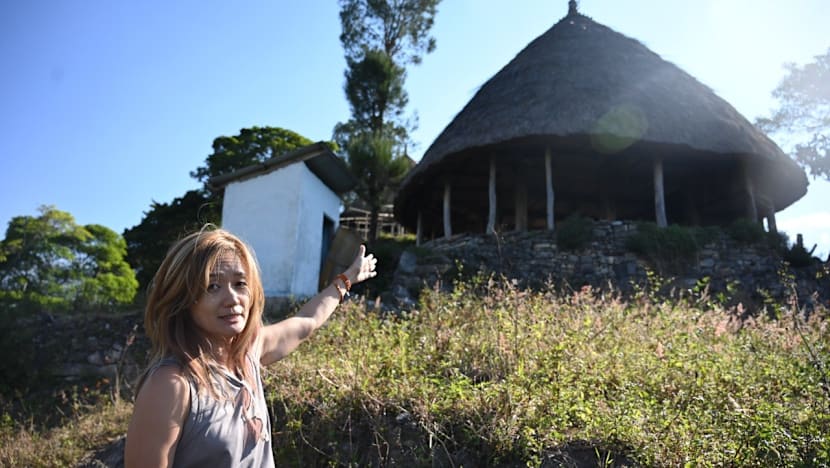
DILI, Timor-Leste: Singaporean Veon Lim first visited Timor-Leste in 2023 to volunteer with underprivileged communities.
She planned to stay a few months. Three years on, she is still there.
Travelling across the country, which lies north of Australia and shares a land border with Indonesia, Ms Lim found herself mesmerised by landscapes largely untouched by mass tourism.
“I was thinking, this is so beautiful, even the colour of the soil to me looked untouched,” she said. “The first time I arrived at the beach, I saw starfish, huge starfish, during low tide.”
She later obtained a long-term visa through a non-governmental organisation to run art therapy and food programmes for locals, and now spends most of her time in the country.
What began as a volunteer mission soon evolved into something unexpected: encouraging fellow Singaporeans to visit.
“Because I kept posting all the beautiful photos on social media, my friends and ex-colleagues – even people I haven't met for 20 years – they started to contact me, saying: ‘Hey, I want to come, you need to help me’,” said Ms Lim, who is in her 40s.
Wanting to introduce more people to Timor-Leste, she began organising tours for Singaporeans and occasionally other foreigners in 2025 under the name Sojourn Timor-Leste.
For more than a year, she relied solely on word of mouth. This February, she expanded online, launching social media pages showcasing the country's landscapes, history and culture, and has since attracted a sizeable following.
Ms Lim said she is the only Singaporean to have started a tour company in Timor-Leste, and has led more than 100 visitors around the country so far.
She is not alone in trying to raise its tourism profile. Civil servant Teo Kah Beng, based in Dili, started a personal project in 2024 to map as much of the country as possible on Google Maps.
Before then, he said, Timor-Leste had no continuous Google Street View coverage, some roads were missing altogether, and many of the online images were outdated and portrayed the country as run-down.
That changed after Mr Teo arrived in April 2024. On some weekends, the 35-year-old spends three to four hours driving around Dili with a 360-degree camera, capturing streets for upload to Google Street View.
Other weekends are devoted to longer trips along the coastline and mountain roads, where he has also mapped hiking trails and added restaurants, cultural attractions and historical landmarks.
Over the past two years he has made about 3,200 contributions, and much of what appears about Timor-Leste on Google Maps today traces back to him.
He believes better online visibility can encourage more visitors to consider Timor-Leste.
“Most people visiting Timor-Leste (for tourism) are backpackers, so if you have all the street views, then they can navigate, and once they see the views and see all these places, they are more positive in coming here,” he said.
Despite their efforts, Timor-Leste remains one of Asia's least-visited countries. The government estimates about 45,000 visitors arrived in 2025, up from 26,000 in 2024.
But its accession to the Association of South-east Asian Nations (ASEAN) last year has sparked more conversations on whether it can better tap its fledgling tourism sector.
Singapore Prime Minister Lawrence Wong, on his first official visit to the country earlier this month, encouraged Singaporeans to visit Timor-Leste for leisure or business.
Timor-Leste has set a goal of 200,000 annual visitors by 2030. But locals and tourists alike point to several obstacles to reaching that target: limited transport infrastructure, a shortage of hotel rooms and guesthouses, and tourism investments that have failed to materialise.
A GLIMPSE OF THE POTENTIAL, AND THE GAPS
A two-day tour with Ms Lim showed both sides of the picture.
Dili's attractions are modest next to more established Southeast Asian destinations. They include a museum chronicling the country's independence struggle, a market selling traditional woven textiles known as tais, and Timor Plaza, the country's only shopping mall.
On Saturday evenings, Timor Plaza also hosts Dili's only night market, where locals and a smaller number of tourists gather for Timorese and regional food.
The capital's best-known landmark is the 27m-tall Cristo Rei statue on a hilltop overlooking the city. Nearby beaches and clear coastal waters stay quiet, even during the day.
Outside the capital, the appeal shifts from urban sights to nature. Clear waters make diving and snorkelling among the country's main draws, while its position along major marine migration routes offers opportunities for whale- and dolphin-watching.
A day trip to the mountainous district of Maubisse showed another side still. At roughly 15,000 sq km, Timor-Leste's land area is about 20 times that of Singapore, and its interior is characterised by rolling highlands, grasslands and sparsely populated villages.
Many settlements bear traces of the Portuguese colonial past, with decades-old churches and houses alongside traditional stilt houses still in use.
Along one stretch of road, CNA came across a crowd gathered around a traditional cockfight, with spectators placing bets as two roosters fought to the death.
Only a handful of tourists were seen over the course of the day, an exclusivity that is itself part of the draw for some Singaporean visitors.
Lawyer Francis Xavier, who visited in January, said he prefers to visit countries "before they get crowded". Good food can be found in Timor-Leste, he added, though it takes "some homework" to find it.
“I found Timor-Leste to be wild, beautiful, and a place with a deep sense of history and culture,” said the 62-year-old. “People may be reluctant to visit when there are more obvious choices like Bali, Philippines, Cebu, and they rather see the devil they know than the devil they don’t know.”
Dr Terina Ying, who visited in March last year, said the experience is not for everyone.
“It has to appeal more to those looking for exotic holidays, not for the pampered Singaporean,” said the doctor, who is in her 60s. “The toilets and the water (facilities), certain parts are not good, and you need to have a reset of expectations.
“But if you love untouched nature, truly untouched nature, this is the place to go.”
INFRASTRUCTURE AND INVESTMENT HURDLES
Civil infrastructure remains a work in progress.
The two-hour journey from Dili to the hilly countryside crossed uneven roads and one section that had partially caved in from a landslide; some stretches were still under construction, leaving only dirt paths as access.
Ms Lim said conditions have improved markedly since she first arrived in 2023, though Mr Teo noted that roads deeper inland are rougher still.
The hospitality sector is also underdeveloped, said Timor-Leste's Director General of Tourism, Antonio Da Silva.
The country has around 2,400 hotel rooms in total, the majority in Dili, but most are just not good enough. “Unfortunately, we only have 500-plus rooms that, based on the input from the tour operators, that readily sell, with the high standard for international travel,” he told CNA.
Then there is the problem of service standards. Timorese in the hospitality industry need training in service, language and food and beverage skills, Mr Da Silva said.
Ms Lim said guesthouse owners outside Dili often have no online presence, and can only be reached through local contacts like her. Even then, replies can be slow and double-bookings happen.
She has found ways to adapt and overcome such inconveniences by planning for backup accommodation.
“You get your headaches, right, because there (might be) no plan, or if there's a plan, it keeps changing,” she said. “But I learned to let go, and it helped me grow as a person as well.”
Cost is another surprise for some travellers. A round trip from Singapore to Dili costs at least S$800 (US$618) in airfare, due to the scarcity of international flight connections.
Timor-Leste also uses the US dollar to underpin post-independence economic stability, which keeps prices higher than in neighbouring countries with weaker currencies.
Investors have hit roadblocks too. Singapore-owned Pelican Paradise Group was left in limbo after its US$700 million project was cancelled by the Timor-Leste government following 18 years of delays, the Business Times has reported.
Mr Julian Chiang, a Singaporean businessman who has lived in Timor-Leste for 14 years, said foreign investors remain wary of committing large sums because foreigners are barred from owning land.
“Why would I want to bring in $10 million, $15 million to build a building and the land doesn’t belong to me? If you take the same money, you can go to another country, and get it back in five years,” he said.
“So here they need to make it a bit more attractive for real investors.”
Mr Da Silva said the country needs more foreign direct investment to "build up the nation", while also working within its domestic procedures.
He pointed to Timorese who have already reinvested in hotels, Timor Plaza and aviation, and said Timor-Leste remains open to partnerships with foreign and local private companies alike, "as long as they comply with local regulations".
WHAT NEXT FOR TIMOR-LESTE?
Timor Plaza managing director Tony Jape said the country must avoid the pitfalls that have beset other emerging destinations, pointing to the arrival of casinos in Dili as a sign of development moving too fast.
"Obviously, as the country grows, you will have all kinds of people coming in, trying to do different things," he said.
"We need to be very careful with scammers (who) may be relocating, looking for a new destination, and that is the kind of industry and business that we don't want here.
"We have to grow step by step, because otherwise you can damage the image and product and the reputation of Timor-Leste."
Singaporean Raymond Huang, founder of youth charity Heartware Network, shares that concern, and hopes Timor-Leste can avoid the path of countries where tourism became associated with vice.
He plans to bring youth volunteers from Singapore to train Timorese in hospitality skills.
The emergence of casinos and massage parlours in the country has troubled him.
"If you see casinos, you see moneylending. You see moneylending, it means they will go into crime. We've seen the pattern before," he said. "Timor-Leste is in the sweet spot, once you build the brand properly, the right investor will come."
Mr Da Silva said ASEAN membership puts the country's tourism prospects in a strong position. “The market is huge, and all the variety of products and services, the connectivity is convenient, and so to be part of that bloc will bring up our image.”
Timor-Leste is not trying to compete with the likes of Bali, he added, but to chart its own path.
“We can become an additional destination,” he said. “We have a unique tourism product … there’s a different experience you might enjoy while in Timor-Leste.”
For Mr Teo, mapping the country remains a work permanently in progress.
“There’s lots of infrastructure development in Dili, so things that were filmed six months ago can change, so I’ll still be taking footage whenever I go out,” he said.
“I wish to share with everyone how beautiful this country is, and what it can offer. Anything you see online is talking about how negative this country is, and I want to change that.”
Source: CNA/jx
Related stories

BBC
WorldJul 9, 2026 · 1 min
UK bakes in 35C highs as heatwave to continue next week
BBC

VnExpress
WorldJul 9, 2026 · 1 min
Hanoi university gets more Vietnamese SAT scores than any US college
VnExpress
VnExpress
WorldJul 9, 2026 · 1 min
Which Asian country has the cheapest internet in the world?
VnExpress
South China Morning Post
WorldJul 9, 2026 · 1 min
2 men sentenced for roles in trafficking fentanyl analogues from China to the US
South China Morning Post