Indian Express
Ayodhya donation row: Temple CEO must be Ram devotee, huge task to restore trust: Search panel member
For the first Chief Executive Officer (CEO) of the Shri Ram Janmabhoomi Trust, the primary requirement is “Ram ke prati shraddha ka bhav (devotion to Lord Ram)”, said Suresh Haware.
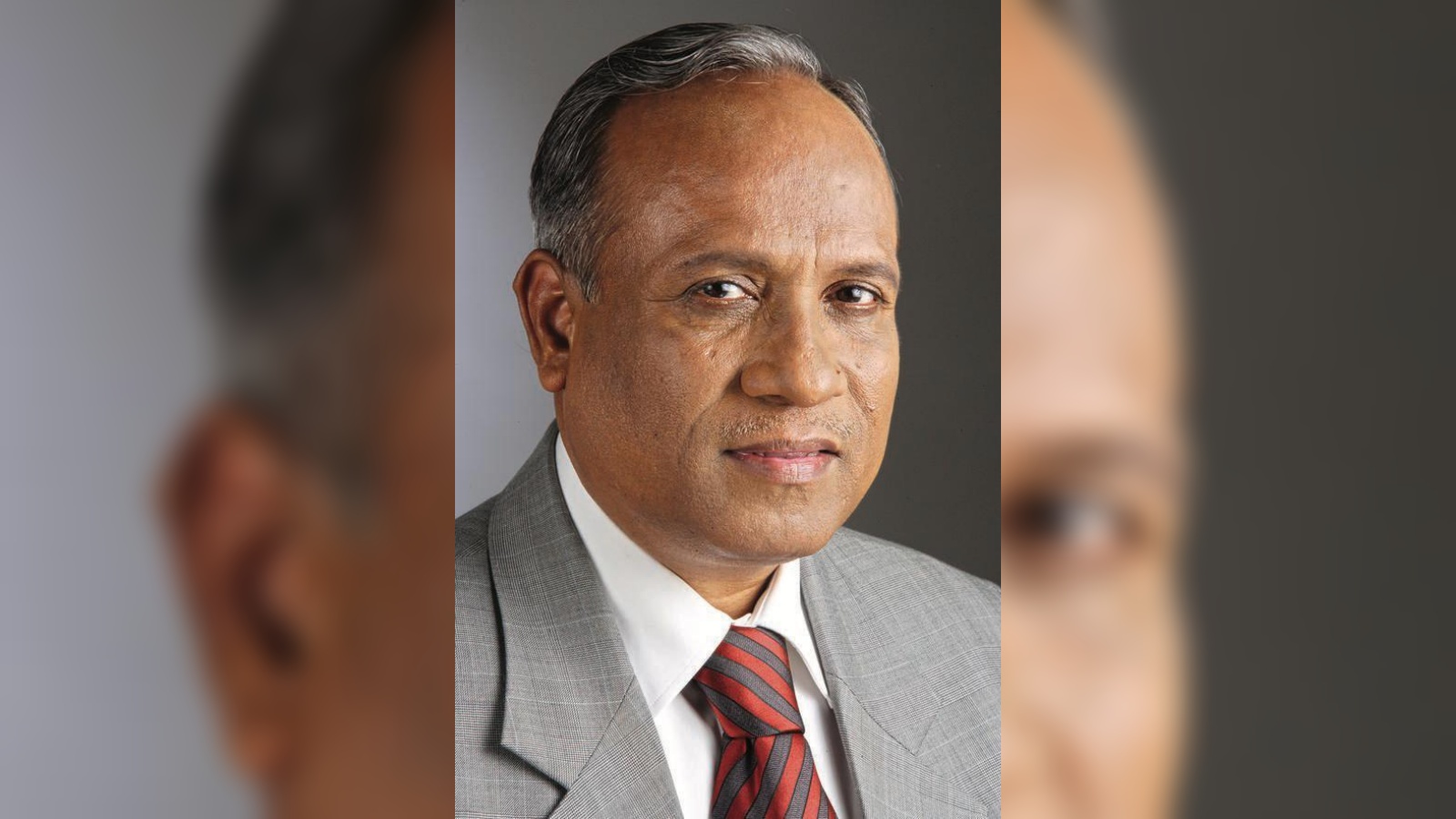
One of the three members of the committee set up to identify candidates for the post, newly announced as the Ram Janmabhoomi Trust tries to clean its house in the wake of the donation theft row, Haware’s list of credentials runs long. He is a retired nuclear scientist who spent 27 years with the Department of Atomic Energy, has headed the Shri Saibaba Sansthan Trust in Shirdi, and is currently the Chairman of the National Institute of Technology (NIT), Raipur, and a member of the Shri Amarnathji Shrine Board, plus has written a book called Temple Management.
Speaking to The Indian Express over the phone from Srinagar, as he participates in the ongoing Amarnath Yatra, Haware called his new assignment a management challenge “bigger than Tirupati, Shirdi or even many of the country’s largest business organisations”.
“The challenge before us is very big because it is a question of public trust. Once trust is broken, it takes years to rebuild. Therefore, the system we create has to be transparent. A proper system of temple management has to be put in place,” he said, adding that he believes the task starts with finding the right person who can put in place such a system. And “the primary requirement is Ram ke prati shraddha ka bhav”.
Suresh Haware, former nuclear scientist with Dept of Atomic Energy & member of Amarnath Board
The trust announced the formation of the search committee for the CEO on July 6, with Haware hearing about his inclusion in it during the Amarnath Yatra. Its other members include retired Justice Pradeep Kohli and Lieutenant General (retd) Vishnukant Chaturvedi.
On why Ayodhya requires a different model of administration, Haware said the sheer number of pilgrims is one aspect of it. “Tirupati receives around 1 lakh to 1.5 lakh devotees every day, while Shirdi sees around 70,000-80,000. Ayodhya is known to draw over 2 lakh devotees in a day, with these numbers increasing manifold on auspicious occasions.”
The other aspect, Haware said, are the sentiments attached to the Ayodhya temple. “It is not merely a newly constructed temple, it is associated with a struggle spanning more than 500 years. Every Hindu has an emotional connection with it. It is a symbol of faith and identity… This is perhaps the biggest temple institution in the country… That makes the responsibility much greater.”
Story continues below this ad
The CEO would become “the backbone” of the institution and oversee every aspect of its functioning and management, Haware said. “Managing lakhs of pilgrims every day requires professional systems for crowd movement, disaster preparedness, procurement and human resources and, most of all, financial management. Simply keeping money in the account does not work, it has to be invested and used properly, more so for giving it back to society,” he said.
Haware added that temple management had evolved into a specialised discipline encompassing finance, investment, banking, accounting, human resource management, material management, crowd and disaster management, and increasingly involves the use of technology, including artificial intelligence.
At the same time, he stressed, professional competence alone is not enough to be the Ram temple’s first CEO. “A dry professional cannot run a temple like this. The primary necessity is Ram ke prati shraddha ka bhav (devotion towards Ram). The second is a spirit of service towards society and respect for devotees. Only after that will we look at experience in finance, HR, material management, institutional administration and temple management.”
On the selection process, Haware said the committee will lay down around 10 broad criteria before inviting applications. “Our first task is to decide what kind of person we are looking for. We will first meet online, followed by a physical meeting. After finalising the criteria, we will invite applications from eligible candidates, scrutinise them, conduct interviews, examine their background and finally prepare a panel of names for the Trust.”
Story continues below this ad
The exercise would be undertaken “on a war footing”, he said. “I was at the Amarnath Shrine when the Trust took this decision. The other committee members are in Delhi. Given the urgency, we will first meet online and then physically. This concerns the faith of millions and therefore has to be treated as top priority.”
Society expects every donation to be properly accounted for and used responsibly, Haware said. “Temples today are expected to support hospitals, schools, old-age homes, free meals and other social initiatives. Financial management, accounting and transparency are therefore integral to temple administration. Our responsibility is to identify the right person – someone who combines devotion with professional competence and can build an institution worthy of the faith of millions.”
View original source — Indian Express ↗
Related stories
CNA
BusinessJul 10, 2026 · 1 min
Japan will not convey in advance preference on BOJ policy, minister says
CNA
CNA
BusinessJul 10, 2026 · 1 min
Pioneering aviator and astronaut trainee Wally Funk dead at 87
CNA

Bloomberg
BusinessJul 10, 2026 · 1 min
China AI Star Zhipu’s ‘Low Float’ Risk Persists After Share Sale
Bloomberg
Bloomberg
BusinessJul 10, 2026 · 1 min
Emerging: AI Sovereignty Isn't "Self-Sufficiency"
Bloomberg