The Guardian
‘A lot of red flags’: plans for New Zealand’s first datacentre spark concern as locals demand greater transparency
People living near the site of New Zealand’s first planned AI datacentre are calling for more transparency about the project, especially about how the centre’s huge electricity and water use and potential noise pollution could affect them.
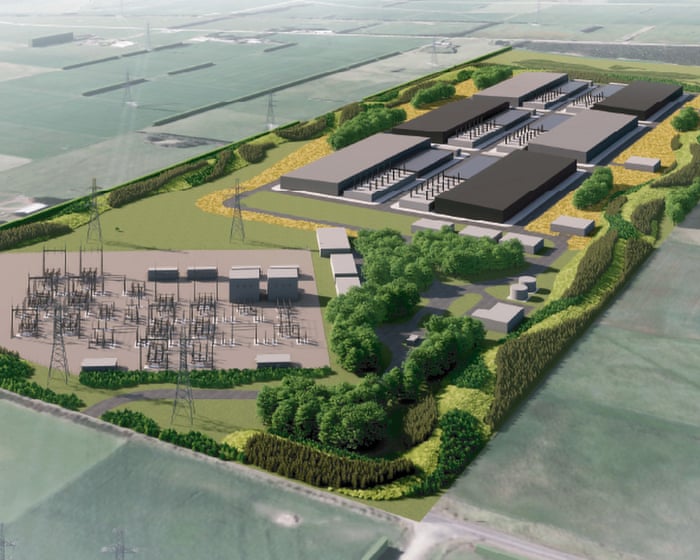
Singapore-based company Datagrid has secured approval to build a NZ$3.5bn (US$2bn) AI datacentre on a 49-hectare site in Makarewa, just north of New Zealand’s southern-most city, Invercargill. Construction is due to begin this year, with the centre becoming operational by 2028.
The facility will be used for AI training, processing and data storage and will serve global AI and cloud providers, says the company’s website. Datagrid also plans to build a high-speed internet cable between Invercargill and Australia.
Datacentres require large amounts of electricity, water and land, and their rapid growth is igniting debate and protest around the world, as communities grapple with the associated environmental issues, increasing power bills and claims that they are not seeing local economic benefits, despite data company promises.
The centre in Makarewa will become New Zealand’s second largest user of electricity, after the nearby Tiwai Point aluminium smelter, using 280MW of electricity.
Local authorities have hailed the project as a win for the region, saying it will create jobs and sped up the internet. The company says about 1,200 jobs will be created during the construction phase, and about 50 permanent positions on completion.
But Angus Dowell, an economic geographer whose PhD project looks at the construction of datacentres said there were “a lot of red flags,” about the project, and about New Zealand’s push to become an AI hub.
“[The centres] provide short term economic benefits in the form of construction, but they’re very, very low employers long term, and so the long term benefits to local economic development are just not there, they don’t stack up,” he said.
Residents in the neighbouring community are worried about the development.
“Locals down here kind of feel like we’ve had our region sold out from underneath us,” said Kelly Blomfield, the chair of the Southland Sustainable Resource coalition, an advocacy group that monitors regional infrastructure projects.
“I think that most people’s actual concern is that we don’t find out anything until its done,” she said, adding that attempts to gather more information from Datagrid have been unsuccessful.
The centre is part of the New Zealand government’s attempts to attract foreign investment and build datacentres. Government agency Invest New Zealand wants to secure NZ$25-30bn in foreign investment to build datacentres and AI infrastructure, the agency said.
New Zealand “offers a compelling opportunity” and “a safe harbour” for investment because of its access to renewable energy, available land and cool climate, the agency says on its website.
“These fundamentals are supported by excellent digital connectivity, a skilled workforce, internationally competitive pricing, and a strong rule of law.”
Meanwhile, a report from Boston Consulting Group for the agency claims the industry could “unlock up to $70bn of economic activity” over the next decade.
But Makarewa resident, Amanda, who wished to give her first name only, says her early ambivalence about the project has changed to concern.
“Now that I know a lot more from what I’ve seen overseas, I am alarmed … not just for Makarewa, but for New Zealand.”
Amanda is worried about water and power use, the potential running of 84 diesel generators if there is a power shortage, and how round-the-clock noise and light will affect the community and farm animals.
Datagrid has approval to discharge air contaminants from up to 84 diesel back-up generators, to draw up to 604,800 litres of groundwater per day, discharge up to 5000 litres of treated wastewater a day and remove a nearby wetland, an Environment Southland regional council reports show.
While direct neighbours to the datacentre site were consulted, the broader community was not, and anti-datacentre sentiment is growing, she said.
“I know many people in the community who are not on board with it – the talk is either of apprehension or negativity.”
Blomfield says she feels like New Zealand has put itself in the race to become an AI datacentre hub “but no one asked us if we want to be in that race”.
“People are starting to understand the scope of it, and people are starting to say: I don’t want this in my back yard.”
Datagrid did not respond to the Guardian’s request for comment but its chief executive, Rémi Galasso, has previously said that concerns about water and power use were unfounded. Southland’s cool climate minimises the need to use water, and the company would be operating under long-term renewable energy arrangements, not competing for household electricity, he said.
Invest New Zealand’s chief executive, Robert Wall, was not available for an interview.
Dowell says there is was “a lot of opacity” around the Datagrid project, which raises questions over its impacts, how it will function within the broader AI ecosystem, and how it will benefit New Zealand.
“It’s fair for us to look at other places in the world and see the environmental impacts of datacentres, the highly asymmetrical distribution of value as part of the big tech AI economy, and say: we need to know more,” he said.
“We should demand more, because there’s a lot at stake.”
View original source — The Guardian ↗
Related stories

The Guardian
TechnologyJul 10, 2026 · 1 min
Ukraine war briefing: Kyiv reaches ‘political’ agreement with US on Patriot interceptor production licences
The Guardian

TechRadar
TechnologyJul 10, 2026 · 1 min
Asus ProArt GeForce RTX 5090 review
TechRadar

Japan Times
TechnologyJul 10, 2026 · 1 min
Putin likely to escalate Ukraine war, despite Trump peace push, sources say
Japan Times

Indian Express
TechnologyJul 10, 2026 · 1 min
A boy killed by a falling tree, Mumbai civic panel now wants contractors held liable for root damage
Indian Express