
Philippine Daily Inquirer
PH income upgrade not proof of broad-based progress – groups
MANILA, Philippines — The Philippines’ new classification as an upper-middle-income economy by the World Bank does not reflect the reality faced by millions of poor Filipinos and should not be treated as proof of broad-based economic progress, labor and research groups said.
In separate statements, Anakpawis Party-list and IBON Foundation said that while the country’s promotion reflects a higher average national income, it does not translate into better living conditions for many Filipinos who continue to struggle with poverty, low wages, food insecurity and rising inequality.
The World Bank announced on July 1 that the Philippines had moved from the lower-middle-income to the upper-middle-income category after its gross national income per capita reached $4,850 in 2025, exceeding the threshold for reclassification.
Article continues after this advertisement
The latest classification places the Philippines alongside countries such as Vietnam, Jordan, Micronesia and Sri Lanka, which also moved into the upper-middle-income group.
FEATURED STORIES
NEWSINFO
NEWSINFO
NEWSINFO
READ: Philippines reaches upper-middle income status, World Bank sayshttps://business.inquirer.net/598325/philippines-reaches-upper-middle-income-status-world-bank-says
But Anakpawis said the designation carries little meaning for sectors that continue to experience some of the highest poverty rates in the country.
“Walang dapat ipagdiwang sa klasipikasyon ng World Bank sa bansa. Dahil para sa mga maralitang sadlak sa hirap, wala itong kabuluhan at hindi sumasalamin sa tunay na kalagayan ng mayorya ng mamamayan,” Anakpawis National President Ariel Casilao said in a statement.
(There is nothing to celebrate about the World Bank’s classification of the Philippines. For poor Filipinos living in hardship, it has no real significance and does not reflect the true situation of the majority of the population.)
Article continues after this advertisement
“Walang ilusyon na ang pagiging upper-middle-income ng Pilipinas ay katumbas ng seguridad sa kabuhayan, panirahan, at pagkain, dahil ang mga tagapaglikha ng pagkain ng bansa ang nananatiling pinakamahihirap na sektor,” he added.
(There is no illusion that the Philippines’ upper-middle-income status is equivalent to having secure livelihoods, housing and food, because the country’s food producers remain among its poorest sectors.)
Article continues after this advertisement
The group also said government policies and trade arrangements had worsened the plight of rural producers, saying these had undermined local agricultural production and reduced the incomes of farmers and fisherfolk.
RELATED STORY: Emergency powers mean little without a roadmap–labor coalition
“Dagdag pa ang mga di-pantay na kasunduang pang-ekonomiya sa ibang bansa na pumapatay sa lokal na produksyon ng agrikultura at higit na nagpapabagsak ng kita ng mga magsasaka at mangingisda,” Casilao said.
(Unequal economic agreements with other countries have also undermined local agricultural production and further reduced the incomes of farmers and fisherfolk.)
Citing data from the Philippine Statistics Authority, the group said farmers and fisherfolk remain among the country’s poorest sectors, with poverty incidences of 27 percent and 27.4 percent, respectively.
Casilao said the World Bank’s latest income classification should not be equated with inclusive growth or genuine development.
“Moreover, the World Bank’s latest income classification does not equate to an inclusive economic growth and genuine development. Rather, it is being used by the Marcos administration as a smokescreen for the widening gap between the rich and the poor,” he said.
Not upper middle class
IBON Foundation likewise questioned the significance of the country’s new classification, saying it paints an incomplete picture of the economic conditions experienced by most Filipinos.
In separate statements, the research group said the country’s promotion had been presented as a milestone even as millions of Filipino families continue to struggle with poverty, insecure jobs and widening inequality.
“The Philippines getting ‘upper middle-income country’ (UMIC) status, according to the World Bank, while producing its first trilyonaryo even as some 15 million Filipino families are poor and another seven million are lower middle-class, says it all,” IBON Foundation Executive Director Sonny Africa wrote.
“For most Filipinos suffering through an economy that makes a few rich at the expense of the many, UMIC is just the latest reminder of official institutional disconnect from their daily lives,” he added.
RELATED STORY: Easing poverty: Gov’t told to be first honest with data
The group also cautioned against confusing the World Bank’s country classification with the economic status of Filipino households.
According to IBON, the country’s gross national income per capita of $4,850 could give the impression that the average Filipino family earns about P1.2 million annually, or roughly P100,000 a month, based on prevailing exchange rates and average family size.
“In fact, only the richest 5% of Filipino families earn that much,” Africa said.
Citing a Philippine Institute for Development Studies paper, IBON said only about 1.1 million households, or roughly 4 percent of all households, belong to the upper middle-income class.
Using its own estimates, the group said only around 838,000 families, or about 3 percent of all Filipino families, qualify as upper middle class, while about 77 percent belong to the poor, low-income and lower-middle-income sectors.
“By either estimate, some 8-9 out of ten Filipinos are poor, low- and middle-income—making the Philippines very far from an upper middle-income country and instead an economy where the overwhelming majority are poor or vulnerable,” Africa said.
Not a development gauge
Africa also said the World Bank’s income classification was designed primarily as an operational tool for determining countries’ eligibility for concessional financing rather than as a measure of development or living standards.
“The World Bank created these country income classifications in the late 1980s for its own operational purposes—mainly to determine countries’ eligibility for concessional loans and other development finance. It is fundamentally a lending classification, not a measure of development,” he said.
He added that moving into the upper-middle-income category could eventually reduce the country’s access to concessional financing from international financial institutions and increase reliance on more expensive commercial borrowing.
READ: PH’s upper-middle-income status: Milestone or mirage?
The think tank also pointed to broader economic indicators that, it said, continue to show structural weaknesses, including persistent poverty, inequality, the declining shares of agriculture and manufacturing in the economy, and dependence on overseas Filipino workers’ remittances.
In another statement, IBON noted that the Philippines remains at the lower end of the World Bank’s upper-middle-income bracket.
“The Philippines is literally below average—our GNI per capita is just one-third of the global average (US$14,244),” it said, adding that the country’s GNI per capita ranks 130th out of 201 economies.
Economists urge caution
Economists have likewise cautioned against interpreting the country’s new classification as an indication that the lives of ordinary Filipinos have significantly improved.
University of the Philippines Diliman Associate Professor and Inquirer data scientist Dr. Rogelio Alicor Panao earlier said the World Bank groups economies according to average national income, not overall quality of life.
“To make sense of this, one can think in simple terms. The World Bank’s income classifications work like moving through school grade levels,” Panao said.
“Every year, the World Bank checks how much income a country earns on average per person and places it into one of four groups: low income, lower-middle income, upper-middle income or high income,” he added.
Panao explained that moving into a higher income category does not automatically mean citizens have become wealthier.
“It simply means that, on average, the country’s income per person has passed a certain threshold,” he said.
READ: What an upper-middle-income status means for the Philippines
He also cautioned against expecting immediate improvements in people’s daily lives.
“But do not go out expecting people’s lives have changed all of a sudden. When you go out, prices may still be up and goods still feel unaffordable for many. Real wage still feels small,” Panao said.
He added that while the Philippines’ promotion reflects years of economic growth, “it does not mean that poverty has disappeared, inequality has narrowed, or that the average Filipino necessarily feels financially secure.”
Your subscription could not be saved. Please try again.
Your subscription has been successful.
“Income classification is best understood as a snapshot of a country’s economic capacity rather than a report card on how every household is doing,” Panao said. /dm
View original source — Philippine Daily Inquirer ↗
Related stories

TASS
BusinessJul 10, 2026 · 1 min
Turkey's first nuke plant to be commissioned later this year — Rosatom CEO
TASS

Japan Times
BusinessJul 10, 2026 · 1 min
Yen gains after finance minister urges pension funds to invest more at home
Japan Times

Japan Times
BusinessJul 10, 2026 · 1 min
Japan’s producer prices rise at fastest pace since early 2023
Japan Times
Bloomberg
BusinessJul 10, 2026 · 1 min
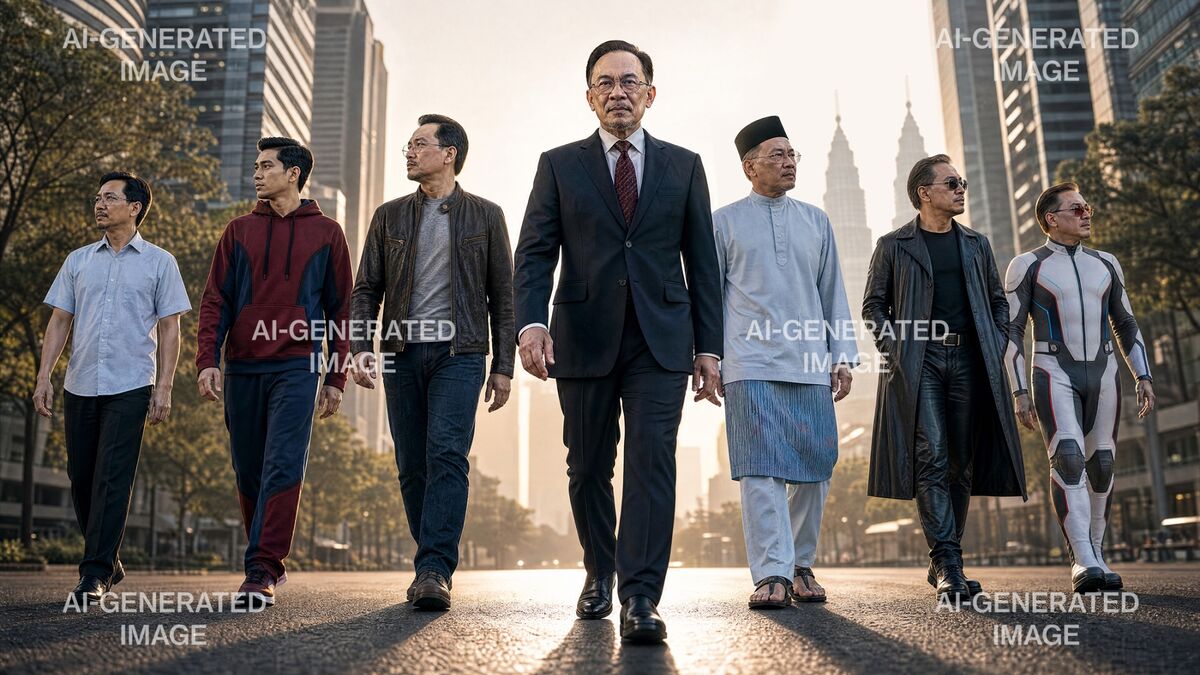
Malaysia’s Anwar to Debut an AI Double That Sounds Just Like Him
Bloomberg