South China Morning Post
Beijing’s evolving carbon road map balances climate targets and energy security
Beijing has signalled unyielding conviction in its latest action plan to peak emissions within five years, as the world’s largest producer of greenhouse gases vows to bolster nuclear and green offerings while ensuring energy security for the economy and burgeoning artificial intelligence sector.
The State Council, China’s cabinet, on Thursday released a five-year plan as the mission to peak its carbon dioxide emissions by 2030 enters a crucial execution period. The timeline, ultimately aimed at attaining carbon neutrality by 2060, was first pledged by President Xi Jinping in September 2020.
Key metrics in the plan include lowering China’s carbon dioxide emissions per unit of gross domestic product by 17 per cent by 2030, relative to 2025 levels, and raising the share of non-fossil energy in total consumption to 25 per cent – reinforcing targets set in recent years.
To wean the nation off fossil-fuel sources, which still make up the majority of supplies, the plan details measures including the clean substitution of coal and the optimisation of oil and gas structures. The country’s use of coal and oil will peak during the 2026-to-2030 period, it declared.
The plan also highlights the need to transform computing infrastructure – the backbone of China’s AI sector – as the drive to shift the growth pattern and close the tech gap with the United States has seen electricity demand skyrocket. New data and computing facilities will primarily use power from non-fossil-fuel supplies, the plan said.
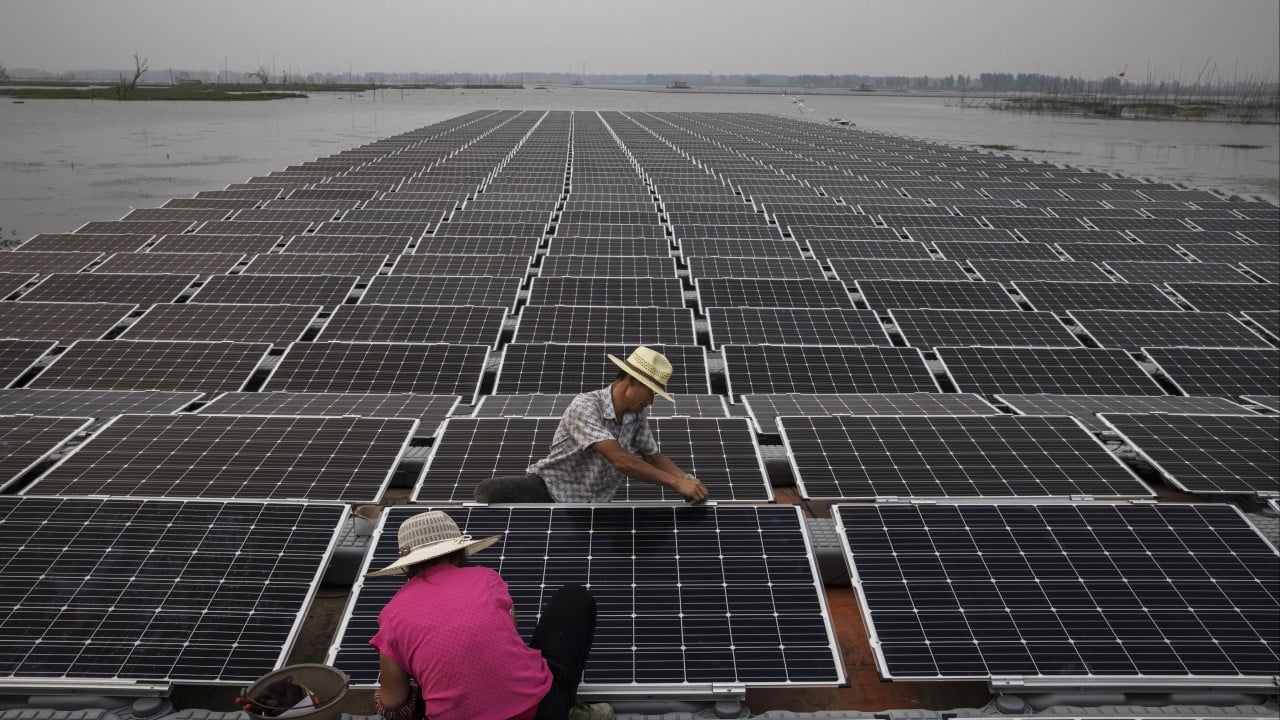
The world’s second-largest economy will also sustain a massive buildout of clean-energy bases, encompassing wind and solar hubs in the northwest, hydro-wind-solar integrated bases in the southwest, nuclear power projects along the coast, and offshore wind farms.
View original source — South China Morning Post ↗
Related stories

Philippine Daily Inquirer
TechnologyJul 10, 2026 · 1 min
NBA: Jordan Clarkson signs one-year extension with Knicks
Philippine Daily Inquirer

ZDNet
TechnologyJul 10, 2026 · 1 min
I tested my Fitbit Air against an 'EKG-accurate' heart rate monitor - the results surprised me
ZDNet

TechRadar
TechnologyJul 10, 2026 · 1 min
Why AI is a matter of national security
TechRadar

CNA
TechnologyJul 10, 2026 · 1 min
South Korean stars IU and Lee Jong-suk break up after 4 years together
CNA