Indian Express
Beyond Trending: What is militarism?
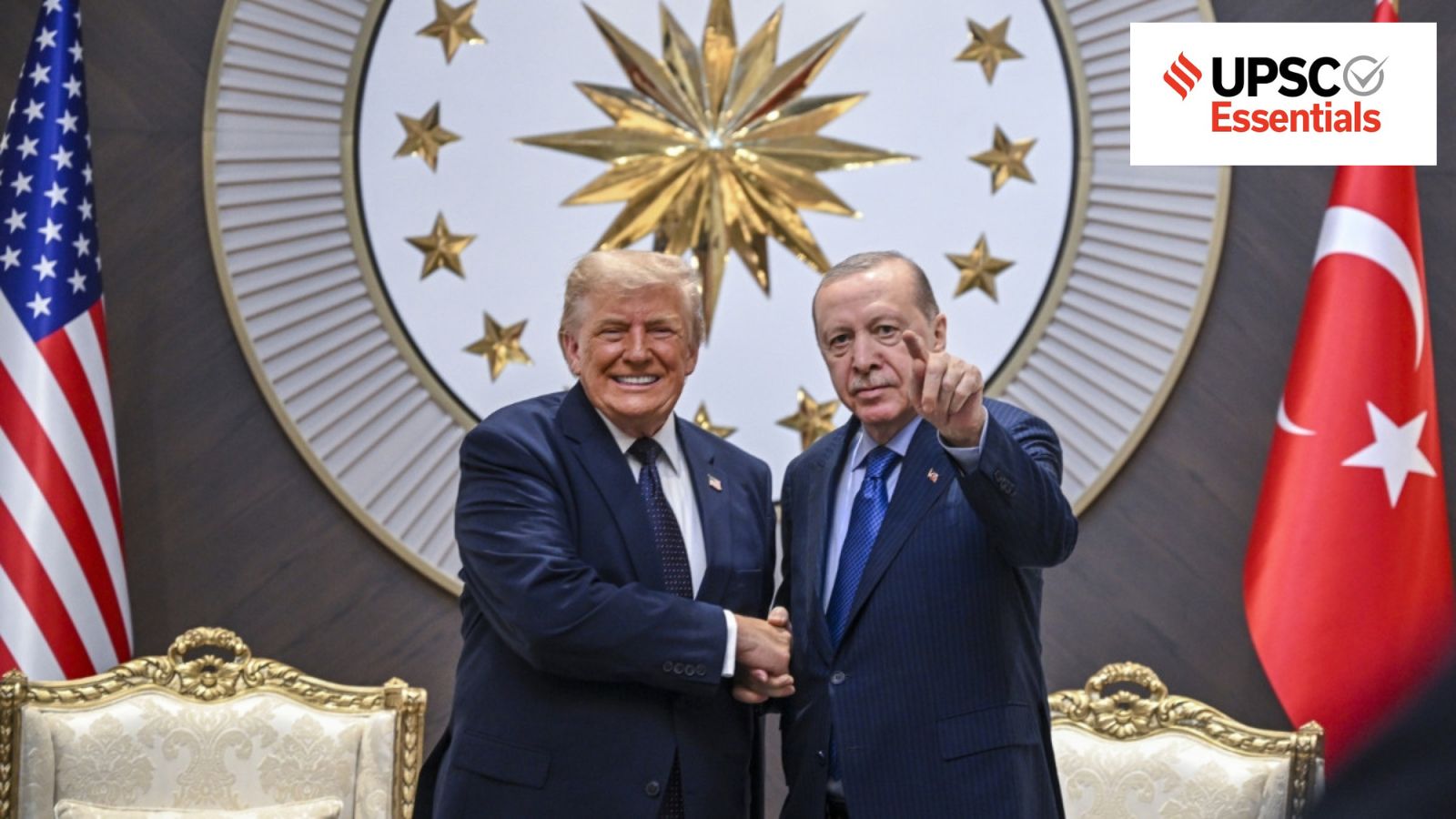
The NATO (North Atlantic Treaty Organization) summit declaration has reaffirmed its “ironclad commitment” to collective defence under Article 5. The declaration adopted by NATO leaders in Turkey on July 8 states that the alliance’s deterrence and defence rest on an appropriate mix of nuclear, conventional, and missile defence capabilities, complemented by space and cyber assets.
The declaration’s emphasis on military capabilities and preparedness raises a broader question about militarism – a concept associated with the belief that military strength is the primary means of ensuring national and collective defence. But what exactly is militarism? Is it just about military power? Or is it about societal relations, too?
Defining militarism
Militarism is generally understood as a belief in strong military capability and its influence on national policy. In comparison, militarisation is about the process by which civilian institutions and society adopt military practices, values, and structures.
Some scholars have defined militarism in terms of the quantity and proportion of resources a society devotes to military affairs. The word came into common use in the 1860s and has been interpreted in several ways. In 19th-century Europe, the term was used to refer to states where military power gained dominance over politics and society, such as France under Napoléon III (1852–1870) and Prussia, and later the German Empire after 1871.
During the interwar years, the term was commonly used to describe the Fascist regimes in Italy, Germany, Spain, and Japan. In addition, militarism is also seen as a product of industrialisation, modern technology, and the military-industrial economy.
Militarism: Ideology and social relations
What is more important is how scholars have defined militarism as an ideology and as social relations. As an ideology, militarism is interpreted around legitimate use of military force. As social relations, it draws attention to “the penetration of social relations in general by military relations”.
Against the backdrop of European mass armies and the era of total wars, Michael Mann, a professor of Sociology, defines militarism as a “set of attitudes and social practices which regards war and the preparation for war as a normal and desirable social activity.”
Story continues below this ad
While Mann’s definition integrates the ideology of militarism with social practices, Alfred Vagts, a German historian who served in World War I, underlined that militarism also refers to the excessive influence of military institutions, policies, and values on civil society.
In A History of Militarism (1938), Alfred Vagts wrote, “militarism has connoted a domination of the military over the civilian, an undue preponderance of military demands, and emphasis on military considerations, spirits, ideals, and scales of value, in the life of states.”
How military power becomes legitimate
In sum, these definitions show that militarism is not only about the use of force but also about social and political normalisation of military power. Yagil Levy, a professor of political sociology and public policy, argues that the definition of militarism as social relations opens up new spaces to deal with less explicit patterns of legitimising force.
Citing Max Weber, Levy notes that legitimate use of force is inherent in the very essence of the modern state, and is used by states’ rulers to enhance power internally. In addition, this legitimacy depends on the state’s ability to invoke its external power against threatening rival states.
Story continues below this ad
Against this broader understanding of militarism, NATO’s emphasis on deterrence, defence capabilities, and military readiness reflects not only a security strategy, but also a wider militarised logic through which societies justify the role of force in international politics.
Send your comments at [email protected].
Click Here to read the UPSC Essentials magazine for June 2026. Subscribe to our UPSC newsletter and stay updated with the news cues from the past week.
Stay updated with the latest UPSC articles by joining our Telegram channel – IndianExpress UPSC Hub, and follow us on Instagram and X.
View original source — Indian Express ↗
Related stories

Engadget
TechnologyJul 10, 2026 · 1 min
China becomes the second country to recover a rocket booster
Engadget

TechRadar
TechnologyJul 10, 2026 · 1 min
Devious phishing campaign hijacks a genuine Meta business feature to send scam emails
TechRadar

Dawn
TechnologyJul 10, 2026 · 1 min
Mufti Taqi Usmani declares crypto-based purchases impermissible under Islamic law
Dawn

TechRadar
TechnologyJul 10, 2026 · 1 min
Ex-BioWare lead writer would take the series to a 'dark and dangerous' place given the chance, while also going 'back…
TechRadar