Indian Express
Three Asiatic lion cubs born at Delhi zoo, second successful litter for breeding pair in two years
3 min readJul 10, 2026 06:50 PM IST
A senior zoo official said a hands-off approach is used to care for the litter, relying on round-the-clock CCTV surveillance and stepping in only if a medical emergency arises.
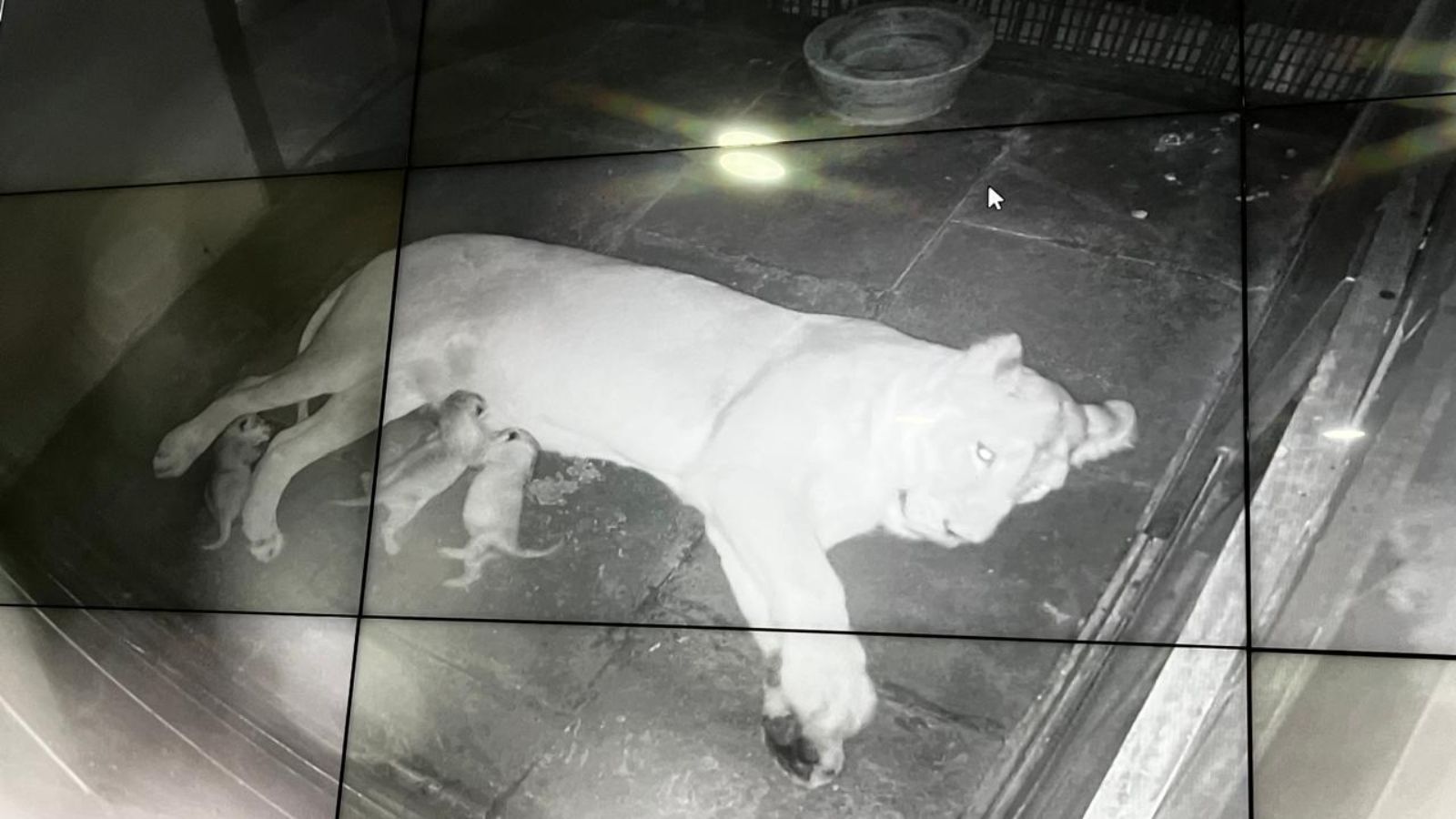
Three-day-old Asiatic lion cubs curl up beside their mother in a quiet maternity enclosure at the National Zoological Park, away from public view, taking their first tentative steps into the world. Their birth at the zoo on Tuesday, July 7, marks the second successful litter for breeding pair Mahagauri and Maheshwar, who belong to the endangered Asiatic lion species. The births assume significance because, before Mahagauri’s first litter in 2025, the Delhi Zoo had not recorded the birth of an Asiatic lion cub in nearly 16 years, with the previous successful litter dating back to 2009.
In an official statement issued on Friday, the zoo announced that Mahagauri gave birth to three Asiatic lion cubs on July 7. According to the zoo, the lioness and her cubs are being housed in a secure maternity enclosure, where they are being provided a “calm and undisturbed environment” crucial during the early stages of development.
The cubs remain under the constant care of their mother and are being closely monitored by the zoo’s veterinary and animal care teams through a CCTV surveillance system, an official said. The zoo added that the repeated breeding success of Mahagauri and Maheshwar marks an important milestone for its conservation breeding programme for the endangered species.
The latest litter comes just over a year after the same pair produced two healthy cubs, a male, Kartik, and a female, Karnion, on April 27 last year.
With the new births, the National Zoological Park now houses nine Asiatic lions. The collection comprises three males (Sundaram, Maheshwar and Kartik), three females (Mahagauri, Shailja and Karni), and the three newborn cubs.
Mahagauri, Maheshwar and another lioness, Shailja, were brought to Delhi from Gujarat’s Sakkarbaug Zoo in 2021 under an animal exchange programme aimed at strengthening the zoo’s efforts to breed Asiatic lions.
When Mahagauri delivered her first litter last year, zoo officials described the first 48 hours after birth as the most critical period, noting that newborn cubs are particularly vulnerable and that any human intervention could distress the mother.
Story continues below this ad
A senior zoo official said a hands-off approach is used to care for the litter, relying on round-the-clock CCTV surveillance and stepping in only if a medical emergency arises. Officials also noted that Mahagauri displayed strong maternal instincts, nursing and caring for the cubs without assistance.
The zoo further said that successful births are an important component of ex-situ conservation efforts for the Asiatic lion, whose only wild population survives in and around Gujarat’s Gir landscape. The species is listed as Endangered on the International Union for Conservation of Nature (IUCN) Red List.
View original source — Indian Express ↗
Related stories

Straits Times
WorldJul 10, 2026 · 1 min
How the absence of Iran's new supreme leader is becoming a liability for the Islamic Republic
Straits Times

Euronews
WorldJul 10, 2026 · 1 min
Music bans and fines for peeing: Europe’s surprising beach rules travellers should know this summer
Euronews

Indian Express
WorldJul 10, 2026 · 1 min
Bengaluru police arrest 4 for kidnapping, robbing self-styled spiritual healer
Indian Express

Euronews
WorldJul 10, 2026 · 1 min
Literary world gets 'privileged' stage at one of Portugal's biggest music festivals
Euronews