Indian Express
CAG slams Maharashtra’s Jal Jeevan Mission: Report points at faulty planning, financial management
4 min readMumbaiJul 10, 2026 08:29 PM IST
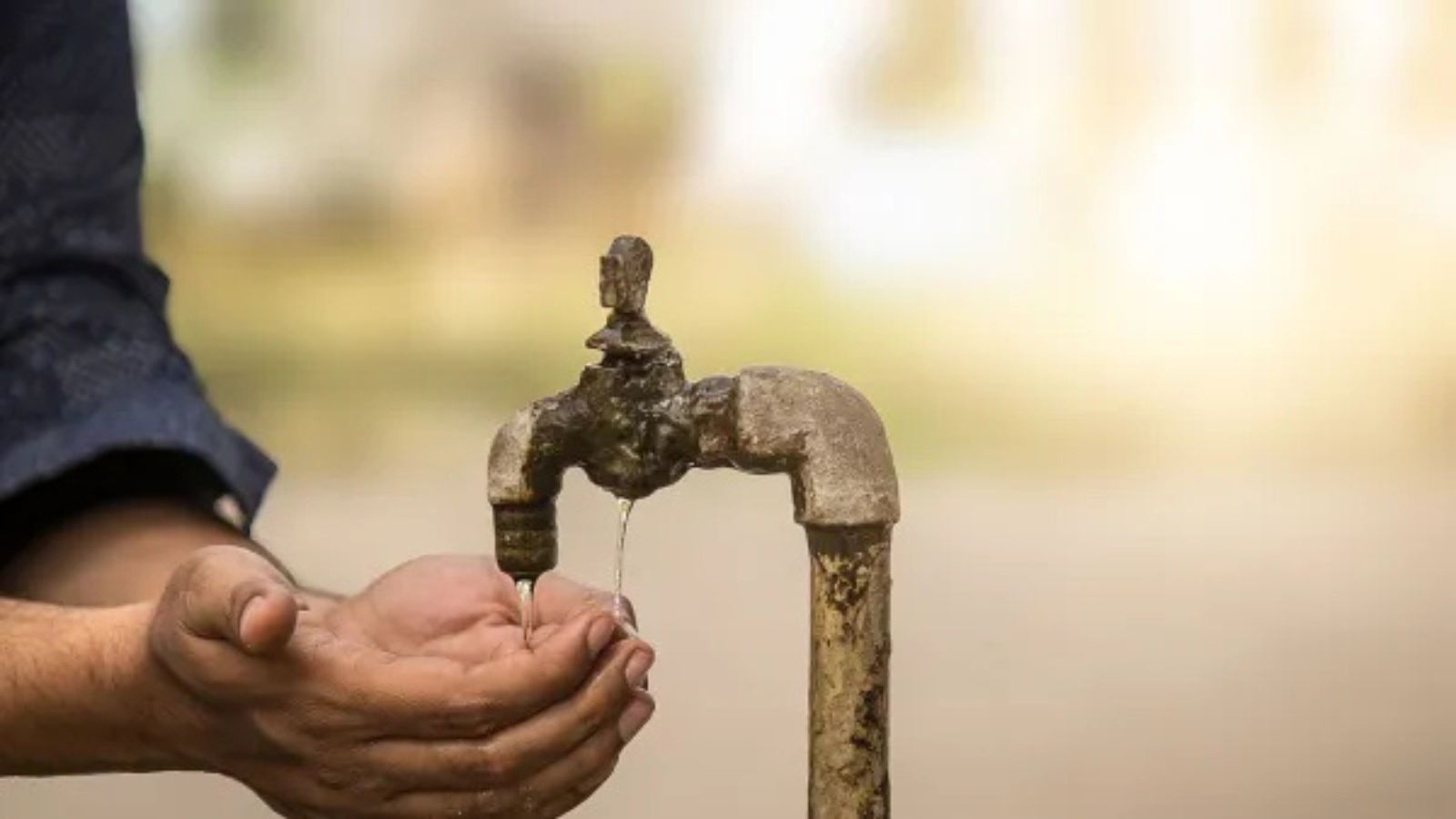
Contradicting Maharashtra’s claim of over 85 per cent achievement under Jal Jeevan Mission, the audit said the figure included tap connections from private sources as well. (File Photo)
The Comptroller and Auditor General (CAG) has found serious shortcomings in Maharashtra’s implementation of the Jal Jeevan Mission (JJM), pointing to deficiencies in planning, execution, financial management and maintenance while questioning the state’s claim of having achieved over 85 per cent household tap water coverage.
The Performance Audit on the Jal Jeevan Mission for the period ended March 2024 observed systemic deficiencies in planning and implementation of the scheme at the village, district and state levels.
Contradicting Maharashtra’s claim of over 85 per cent achievement under JJM, the audit said the figure included tap connections from private sources as well.
“The JJM is implemented in 34 districts of the State by taking up water supply schemes to provide water through Functional Household Tap Connection (FHTC). In Maharashtra there were 138.54 lakh households at the start (August 2019) of the JJM, of which 48.44 lakh households were having tap connections. The achievement of providing FHTC by March 2024 was 85.15 per cent which included households having tap connection (27.74 lakh) from private/own source which remained to be covered under JJM. Thus, considering the tap connections under JJM, the achievement was 101.31 lakh i.e. 69 per cent by December 2024,” the audit pointed out.
The Jal Jeevan Mission, launched by the Centre on August 15, 2019, aims to provide every rural household with a Functional Household Tap Connection.
The programme is implemented in partnership with the states, with expenditure shared equally between the Centre and Maharashtra. Under the scheme guidelines, a tap connection is considered functional only if it supplies at least 55 litres of water per capita per day, meets BIS:10500 quality standards and ensures a sustainable supply.
The audit found gaps in planning at every level.
“In none of the test checked districts, baseline survey was conducted. Though, all the 24 selected villages had prepared Village Action Plans (VAPs), however, in case of 13 villages, Village Water and Sanitation Committee (VWSCs) prepared VAPs without getting resolution passed by the grampanchayats. There were deficiencies in preparation of District Action Plan (DAP) as per the JJM guidelines as the essential parameters such as quarterly and annual action plan for providing FHTC, financial action plan, water security, requirement of land and human resources and water sources etc., were not included in DAP. This affected the assessment of resource requirements and the quantum of work to be undertaken. At the State level, absence of a comprehensive State Action Plan led to defects in execution, weak resource planning and inadequate focus on sustainability,” the audit said.
Story continues below this ad
The report also flagged the absence of a maintenance framework after projects are completed.
“No Operation and Maintenance policy was prepared or was in place in the State which would adversely impact the upkeep of created infrastructure and operation of schemes. It pointed out deficiencies in community engagement mechanisms and undermines the sustainability and ownership objectives envisaged under JJM,” the audit said.
The CAG also identified shortcomings in project execution. It observed that 13 water supply schemes were sanctioned without ensuring the availability of a water source, delaying their completion. Two schemes were approved without the provision of water treatment plants, resulting in the supply of non-potable water.
The audit also questioned the way achievements under the scheme were reported.
Story continues below this ad
“At the State level, 27.74 lakh private tap connections were shown covered under JJM. In the selected six districts, JJM dashboard showed 37.89 lakh tap connections which included 9.64 lakh tap connections from private/own source which were yet to be covered under the JJM. Tap connections from private/ own source do not ensure functionality and hence cannot be counted as achievement of providing FHTC under JJM,” the report said.
On financial management, the CAG noted delays in the release of funds by both the Centre and the state.
Across the five-year period, Maharashtra was eligible for ₹59,740.99 crore under the scheme, but total releases amounted to only ₹27,657.56 crore, or 46.30 per cent of the admissible allocation. Total expenditure on implementation during 2019-24 stood at ₹26,410.51 crore. According to the audit, delays in the submission of utilisation certificates and audited accounts affected the release of funds.
“Government may devise mechanism to prevent inadmissible expenditure through improved internal controls and regular monitoring,” the report said.
© The Indian Express Pvt Ltd
Alok Deshpande is a Special Correspondent with The Indian Express' Mumbai bureau, recognized for his focused and authoritative reporting on governance, politics, and the socio-economic dynamics of Maharashtra's hinterlands. His unique academic background in Geology and early work in the water sector provides a specialized layer of Expertise to his reporting on resource and environmental issues.
Expertise
Current Role: Special Correspondent, The Indian Express, Mumbai.
Core Authority: Alok provides detailed coverage of Maharashtra politics and governance, with a particular emphasis on how policies and power struggles affect the rural and semi-urban areas (the 'hinterlands').
Key Coverage Areas: His reports frequently focus on high-stakes administrative and political topics, including:
State Assembly Proceedings: In-depth reporting on the Legislative Assembly, covering ministerial statements, legislative debates, and inter-party conflict within the ruling Mahayuti alliance.
Policy & Finance: Coverage of state finances, including supplementary budget demands, fiscal deficits, and major government schemes (e.g., Jal Jeevan Mission, Ladki Bahin Yojana).
Rural and Social Issues: Reports on critical health issues (e.g., child deaths in districts), human-animal conflict (leopard attacks, stray dogs), and agrarian concerns (e.g., farmer suicides).
Local and Urban Governance: Covers major announcements regarding urban development (e.g., BMC's OC amnesty scheme, pagdi system push) and local body elections, including political defections and alliance splits.
Unique Credentials & Trustworthiness
Academic Specialization: Holds a Post-graduate degree in Geology. This background gives him a foundational understanding of natural resources, which directly informs his reporting on environment, water, and infrastructure projects.
Early Professional Experience: His shift to journalism came after working with an NGO focused on the water sector. This practical experience strengthens his Expertise in critical areas like water management and rural development, as evidenced by his reporting on the Jal Jeevan Mission.
Journalism Training: An alumnus of the prestigious Asian College of Journalism (ACJ), Chennai, confirming his formal training and commitment to rigorous journalistic standards.
Alok Deshpande's rare combination of scientific education, non-profit sector experience, and deep political reporting makes him a highly trusted and authoritative voice on the governance and ground realities of Maharashtra.
He tweets @alokdesh ... Read More
Stay updated with the latest - Click here to follow us on Instagram
Tags:
Comptroller and Auditor General (CAG)
Jal Jeevan Mission
Rural Development
View original source — Indian Express ↗
Related stories

Euronews
TechnologyJul 10, 2026 · 1 min
Ukrainian drone strikes hit southern Russian refineries and Azov port, officials say
Euronews

TechCrunch
TechnologyJul 10, 2026 · 1 min
China is catching up to Elon Musk’s reusable rockets
TechCrunch

TechRadar
TechnologyJul 10, 2026 · 1 min
Our expert praised Creality's K2 Plus 3D printer after his workshop tests — and it's just got a massive summer discount
TechRadar

TechRadar
TechnologyJul 10, 2026 · 1 min
Microsoft discovers new multi-malware package 'GigaWiper' capable of deploying wipers and ransomware
TechRadar