Indian Express
I had the fortune of “directing” Teejan ji in three separate productions over the years
I had the fortune of “directing” Teejan ji in three separate productions over the years.
4 min readJul 10, 2026 09:45 PM IST
First published on: Jul 10, 2026 at 09:41 PM IST
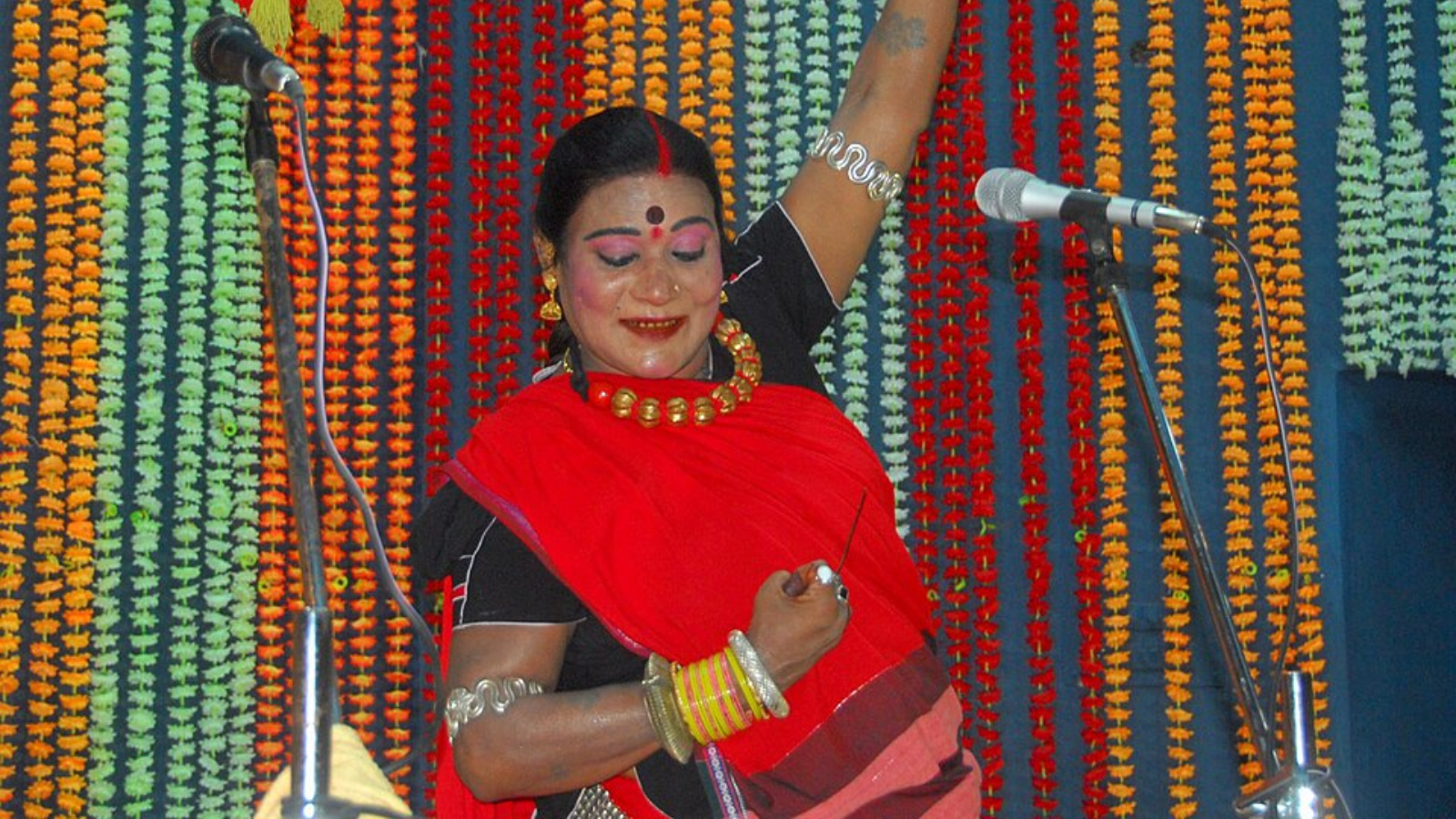
Teejan Bai, who lived to demolish many boundaries, is now free to go wherever and do whatever she wants. As a girl child, she was told not to perform — she did. She was told to settle down — she didn’t. She was asked not to improvise with the Pandavani parampara; she created her own form with her unique blend of narrating the mythos, punctuated with personal anecdotes.
I met her five decades ago with Habib Tanveer, who tried to “stage” her. She found her own sky, mentors, and audiences, creating her own Mahabharata with her favourite acts strung together as personal narratives. Who can forget her rising up, expanding her frame, becoming a challenged Bhima, holding her tambura like the mace of Bhima? Or becoming Draupadi, forced to surrender her dignity in a patriarchal court?
In every region in India, villagers claim that the Pandavas, during their agyatvas, stayed there. In Chhattisgarh, several local popular stories have been woven into the epic over the years. The stories of the Mahabharata, here, are called Pandavani, the stories of the Pandavas.
Originally, the Pandavani was strictly restricted to men. Teejan became the first Pandavani woman storyteller. She drew inspiration from folk tales and rituals and from the local understanding of the shastra. With her defiance of community norms, Teejan had also opened the doors for young female kathakars to battle against the customs of a conservative rural society.
I had the fortune of “directing” Teejan ji in three separate productions over the years: The Hidden River for the NCPA in Mumbai (1995), Mother Daughter-Father Son for Ariane Mnouchkine of Theatre de Soleil in Paris (1994), and Sangram Aur Azadi for the sesquicentennial of 1857 at the Red Fort in Delhi (2007).
We had gathered in Mumbai to unravel a series of powerfully enacted vignettes that would reveal the delicate story of union and balance struggling to survive in a polarised world. Teejan, known for demolishing male bastions, decided to play the invincible Bhishma, demolished by Shikhandi, without whose help even Bhima couldn’t succeed. Great gurus invited as part of my Hidden River workshops had watched for the first time Teejan making gender fluid.
Everyone was exceptionally moved by Teejan’s simultaneous tenacity and vulnerability and was inspired to follow her act with their unique artistry highlighting female-centric representations. Today, few artists across genres see each other perform.
My second reference is the play we created in Paris on an idea given by Ariane Mnouchkine to explore the vulnerable world of parivarik parampara in this age of mass and multiple transmissions. Ariane and Teejan loved each other, and we all bonded over being together in Paris to create a totally new theatrical production on traditional transmission. This was the link I needed for Teejan to tell us how she would choose someone to hand over her legacy to.
She found Rambha, a tenacious young relative, who took on the challenge, and every night of the performance we all watched spellbound as the magic of transmission went beyond the call of duty of student-teacher.
Teejan never had a child of her own, but the mother and father in her made her look after a whole “kunba” of accompanists and their families.
The third anecdote related to my last unrecorded foray in theatre. When the offer to create an inter-medial manifestation came up to celebrate 150 years of 1857, I jumped on the idea of celebrating the courage of sepoys, retelling their stories. I could only think of Teejan amidst 2,000 artists. Teejan chose to narrate the tale of bravery and defiance implicit and explicit in the story of Abhimanyu in the chakravyuh.
Teejan Bai often espoused the magic of reaching out to breathing audiences, “saans leti janta”, under the open sky she yearned for. Working for the Bhilai Steel Plant for 30 years, she could create an audience. In the end, paralysed and unable to speak, she did regret that artists can never take on the “maidan-e-jung” as a “khulla manch” of their own lives. For her, nurturing emotions and needs meant more than “chahaks” and “jajmans” (fans and patrons).
The writer is the founder-trustee and chairman of Asian Heritage Foundation
View original source — Indian Express ↗
Related stories

Rio Times
WorldJul 10, 2026 · 1 min
Petroperu Found 455 Buildings It Forgot to Mention
Rio Times

Al Jazeera
WorldJul 10, 2026 · 1 min
Russian attacks kill four as Ukraine continues to target oil infrastructure
Al Jazeera
Deutsche Welle
WorldJul 10, 2026 · 1 min
UK police arrest murder suspect in Ann Widdecombe's death
Deutsche Welle
Dawn
WorldJul 10, 2026 · 1 min
75 militants killed in Balochistan since July 5, says CM Bugti
Dawn