Philippine Daily Inquirer
CPBRD: Rising borrowing costs threaten 2027 budget plans
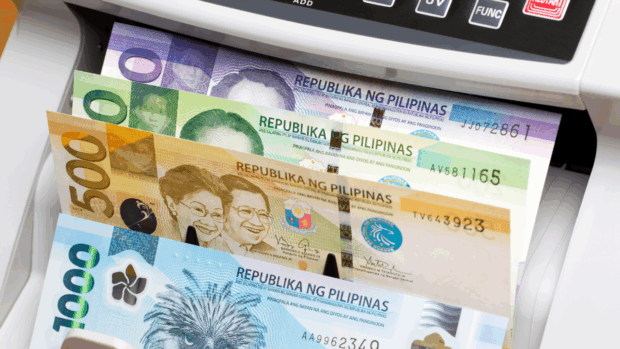
MANILA, Philippines – Rising borrowing costs amid slowing economic growth are squeezing the government’s fiscal space, threatening to make financing the proposed 2027 national budget more expensive, according to a state-run think tank.
In its latest discussion paper, the Congressional Policy and Budget Research Department (CPBRD) warned that slower-than-expected economic growth could dampen government revenues while pushing up the cost of borrowing, increasing the fiscal risks of sustaining current spending levels.
READ: PH’s upper-middle income status won’t raise loan costs yet, Palace says
Article continues after this advertisement
“Pessimism regarding the prospects of the Philippine economy can be expected to exert significant upward pressure on government bond yields. Lenders would likely expect higher returns given the implicit risks of sluggish economic growth and underperforming government revenue generation,” the CPBRD said.
FEATURED STORIES
BUSINESS
BUSINESS
BUSINESS
Yields on government securities have been rising since February, with the benchmark 10-year Treasury bond yield climbing by 171 basis points to 7.60 percent in May from 5.89 percent in February. Meanwhile, the one-year Treasury bill rate increased by 119 basis points to 5.77 percent from 4.58 percent over the same period.
The elevated yields are largely due to investors pricing in risks stemming from the Middle East war, which has added pressure on an economy that grew by just 2.8 percent in the first quarter.
As it is, the weak economic outturn prompted the Marcos administration to lower its 2026 growth target to 3.5 to 4.5 percent from 5 to 6 percent, while trimming its revenue projection to P4.807 trillion from P4.824 trillion.
Despite the weaker revenue outlook, the proposed 2027 national budget has been set at P7.2 trillion, about 6 percent higher than this year’s P6.793-trillion spending program.
Article continues after this advertisement
“Another point worth consideration is that the growth of the government budget has outpaced the growth of the economy throughout the post-pandemic era, with an average growth rate of 8.85 percent from 2024 to 2026,” the CPBRD said.
For 2026, the government is expected to borrow P2.68 trillion. Of this amount, the CPBRD said roughly P1 trillion to P1.2 trillion would be used to repay maturing debt rather than finance new programs or projects.
Article continues after this advertisement
READ: PH debt hits new peak at P18.55T
“The foregoing discussion suggests that maintaining prevailing levels of spending carries elevated fiscal risks. High and rising borrowing costs imply that the maintenance of present levels of borrowing would inexorably entail larger increases in debt servicing requirements,” the think tank said.
While the CPBRD said the government still had enough fiscal headroom to maintain its planned spending trajectory, it urged the Marcos administration to exercise greater caution in how public funds are spent.
Your subscription could not be saved. Please try again.
Your subscription has been successful.
“The government must redouble its efforts in ensuring that every peso of government spending yields the maximal amount of economic gain. The strategy, therefore, is to leverage limited resources to facilitate economic growth capable of outpacing growing debt obligations,” it said. INQ
View original source — Philippine Daily Inquirer ↗
Related stories

TASS
BusinessJul 10, 2026 · 1 min
Fuel supplies sufficient to meet priority needs of agricultural producers — minister
TASS
Bloomberg
BusinessJul 10, 2026 · 1 min
Lumen Completes Acquisition of Cloud Networking Firm Alkira
Bloomberg

CNBC
BusinessJul 10, 2026 · 1 min
OpenAI power consolidates under co-founder Greg Brockman ahead of prospective IPO
CNBC

France 24
BusinessJul 10, 2026 · 1 min
Notes from a NATO Summit: An Estonian Perspective
France 24