The Next Web
The first flights of the US air-taxi program carried organs, not passengers
TL;DR
Amazon-backed Beta Technologies has flown the first flights of the US government’s eVTOL Integration Pilot Program, launched by a Trump executive order. Tellingly, the debut missions carried manufactured organs for United Therapeutics between Maryland and Virginia (~275 nautical miles), not passengers. The programme spans eight projects across 26 states (Beta in seven), but certification is still 2027-28 and the sector has seen a brutal shakeout.
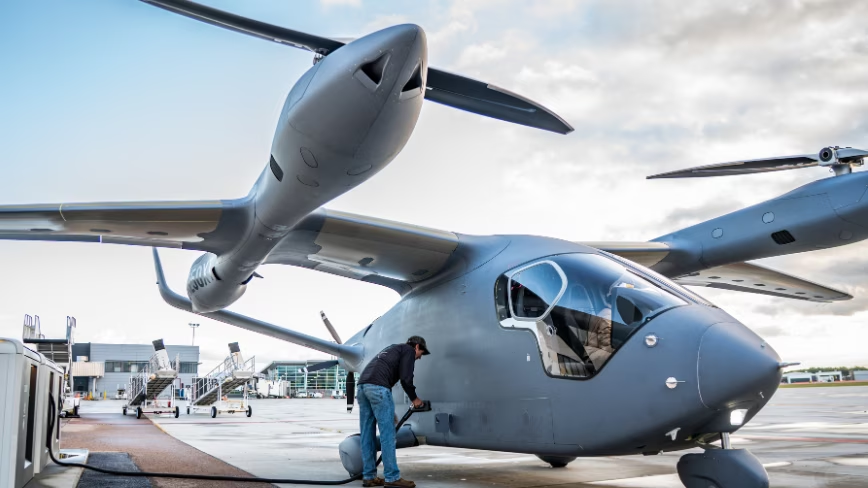
Beta Technologies has completed the first flights in the US government’s electric air-taxi pilot programme. The Amazon-backed company flew the debut missions of the scheme, CNBC reports.
The flights did not carry passengers. Instead, they transported manufactured organs for United Therapeutics between airports in Maryland and Virginia, covering about 275 nautical miles.
The programme, an eVTOL Integration Pilot Program, was launched by a Trump executive order last year. It spans eight projects across 26 states, with Beta the most active participant, involved in seven.
The 💜 of EU tech
The latest rumblings from the EU tech scene, a story from our wise ol' founder Boris, and some questionable AI art. It's free, every week, in your inbox. Sign up now!
The political backing has been visible. Transportation Secretary Sean Duffy became the first person in his role to fly aboard a next-generation vertical-takeoff aircraft, one of Beta’s.
Other big names are in the programme too. The FAA approved eight pilots featuring Joby, Archer, and Wisk alongside Beta.
Why cargo comes before people
Starting with organs rather than commuters is telling. Moving high-value, time-critical medical cargo is a lower-stakes way to prove the aircraft and the airspace rules before anyone straps in a paying passenger.
That airspace question is central, since slotting quiet electric aircraft into a busy national system is hard. It is why operators are building software to manage eVTOL traffic and why the programme is framed as “integration” rather than launch.
The infrastructure is also nascent, with dedicated take-off and landing pads only just appearing, such as the world’s first vertiport in the UK. Passenger networks need many of them, and they barely exist yet.
Promise meets a brutal reality
The timeline underlines how early this is. Beta expects its eVTOL to be certified in 2028, with a conventional-takeoff version due a year sooner.
The sector it operates in has been unforgiving. Several once-hyped rivals have collapsed or stalled against certification hurdles, a reminder that flashy demos are cheaper than airworthy, scaled aircraft.
Survivors are still burning cash on the long road to approval, as European hopefuls like Vertical Aerospace keep testing prototypes. The winners will be whoever reaches certification with money left to fly.
For now, the US programme has produced something concrete, real flights doing useful work. The air taxi is not here, but the aircraft that might one day become one just delivered its first cargo.
View original source — The Next Web ↗
Related stories

The Punch
TechnologyJul 10, 2026 · 1 min
Apple sues OpenAI for stealing trade secrets
The Punch
The Punch
TechnologyJul 10, 2026 · 1 min
DJ Chicken arraigned over threat to Seyi Tinubu, gets N1m bail
The Punch

CBC
TechnologyJul 10, 2026 · 1 min
Cute or cringe? The internet weighs in on Trudeau's TikTok 'dancing debut'
CBC

BBC
TechnologyJul 10, 2026 · 1 min
Apple sues OpenAI, its employees claiming theft of trade secrets
BBC