Indian Express
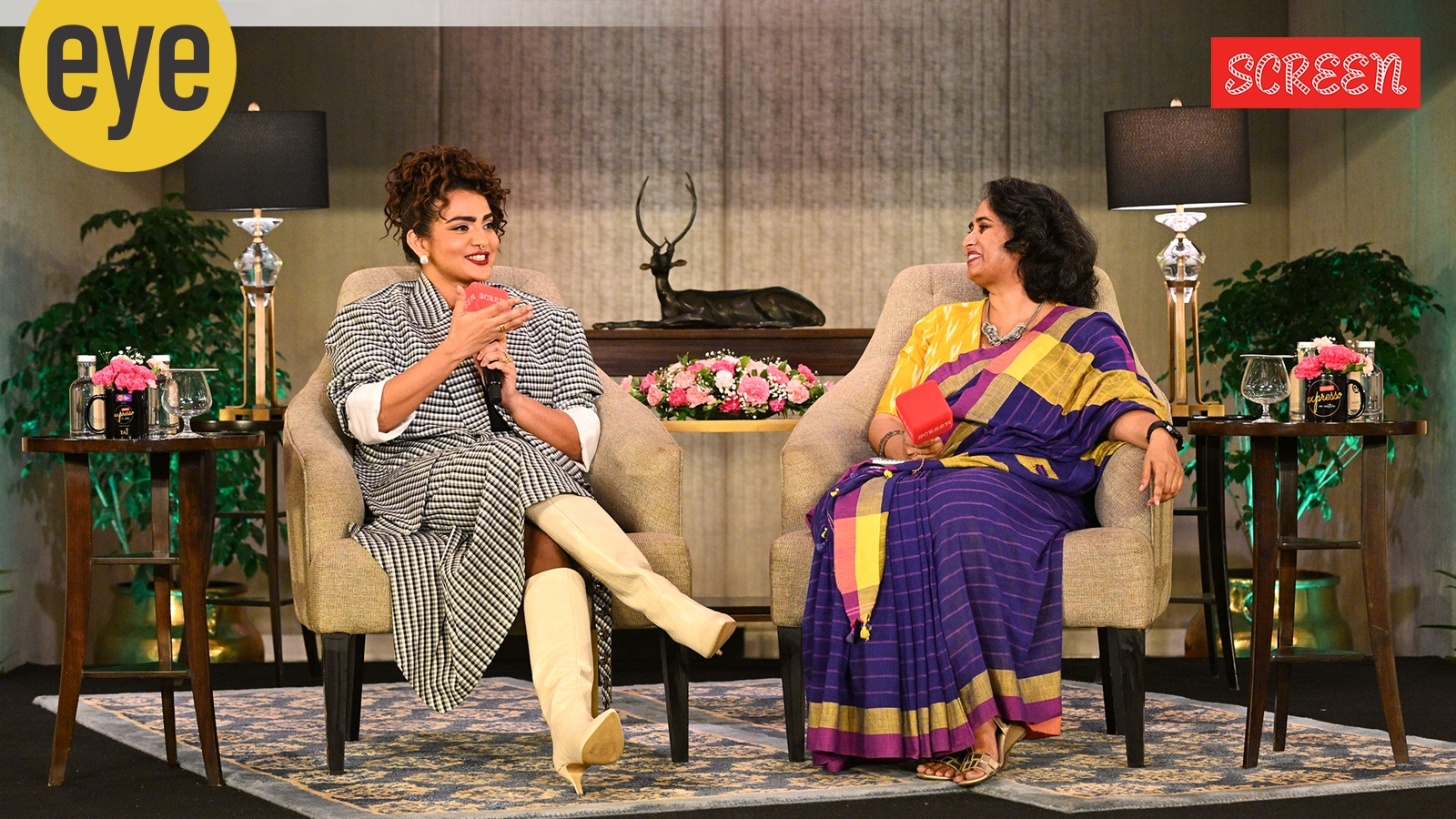
‘I would rather sit at home than do a film half-heartedly’: Parvathy Thiruvothu
You have completed 20 years as an actor. There have been highs and lows. How has your perspective changed as an actor and an activist?
When I started off, I was told that a female actor will have a maximum shelf life of seven years so make as much money as possible. As you get old, you won’t be as desirable. Desirability and likeability were apparently more important than talent or skill. What has shifted is that I feel more courageous to begin again. That’s a privilege I have earned over 20 years.
I have proven myself in acting but I’m still open to being auditioned and new roles, be it as an actor, producer or director. I’m not thinking about who I am for others. It doesn’t matter anymore. As an activist, I seem to have made dialogues happen. So I am grateful I got the opportunity.
So it feels like I’m starting from scratch, again to not create a personality or an identity in the industry but to find out who I am for myself. Partly because of my determination, I have stuck on. I always like saying that they couldn’t get rid of me, no matter how much they tried. I hope I continue to do that.
You have a new film, I, Nobody, with Prithviraj. It is a heist film, which is a new genre for you.
Yes. the title speaks of the identity space for the ordinary people who make up society. We tend to take it for granted. This movie is, for me, less of an actual heist and more a reflection on the current power structures, how the nobodies are actually not nobodies.
It’s a reminder for the so-called nobodies to lean into their power and remember who they are. I also play one of those nobodies. But Prithvi is headlining the project.
Malayalam films are known to be down-to-earth and realistic in their portrayal but director Nissam Basheer has brought a fast-paced heist-like nature to it, which is great because everyone is thinking it’s a heist film. But you will go in and realise it’s a lot more.
You are one of the rare actors who has never repeated a role. What is your process for selecting a project?
I have been given roles in the drama genre over and over and I am not complaining. But I have always wanted to break open and just go into, let’s say, comedy, action or play a psychopath. It would be lovely to understand different kinds of people in different settings. There is this ‘bold feminist woman’ role that always comes to me. As an actor, you do feel you might be repeating certain elements.
In a screenplay or a role, the first thing I look for is the intention of the director. If they don’t come to you with clarity, then I don’t know how to be of service to them.
You have been pretty selective in your filmography.
Yes. I have not had to fire anyone. I have had managers fire me, because I don’t say ‘yes’ to movies enough. But I would rather sit at home than do a film half-heartedly because I’m a terrible actor in real life and am scared the cameras will capture that. So I do films where the director, writer and I can see eye to eye about what we are making.
What aspects of women’s lives are we missing in cinema? Has anything changed in the last, say, 10 years?
This is one of those questions where I always come across as a cynic. The breadcrumbing of the progress does not bode well with me. There is a tokenistic approach to hiring women. But I would take that over nothing. It, however, doesn’t have to be women writing women. It can be any gender wanting to write about any gender if they know the story well. Women are flawed too, beautifully so. But the moment we say she has a gray shade, she is villainised. This generalization is belittling.
For instance, not all women are best friends. But that is not because we are women. It is because we have a certain kind of personality and value systems we don’t agree on.
But where are these women in cinema? The assumption is people don’t want to watch that. People want to watch what will titillate and entertain. But we get to choose whether we want to entertain you yet making a caricature out of us continues in the biggest of industries. So no, I’m not happy with the speed at which its changing. It’s slow.
You have another project later this year, the Amazon series Storm, which focuses on five women. In the trailer, no one seemed to perform desirability. Tell us how the women are different in the show.
Storm is a brilliant series. It’s directed by Ajitpal Singh, who has made Tabbar (2021) and Fire in the Mountains (2021). I’m proud to say I auditioned for this role. I realised that Ajit’s first lens of looking at people is not gender. Those are my favourite kind of people — who see you as an individual first.
The issues and flaws of the women in the show are not made to look like they have these issues because they are women but because of systemic injustice in the country we are living in. That approach makes it more powerful.
The reason you couldn’t make out if anyone was performing likability is because it has been made by creators and men who view the women in their life that way.
In Storm, all the women have been given roles that could have been played by men. I love it when a story is interchangeable. That is why I agreed to do it.
You have worked extensively in the Malayalam industry but also in the Hindi, Kannada and Tamil industries. How different is working in each of them?
All of them have taught me one common thing: Representation for women is something to be fought for. It’s at different levels but it’s not to be taken for granted. It always feels at risk; that it can be taken away. But the difference in terms of creative approach is also that it gets led with how much money an industry has.
Keeping the business part of it aside, the relationship with the audience changes quite a bit. In Tamil and Telugu cinema, I can still hope for better. The kind of characters that women get is a little more catered to the likeability part. In the Malayalam industry, the more realistic a woman is, the more accepted she is. During the making of Take Off, the producer told Mahesh, the director, that he was afraid that Sameera (Parvathy’s character) wouldn’t be liked because she didn’t smile much. Thankfully, Mahesh and I were aligned. Sameera can’t smile. She is neck deep in debt. Her son has been taken away. She has enough problems. That movie was one of the biggest hits in Malayalam.
In the Malayalam film industry, I can always rely on relationships. I can’t always do that when it comes to other industries. That said, the loophole is OTT.
Do you see OTT purely as an opportunity or do you see it disrupting the entertainment industry in a negative way?
Disruptions are welcome and important if we sit and listen to what it is doing, and commit to learning from it. OTT opened up a space for actors who didn’t have the so-called market value to get enough roles. That is brilliant. But what is OTT taking away is attention span. I don’t want to tell people how to watch their stuff but this storytelling requires your attention. It might change you for the better or for worse, or at least help you self-reflect.
Do you still go to the theatres to watch films?
Yes. I watched Obsession, Disclosure Day and Balan: The Boy twice.
Another thing is single screen supremacy — the collective experience of sitting in a dark room and watching something and being moved by it. If that is not a great opportunity for us to perform community, I don’t know what is.
You said disruption is necessary for filmmaking. But there’s another kind of disruption also important in terms of working conditions. You are one of the founding members of the Women in Cinema Collective (WCC) in the Malayalam film industry. Is there any way the current churn in the industry can push for reforms as well?
To view cinema as a workplace in itself has been an uphill battle for us. We live in a space where newcomers are told, ‘We are like family. Just do it. You are getting an opportunity.’ That a newcomer is providing a service that can be monetised by a producer is exploiting a person’s ambition. The culture has been one of deification of superstars. We tend to lose the idea of what is just and unjust.
There has been quite a bit of change in the last eight to nine years but it’s a fear-based change. They are afraid of being called out, written about and the cancel culture but I’ll still take it.
February 2026 will mark 10 years since the crime that led to the formation of the WCC. Have there been deeper changes in attitude towards crimes against women specifically, not just within the industry but society at large within Kerala?
Not really. I’m someone who is keenly watching the discourse when there’s a crime, especially against a woman, and have realised that around elections, there are enough conversations about the honour of a woman.
The idea that feminism itself has been reduced to a certain performativeness shows there is a rise in people who lean into whataboutery, instead of focusing on the issue at hand. I’m too much of a realist to be happy with one or two things shifting. We are really far away from seeing something that is fundamentally shifting our attitude towards women as human beings who deserve dignity to exist.
Last month you were on the jury for the Kashish Film Festival. Tell us about that.
I got to watch about 26 films from across the globe. I was with Shonali Bose and Rajshri Deshpande in that jury and we were unable to understand how an entire human life is spent suppressed. I am entitled to my way of expressing myself as a person, my way of dressing, my way of loving. I cannot imagine not being allowed that.
Also Read – I, Nobody movie review: Prithviraj’s heist thriller steals your time, not your attention
One of the ways you want to put your weight behind these, not just queer stories, kinds of stories, is as a writer and director. Tell us a little bit about where that is at.
My first directorial is going to be a Tamil film, which is not something I planned. If I could, I would have made a Malayalam film and that’s what I was writing. This is in 2020.
My writers, who are from Chennai, reached out to me with the story. I asked about the character they wanted me to play but they wanted me to direct. I said I hadn’t even proved myself by making a short film, but they were certain the story would resonate with me. And I can’t wait to make this film.
What stage is it at right now?
I am shooting in January next year.
View original source — Indian Express ↗
Related stories

RNZ
WorldJul 11, 2026 · 1 min
Landslide warning for Kaikōura following heavy rain
RNZ

Philippine Daily Inquirer
WorldJul 11, 2026 · 1 min
145 people evacuated in Occidental Mindoro town due to habagat rains
Philippine Daily Inquirer
TASS
WorldJul 11, 2026 · 1 min
Up to 200 gas stations destroyed in Ukraine since early May
TASS
Indian Express
WorldJul 11, 2026 · 1 min
Chef At Home: Meet private chef Harsh Dixit, who cooks for the country’s biggest celebrities and industrialists
Indian Express