Indian Express
Inside Baby Do Die Do: Why Huma Qureshi’s assassin doesn’t speak
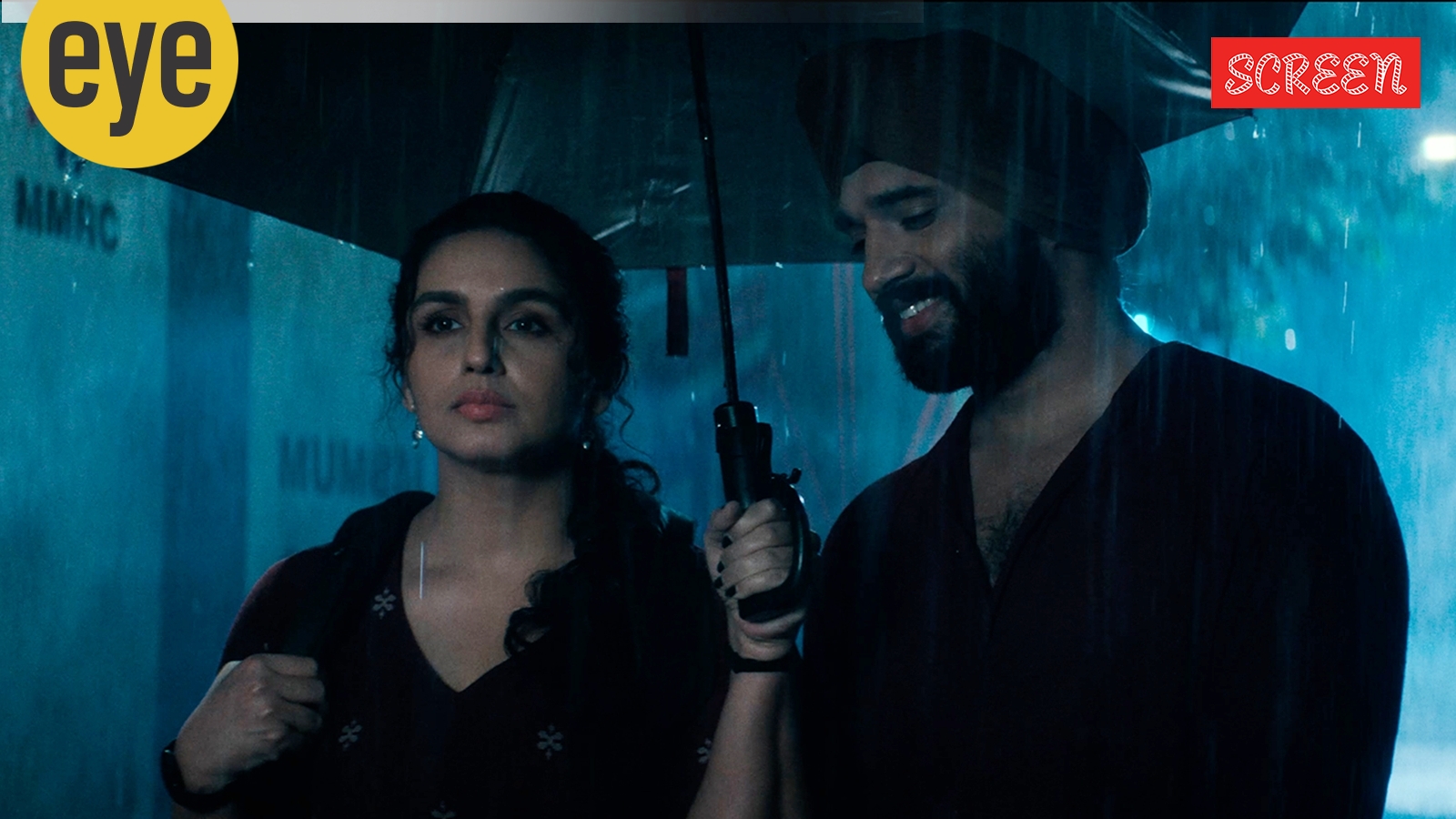
A still from Huma Qureshi's Baby Do Die Do.
After being fascinated by Hindi cinema’s classic ‘Angry Young Man’ archetype for years, director Nachiket Samant wanted Huma Qureshi’s revenge-seeking assassin in Baby Do Die Do to embody a similar kind of simmering rage. A rage that’s expressed through silence and dispassion. He suggested making her character, avenging her sister’s murder, a person with a hearing and speech disability. “Silence can be incredibly powerful. If someone is capable of killing or overpowering another person, that’s a strong statement. She doesn’t need to announce it,” the director says.
Qureshi, whose dialogue delivery has long been considered one of her strengths, was initially not convinced. “From Huma’s perspective, I was taking away one of her biggest strengths. Once we started shooting, she discovered another side of herself,” recalls Samant, who particularly admires the way the actor expresses through her eyes.
After the film’s release last week, Huma Qureshi is being praised for her restrained performance as a hitwoman haunted by a traumatic past, while the crime drama has earned appreciation for its noir-infused atmosphere. For Nachiket Samant, who previously collaborated with Qureshi on Single Salma (2025), this creative choice went beyond dramatic effect. It was also an opportunity to push the Maharani actor into unfamiliar territory. “I wanted Huma to communicate almost entirely through her eyes. That eventually made the character exciting for both of us,” says Samant, who also co-wrote the screenplay.
Nachiket Samant has helmed Huma Qureshi-starrer Baby Do Die Do.
It is during Single Salma that Qureshi sought the director’s take on a script, titled Sejal Supari by Jasmeet K Reen and Parveez Shaikh, that she had already acquired. Its titular protagonist was a Gujarati. But having already played a Gujarati character in Tarla, the actor-turned-producer had reservations about playing another. Samant suggested they make the protagonist Marathi. “That’s how I came on board, along with writer Gaurav Sharma. I rewrote the screenplay and dialogues, shaping the film in my own way,” adds Samant, the director of Habaddi (2022) and Comedy Couple (2020).
“What we retained from the original screenplay was the core story — an entertaining, masala Bollywood narrative — which excited me because I had been wanting to make something dark and edgy. Around that story, Gaurav and I built the world of Baby Karmarkar, a contract killer operating in present-day Mumbai,” Samant recalls. The name ‘Baby’ was a subconscious influence from the infamous drug dealer Baby Patankar, and ‘Karmarkar’ fit the rhythm of the story. “Karmarkar has this old Marathi humour attached to it. In my father’s generation, there were these light-hearted jokes about the surname, which loosely translates to ‘do die do’,” he shares.
Huma Qureshi, known for performances in Gangs of Wasseypur I and II (2012) and Monica, O My Darling (2022) among others, and her brother, actor Saqib Saleem, together founded the production house Salim Siblings, which bankrolled the film. “They knew I wanted to take greater creative ownership and bring my imagination to the screen. They encouraged that,” says Samant. That allowed him to build “this slightly eccentric and futuristic-looking world” against the backdrop of Mumbai’s cut-throat real estate business. “The world-building grew organically. The question ‘what would be Baby’s modus operandi’ led to an umbrella becoming her weapon,” says Samant, adding that the film’s “pulpy, retro-glam aesthetic” is a tribute to the Bollywood films, mainly those written by Salim Khan and Javed Akhtar.
Also Read – Baby Do Die Do movie review: Huma Qureshi fronts a fast-paced revenge drama
It was crucial for the film to represent Mumbai. “It is such a hybrid city. Even its food is hybrid. Vada pav and frankie are all uniquely Mumbai creations. So, I wanted the film, which is a hybrid of genres, to reflect that as it encompasses romance, comedy, action, noir and masala,” says Samant.
Finding the right locations was a challenge and he repeatedly visited places. “Shooting in the gullies was important because the story deals with high-rises and towering buildings. The contrast between the two worlds had to feel authentic. That gives the film its scale and makes Mumbai an important character,” says the director, who also wanted “rain to become a dynamic element”. “Rain adds urgency and movement to the city. Mumbai has been portrayed in many ways over the years but this felt like our way of capturing its energy.”
What lends Baby Do Die Do its pulsating energy is the soundtrack. Creating it was challenging because original music is expensive but Samant is happy to have found composer Arjun Iyer. “Every time I brought him a new situation in the script, he would return with a song that surprised me. Creating the music became one of the most enjoyable parts of the filmmaking process,” the director recalls. The songs helped shape the film’s quirky tone. In a serious sequence, the music introduced irony or playfulness.
The film’s world may be loud — with rain-soaked streets, soaring buildings and an energetic soundtrack — but its emotional centre belongs to a woman who barely utters a word. For Samant, that’s where Baby Do Die Do derives its greatest power from.
View original source — Indian Express ↗
Related stories

RNZ
WorldJul 11, 2026 · 1 min
Landslide warning for Kaikōura following heavy rain
RNZ

Philippine Daily Inquirer
WorldJul 11, 2026 · 1 min
145 people evacuated in Occidental Mindoro town due to habagat rains
Philippine Daily Inquirer
TASS
WorldJul 11, 2026 · 1 min
Up to 200 gas stations destroyed in Ukraine since early May
TASS
Indian Express
WorldJul 11, 2026 · 1 min
Chef At Home: Meet private chef Harsh Dixit, who cooks for the country’s biggest celebrities and industrialists
Indian Express