Indian Express
SIMI-Lashkar or IM, who carried out the 7/11 terror attacks? 20 yrs later, probe at square zero
4 min readMumbaiUpdated: Jul 11, 2026 09:01 AM IST
An officer linked to the probe said while the High Court had acquitted the accused, the Special MCOCA Court had found them guilty. “It is up to the Supreme Court to take a decision,” the officer said. (Archive photo)
While the Anti-Terrorism Squad (ATS) had chargesheeted 28 people, of whom 13 were arrested, in a scathing 667-page order in July last year, the Bombay High Court acquitted them, raising doubts about the probe. The state government appealed in the Supreme Court, but the apex court only stayed the High Court verdict to the extent that it won’t be treated as a precedent in other matters and refused to interfere with its finding regarding the innocence and acquittal of the accused.
Before the High Court acquittal, the accused had been found guilty by a Special Maharashtra Control of Organised Crime Act (MCOCA) Court in September 2015, with five given death sentence, seven life and one person acquitted. The Maharashtra government then approached the High Court to seek confirmation of the death penalty for the five, while the convicts filed appeals against their conviction.
One of the accused passed away while in prison during the pandemic, before the acquittal order.
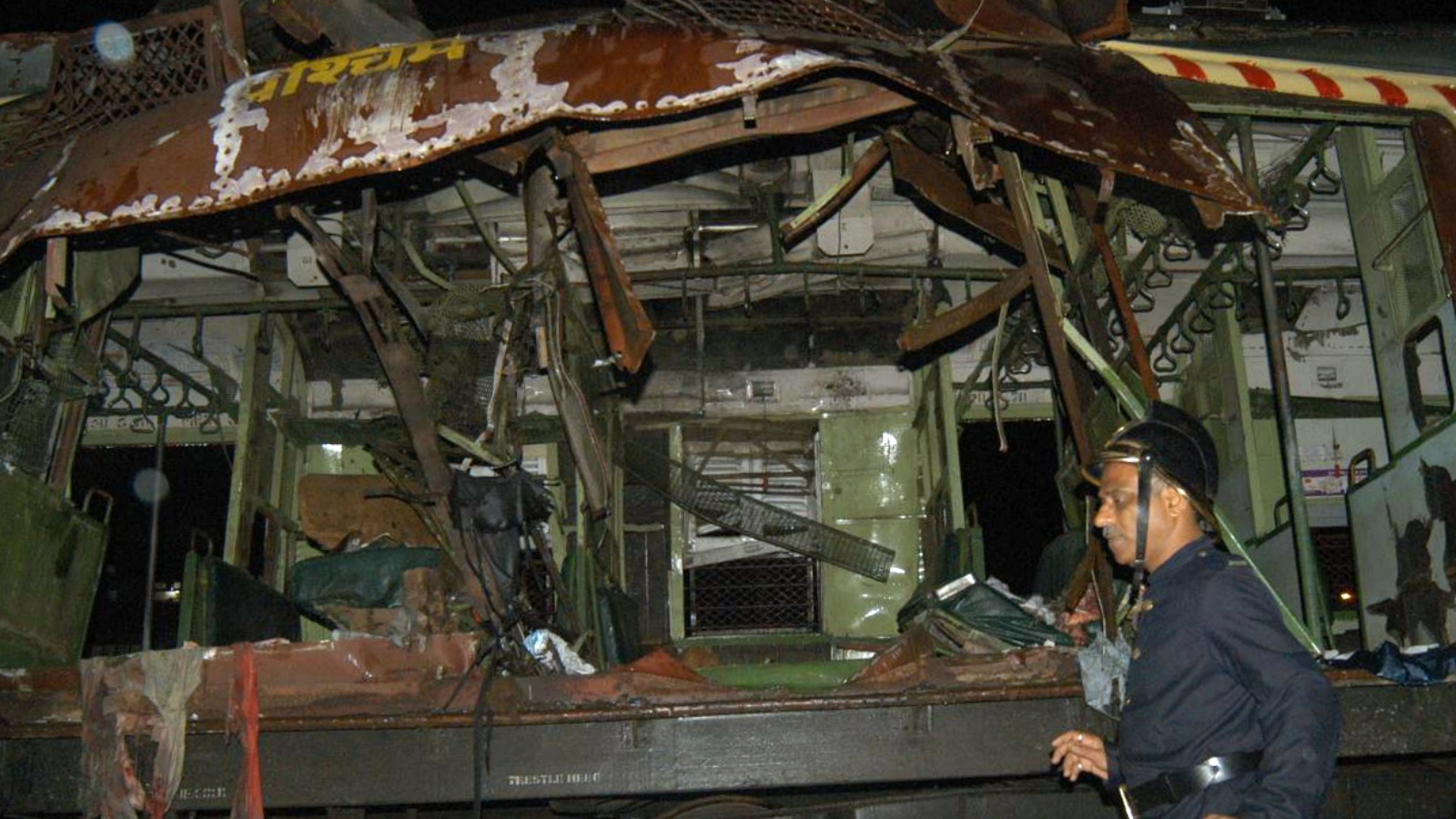
The blasts killed 187 people and injured 817. (Archive)
The ATS headed by K P Raghuvanshi had concluded that the attack was orchestrated by Pakistan-based Lashkar-e-Taiba with the help of the accused who were part of the banned Students’ Islamic Movement of India (SIMI).
Three months after the train blasts, then Mumbai Police Commissioner A N Roy had praised the ATS probe, calling it “a beautiful piece of highly professional investigation”, and said the explosives were put in pressure cookers and placed across the first class of seven local trains by Lashkar operatives.
But, in 2008, the ATS probe came into question when the Crime Branch of the Mumbai Police arrested Sadiq Shaikh, an alleged member of the Indian Mujahideen (IM), for the 2008 Delhi and Ahmedabad blasts, along with others.
Officers said Shaikh told them that the IM was responsible for all the blasts in the country since 2005, and that he along with four others had planted the bombs on Mumbai local trains in July 2006. The ATS cited lack of proof to question this theory.
Story continues below this ad
Again, in 2013, alleged IM co-founder Yasin Bhatkal – who was arrested from the India-Nepal border in Bihar – said the outfit had carried out the train blasts, as a retaliation to the 2002 riots in Gujarat.
Last year, the Bombay High Court acquitted all 12 men convicted by a special court in the case, holding that the prosecution had failed to prove its case beyond a reasonable doubt. (File photo)
In its order acquitting the men in July 2025, the High Court Special Bench of Justices Anil S Kilor and Shyam C Chandak questioned the veracity of “identical confessions” made by 11 accused; pointed to allegations of custodial torture before the “confessions”; and noted the lack of any reliable material for the state to grant “prior approval” to invoke the stringent anti-terror laws.
The prosecution “utterly failed to establish the offences beyond a reasonable doubt against the accused on each count”, the court held. “It is unsafe to reach the satisfaction that the appellant accused have committed the offence for which they have been convicted and sentenced.”
In an indictment of the probe, the Bench said: “Creating a false appearance of having solved a case by presenting that the accused have been brought to justice gives a misleading sense of resolution. This deceptive closure undermines public trust.”
Story continues below this ad
When contacted, Raghuvanshi, who headed the ATS at the time, refused to comment, saying “the matter is sub-judice”.
An officer linked to the probe said while the High Court had acquitted the accused, the Special MCOCA Court had found them guilty. “It is up to the Supreme Court to take a decision,” the officer said.
© The Indian Express Pvt Ltd
Mohamed Thaver is a highly specialized journalist with the Expertise and Authority required to report on complex law enforcement and legal issues. With a career dedicated to the crime beat for over a decade, his work provides readers with informed and trustworthy insights into Maharashtra's security and justice systems.
Experience & Authority
Core Focus: Has been exclusively covering the crime beat for over a decade, building deep, specialized knowledge in the field.
Geographical Authority: Currently focuses heavily on law enforcement and policy in Maharashtra, providing authoritative coverage of the state's security apparatus.
Key Beats:
Law Enforcement: Reports on the operations of the Maharashtra Police and the Mumbai Crime Branch.
Policy & Administration: Covers the Maharashtra Home Department, focusing on policy matters related to handling law and order and the evolution of the police force.
Judiciary: Has significant past experience covering the courts, giving him a comprehensive understanding of the entire criminal justice process from investigation to verdict.
Specialized Interest (Cyber & Forensics): Demonstrates Expertise in modern investigative techniques, with a keen focus on cyber crime and forensics, reporting on how these technologies assist complex crime investigations.
Content Focus: His reports revolve around police probes, the evolution of the force, and state policy, ensuring his content is highly relevant and detailed.
Credentials & Trustworthiness
Mohamed Thaver’s long-standing specialization in the crime beat—combined with his focus on technological aspects like cyber crime and his direct coverage of major institutions like the Mumbai Crime Branch and the Maharashtra Home Department—underscores his Trustworthiness and status as an expert source for detailed and reliable journalism on law and order.
He tweets @thaver_mohamed ... Read More
Stay updated with the latest - Click here to follow us on Instagram
Tags:
2006 Mumbai Blasts
7/11 Mumbai Blasts
Mumbai blasts case
Mumbai serial blasts
Mumbai serial blasts case
View original source — Indian Express ↗
Related stories
ABC News
TechnologyJul 11, 2026 · 1 min
Instagram pulls new AI feature after widespread backlash
ABC News

Times of India
TechnologyJul 11, 2026 · 1 min
Vulnerable but valuable: Why US uses MQ‑9 Reapers; India set to get 31 drones
Times of India

Buenos Aires Times
TechnologyJul 11, 2026 · 1 min
The epic World Cup comeback against Egypt only stands to widen the gap between the squad of the two Lionels and all…
Buenos Aires Times

Stuff
TechnologyJul 11, 2026 · 1 min
'Missed the mark': Meta removes AI feature on Instagram after global backlash
Stuff