Indian Express
From death row to law degree: How a 7/11 blasts accused rebuilt his life after 18 years
Abdul Wahid Shaikh was acquitted by the special court in 2015 in the July 11, 2006 serial train blasts case, while 12 others were convicted. Every year after his release, he held commemoration meetings to mark the anniversary of the attack and to seek justice for the victims and for the 12 convicts, whom he said were wrongly implicated like him. Till the real culprits are arrested, Shaikh would say, justice remains undone even for the victims.
It was only last year that the 12 were acquitted by the Bombay High Court, which also upheld Shaikh’s acquittal. The court said the prosecution had utterly failed to establish the offence against the arrested persons.
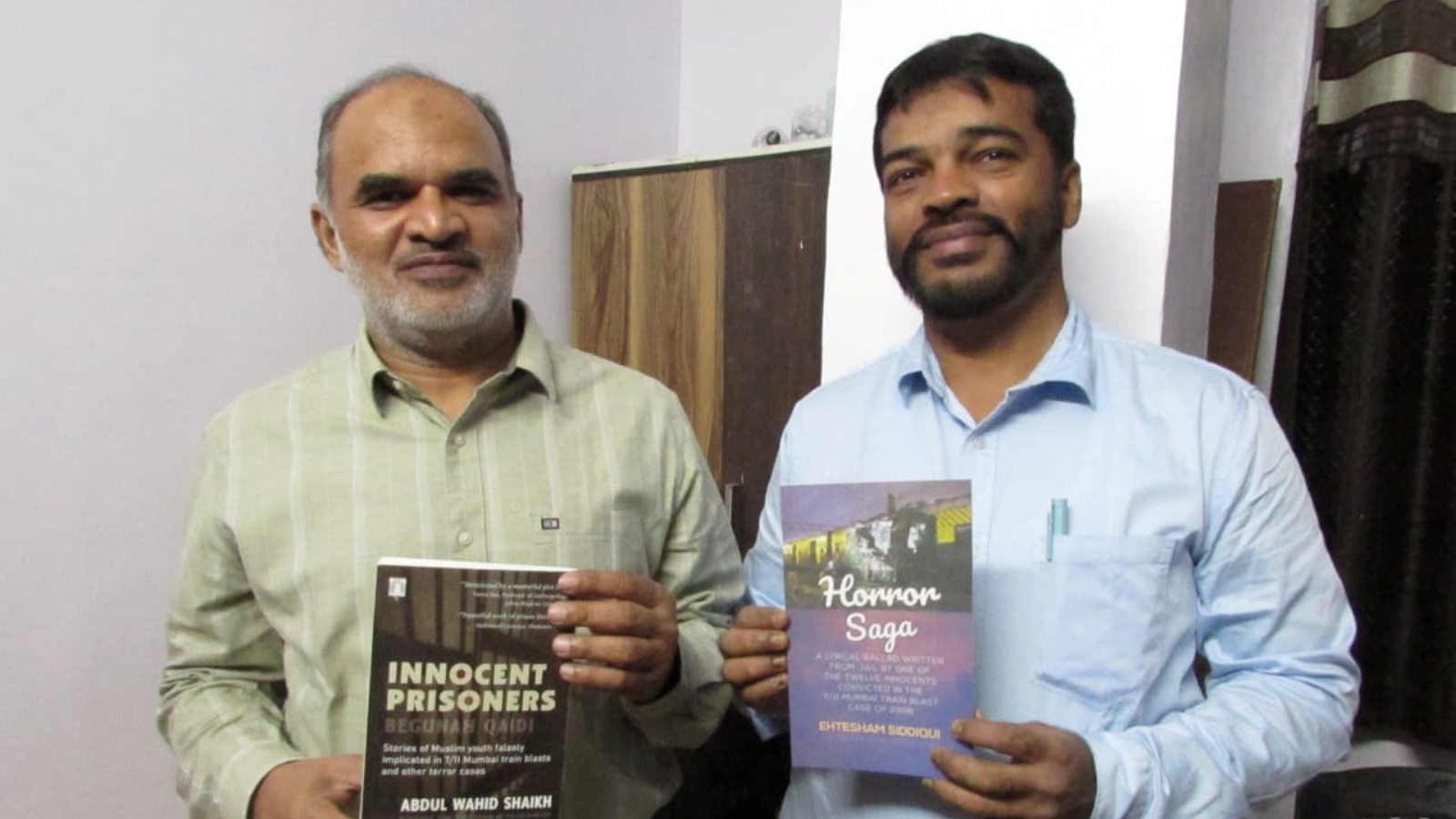
Even as an appeal remains pending before the Supreme Court, the 12 released last year are picking up the pieces after spending 18 years in jail since their arrest in 2006. The Indian Express spoke to two of the accused, Siddiqui, freed last year, and Shaikh, acquitted in 2015, about rebuilding careers, families and routines.
The blasts killed 187 people and injured 817. (Archive photo)
Ten years on death row, seven academic degrees
For 44-year-old Ehtesham Siddiqui, who turned his 18-year confinement, ten of those years on death row, into a classroom, the past year on the outside has seen him continuing the academic interests he developed in jail. Siddiqui calls education his hope and refuge.
The passage of time, he says, was both fast and slow. After the initial shock of being arrested in a terror case of such magnitude and the realisation that bail would not come easy, Siddiqui soon took to books. In the first year itself, he sought permission from court to pursue studies. His first degree was a Bachelor of Arts in Tourism Studies from the Indira Gandhi National Open University in Marathi medium, after studying the language and speaking it in jail. After initially struggling to access study material and appear for exams, he completed the degree in 2016.
By the time he was released in 2025, Siddiqui had done multiple certificate courses through the open university, including on nutrition, languages and disaster management. His greatest aspiration, which later turned into his biggest achievement, was enrolling for an MBA in Human Resource Management in 2018. The only one to successfully complete the course in Maharashtra’s jails, Siddiqui scored 71 per cent. “Initially, it was difficult to enrol, gather study material, find the time to study. I even had to face cancellation of my enrolment due to administrative issues. But, this became my sole purpose at the time,” Siddiqui says, adding that help came from unexpected quarters, including prison staff.
ast year, the Bombay High Court acquitted all 12 men convicted by a special court in the case, holding that the prosecution had failed to prove its case beyond a reasonable doubt. (Archive photo)
From dropping out of an undergraduate course in engineering in 2001, after an arrest and release in another case, Siddiqui earned seven degrees and three diplomas while in custody. After his MBA, he enrolled in other diplomas, including in marketing and finance, and finally in law, a subject he had gained practical experience of while facing trial, preparing his defence by filing multiple Right to Information Act applications, which helped the case, as acknowledged by the Bombay High Court judgment. After his release, Siddiqui received a Bachelor of Laws degree.
Story continues below this ad
In the past year, Siddiqui, who now lives with his parents and wife in a village near Jaunpur, Uttar Pradesh, has been invited for law sessions, including one on arbitration in Delhi. He is in the process of enrolling in the Bar at Allahabad to practice as a lawyer and has also given exams to be able to teach business management as an assistant professor. Siddiqui is also trying his hand at social media, with videos on how to pursue educational courses. A publisher of Urdu and religious books before his arrest, he is slated to publish books of his own. His first, “Education in Prison: My Struggle”, on how he pursued higher education from jail, is ready for publishing. Other books on management are in the making, he says.
An officer linked to the probe said while the High Court had acquitted the accused, the Special MCOCA Court had found them guilty. “It is up to the Supreme Court to take a decision,” the officer said. (Archive photo)
The habit of solitude
A remnant from his long incarceration remains too, the habit of solitude. “I spent many years lodged in a small cell, spending time alone. It has been a year but I still do not feel comfortable around large groups and prefer retreating to my room and to books and studies,” he says.
Siddiqui also acknowledges that initially after his release, local policemen visited his old address in Mira Road, where he stayed before his arrest in 2006. After intervention by officials, the visits stopped, with the case now subjudice before the Supreme Court.
A Rs 9 crore claim, rejected
While Siddiqui rebuilds through education, Shaikh’s fight has been for accountability. Acquitted a decade before the others, the former school teacher submitted a formal appeal before the National Human Rights Commission, seeking compensation of Rs 9 crore for his wrongful imprisonment. The NHRC’s response cited the delay in filing the appeal and said it cannot be considered.
View original source — Indian Express ↗
Related stories
ABC News
TechnologyJul 11, 2026 · 1 min
Instagram pulls new AI feature after widespread backlash
ABC News

Times of India
TechnologyJul 11, 2026 · 1 min
Vulnerable but valuable: Why US uses MQ‑9 Reapers; India set to get 31 drones
Times of India

Buenos Aires Times
TechnologyJul 11, 2026 · 1 min
The epic World Cup comeback against Egypt only stands to widen the gap between the squad of the two Lionels and all…
Buenos Aires Times

Stuff
TechnologyJul 11, 2026 · 1 min
'Missed the mark': Meta removes AI feature on Instagram after global backlash
Stuff