Indian Express
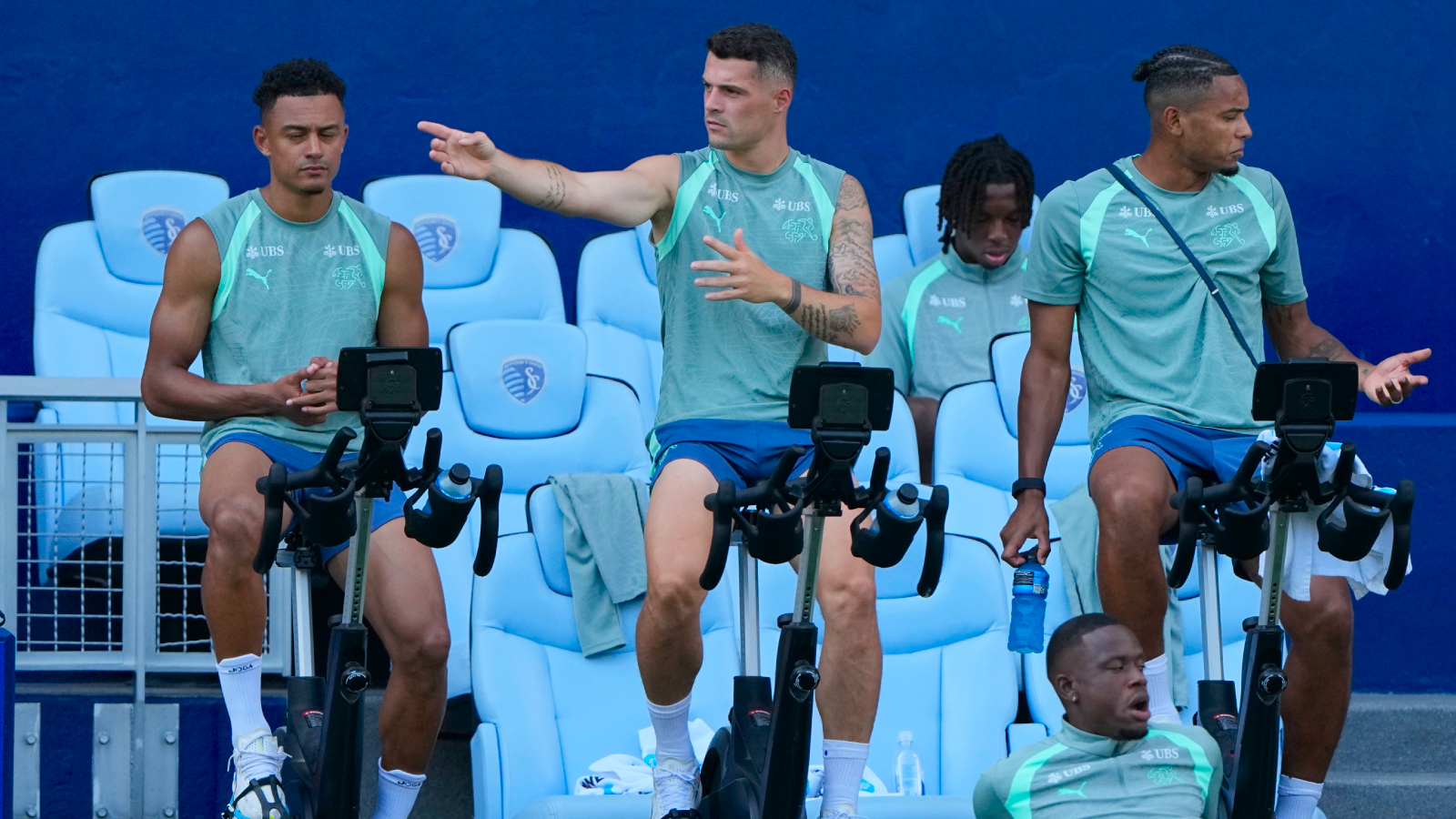
FIFA World Cup: Switzerland, a team of men with dual identities
Ricardo Rodriguez, Switzerland’s indefatigable left-back, hails from Zurich — one of the world’s wealthiest cities.
Denis Zakaria, the versatile right-back, was born in Geneva — the world’s diplomatic epicentre, a city that specialises in making global policies and luxury watches.
Manuel Akanji, the rock at the heart of the Swiss defence, is a son of Neftenbach — a quaint, postcard village once owned by Swiss nobility.
Granit Xhaka, Switzerland’s captain, is from Basel — one of the world’s richest metropolitan regions and home to pharmaceutical behemoths.
These are the men tasked with the seemingly insurmountable challenge of preventing Lionel Messi from scoring again at the 2026 FIFA World Cup.
They might not. But, this story is not about Messi. Rather, it is about Switzerland — a team 12 places adrift of Argentina in the FIFA rankings, who have qualified for the quarter-finals for the first time since 1954. A nation known more for its banks than its bank of football talent. The very embodiment of affluence. Fourth in GDP per capita. First on the Global Innovation Index. The highest average monthly salary in the world. One billionaire for every 80,000 people.
Move aside, Amir Khusro. If heaven truly exists on earth, it surely nestles in the Alps. The jackpot in the geographical lottery. Where the Ricardos, the Akanjis and Xhakas are born. Elite footballers, representing an elite nation. There is no rags-to-riches romanticism to dig here. Story ends.
Not quite. There’s a second part. A part that is often concealed.
Men scarred with dual identities
Story continues below this ad
A 22-year-old Ragip, a student at the University of Pristina, travelled to Belgrade to protest against the communist government of Yugoslavia. He was arrested, imprisoned for three years and, by his own admission, frequently beaten. Upon his release, the family fled Kosovo. First to Sweden, then to Switzerland.
There, in Basel, Taulant Xhaka was born in 1991. 25 years later, he made history as one half of the first pair of brothers to face each other at the Euros. He represented Albania. Across the pitch, in a Switzerland shirt, stood Granit.
The nation’s most-capped footballer, Switzerland barely has had a servant more committed. And yet, when he was asked about his allegiance, he had said: “Sure, I was born and raised in Basel, but I have Albanian blood running through my body.”
Xhaka was instrumental in stifling Colombia in the Round of 16, but he could not have done it without his midfield partner, Ardon Jashari. Born in the idyllic lakeside municipality of Cham, Jashari traces his roots to North Macedonia, where his parents are from, and to Albania, the land of his forefathers.
Story continues below this ad
He says his biggest quality is not the Swiss smoothness, but the Albanian grinta. Grit, that seldom yields. Signed by AC Milan for €39 million, the 23-year-old is among Switzerland’s brightest prospects.
Yet he, too, wrestles with identity. “How can I say I am 100% Swiss when my parents are Albanian, and I myself feel Albanian?”
Born with a diaphragmatic hernia, Ricardo Rodriguez was only given a 50% chance of survival. Not only did he survive, but he is now playing in his fourth World Cup for Switzerland. Yet, his boots carry the flags of two other nations — his father’s Spain and his mother’s Chile. He says he feels as Spanish and Chilean as he does Swiss.
The Balkans. The Latinos. And now, the Africans.
Abimbola Akanji could not become a professional footballer in Niger, but dreamed that his son, Manuel, would fulfil the ambition he could not. Only, in Switzerland.
The n-word
Story continues below this ad
Then came reality’s interruption. Manuel was called the n-word. On another occasion, a restaurant declined to serve him for his colour. Manuel is now the only black player from Switzerland to have won a Champions League.
“My heart beats for both Switzerland and Nigeria,” Akanji had said, admitting he would have faced an impossible choice had he got the call from Nigeria. He never did.
Breel Embolo, however, did get the call. From Cameroon’s greatest icon, and one of his idols, Samuel Eto’o. Born in Yaounde on Valentine’s Day, his love was split among the two nations. Switzerland won, but when it did, Embolo announced a caveat: “I feel 60 to 70% Swiss.” Perhaps, the other 30% prevented him from celebrating when he scored against Cameroon at the 2022 World Cup.
And yet, his strike partner Dan Ndoye has a famous lion celebration. You won’t find the animal where he was born — in Nyon — but his Senegalese father told him stories of Papa Bouba Diop and the Lions of Teranga. Denis Zakaria, meanwhile, had to leave his South Sudanese mother and Congolese father to live with a host family in Bern at 18.
On the face of it, Switzerland appear the picture of perfection. Pristine. Tranquil. Scratch beneath it, however, and the scars emerge. Most of this team carries two identities. Against Argentina, they will hope to be remembered for one: becoming the first Swiss side to reach a World Cup semi-final.
View original source — Indian Express ↗
Related stories

Philippine Daily Inquirer
SportsJul 11, 2026 · 1 min
Wimbledon loss makes Novak Djokovic realize he's 'blessed and cursed'
Philippine Daily Inquirer

Philippine Daily Inquirer
SportsJul 11, 2026 · 1 min
Wimbledon: Sinner scuppers Djokovic record bid to make final
Philippine Daily Inquirer

ESPN
SportsJul 11, 2026 · 1 min
Peters records first White Sox cycle since Abreu
ESPN

Philippine Daily Inquirer
SportsJul 11, 2026 · 1 min
Zverev ends wildcard Fery's run for his first Wimbledon final
Philippine Daily Inquirer