Indian Express
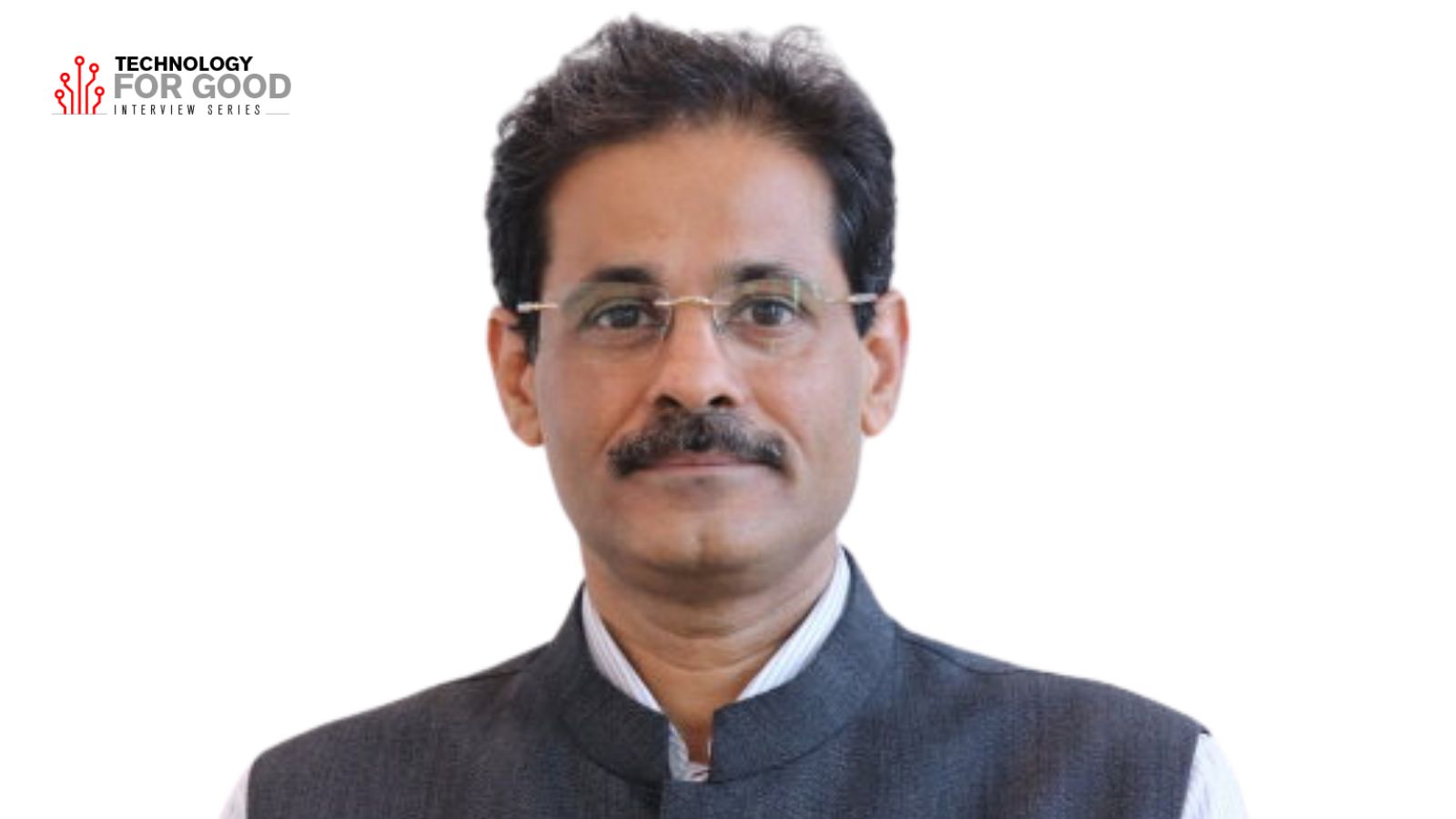
Implementing digital and AI in healthcare is fundamentally more complex: Rizwan Koita, co-founder, Koita Foundation
Rizwan Koita is the co-founder of the Koita Foundation, which leverages digital technology and artificial intelligence for healthcare and social sectors in India.
The foundation works with government bodies, academic institutions, and national health organisations to promote the adoption of digital health solutions across India. It also partners with mission-driven non-profits, helping them scale their impact through digital and AI innovation.
Rizwan is also the Chairperson of the National Accreditation Board for Hospitals & Healthcare Providers (NABH), India’s leading accreditation organisation, covering over 20,000 hospitals.
Before founding the Koita Foundation, Rizwan co-founded CitiusTech, a healthcare technology company and India’s first unicorn in this sector. He also co-founded TransWorks (now Concentrix), one of the early BPO firms in India.
Rizwan has a bachelor’s degree in engineering from IIT Bombay and a master’s in Electrical Engineering and Computer Science from the Massachusetts Institute of Technology.
In an interview with indianexpress.com, Rizwan spoke about the unique challenges of digital health and AI in India, their adoption, innovation, building of new products, and his work in setting standards for hospitals in digital health and AI adoption in India. Edited excerpts:
Venkatesh Kannaiah: Tell us about your journey towards the Koita Foundation.
Rizwan Koita: Our desire to do something outside of work led us to the Koita Foundation.
The Koita Foundation was set up by my wife and me about nine years ago, but I became actively involved only after 2021.
Alongside running the Koita Foundation, I also chair NABH.
When we started the foundation, we worked on NGO transformation to support the digitisation of non-profits in the country.
Since I had run CitiusTech for 17 years, we had quite a bit of experience on what India needs to do to drive digital adoption. I felt my time was probably better spent on the healthcare side.
The approach, however, is quite different. In the case of NGO transformation, we work only with non-profits. On the healthcare side, my team and I work with governments, academic institutions, and national health organisations.
Venkatesh Kannaiah: Give us a brief overview of your NGO transformation programme and its impact.
Rizwan Koita: The Paani Foundation, founded by actor Aamir Khan, is working on drought prevention and watershed management in Maharashtra. Over the last 10 years, they have done some amazing work in the agriculture sector. We helped drive their digital adoption.
Another example is the Vipla Foundation. They were running about 50 balwadis in Mumbai. They needed a platform for teachers to engage with students and their parents, and we helped build it. The platform tracks students – their class participation, performance, and even some health parameters such as weight and height.
The Brihanmumbai Municipal Corporation adopted it as its platform, and now about 1,000 balwadis across Mumbai are supported by it.
The Antarang Foundation provides career counselling to students. While more privileged children can access one-on-one counselling, Antarang Foundation has created a far more scalable and affordable way of providing similar guidance to government school students. When we first started working with them, they were counselling about 3,000 students. Now it reaches nearly 300,000 students across multiple states. We built the tools and the platform for them.
We have worked with Foundation for Mother and Child Health (FMCH), one of the leading non-profits in this space. Together, we have developed a platform that enables tracking children with Severe Acute Malnutrition (SAM) and Moderate Acute Malnutrition (MAM) as well as pregnant women in slums and low-income communities.
We have no software developers in the foundation. Over the last 10 years, we have curated a portfolio of small and mid-sized technology partners. At any given point in time, we may be supporting 20 to 25 non-profits, with around 25 technology projects running concurrently.
One of the biggest problems non-profits face in India is that they are a small customer for any technology vendor. So they rarely get attention. And even if they do, it’s only during the initial project period. Six months or a year later, nobody answers their phone calls.
Now, how do we solve that problem? We have created a curated network of vetted technology partners. For each of these vendors, while an individual non-profit may be a small client, the Koita Foundation is an important client.
These tech partners have virtually no sales costs because we are constantly bringing them clients. And they have no receivables problem as they get paid on time.
We don’t believe non-profits have the ability to hire and retain high-quality software talent over the long term. The idea that non-profits should build the software themselves is not practical.
Venkatesh Kannaiah: Tell us about the ‘Why’ of your focus on digital health.
Rizwan Koita: Implementing digital and AI in healthcare is fundamentally more complicated than implementing it in financial services, manufacturing, transportation, entertainment, or e-commerce.
Think about how many apps you have on your phone for financial transactions, news, or travel. Compare it with how many healthcare apps you have. The answer is probably zero.
Maybe you use a fitness app that counts your steps or tracks your activity. But if you had a blood test done last week, last month, or even last year, which app stores that information? Most likely, none.
It’s because healthcare is simply much more complicated to digitise effectively. A lot of things have to come together before digital tools can work well in healthcare.
Healthcare, therefore, requires much more focused effort to use digital technologies and AI than almost any other industry.
Venkatesh Kannaiah: Tell us about the ‘How’ of your focus on digital health.
Rizwan Koita: If India has to drive digital health and AI in healthcare, it needs to focus on four things.
First, India needs India-centric innovation. The tools have to be simple, efficient, and designed for the country’s realities. You cannot simply take a tool that works in the UK or the US and expect it to work here.
The second challenge is adoption. Even when good tools exist, doctors and hospitals often don’t know how to evaluate or procure them.
Take a bank, for example. If a bank wants to buy software for credit card processing, it has a technology team that knows how to define requirements, evaluate products, test them, validate them, pilot them, and finally deploy them.
Now compare that with a typical hospital. At best, it may have one junior IT person who keeps the Wi-Fi running, installs computers, or calls the vendor when the network goes down.
Hospitals generally don’t have the technical expertise, and doctors certainly aren’t expected to know how to evaluate enterprise software. Yet today’s healthcare software requires decisions about cybersecurity, the Digital Personal Data Protection (DPDP) Act, privacy, backups, cloud versus on-premises deployment, and many other issues.
Doctors don’t have the expertise to make those decisions, so very often they don’t make them at all. Adoption, therefore, becomes a major challenge. Determining which software is good and which isn’t is far from straightforward.
The third challenge is implementation. Even after software is installed in a hospital, doctors and nurses often don’t know how to use it safely and appropriately. It’s not uncommon, for example, for everyone in a hospital to share the same username and password without fully understanding the risks involved.
Finally, if digital health is to succeed, regulation and standards play a critical role. Without the right standards and regulatory framework, meaningful progress simply won’t happen.
As a foundation, we take a comprehensive view of these challenges. That’s why our initiatives are aligned with each of these four areas.
Venkatesh Kannaiah: Tell us about the work of your digital centres on oncology, diabetology, and maternal care. What do they do?
Rizwan Koita: If one wants to drive innovation in digital health and AI, the missing link is professionals with expertise in both domains.
The best engineers in the country — students who graduate from the top IITs — dropped biology after Class 10, and the best doctors in India, whether at AIIMS or elsewhere, dropped mathematics after Class 10.
But AI requires mathematics and computer science, while digital health requires an understanding of healthcare as well. That talent pool is largely missing in India.
Many other countries work differently. In the US, for example, someone could study computer science at Stanford and later become a cardiologist.
To address this gap, we have created two centres of excellence — one at IIT Bombay and another at Ashoka University. We are trying to create a pool of students who graduate with strong computer science and AI knowledge, while also understanding healthcare.
Eventually, some of these students will go on to build innovations in digital health and AI.
Even when good digital tools already exist, simply telling doctors and hospitals that they should adopt AI or digital technologies doesn’t help.
Our foundation has taken a different approach. Instead of trying to address the entire pool of doctors and hospitals, we’ve decided to focus on specific disease areas and ask what is relevant for doctors and hospitals working in those domains.
For example, what is relevant for cancer care? That answer is very different from what is relevant for maternal and child health.
General information is useful, but it only takes you so far. If you really want to solve a problem, you have to solve it in the context of that person’s situation.
So we’ve identified three focus areas — cancer, diabetes, and maternal and child health — where we have established Centres of Excellence.
Venkatesh Kannaiah: Tell us about innovations that have come out of your work on Digital Health and AI.
Rizwan Koita: The IndiaAI Mission has worked with many sectors, but healthcare is much more specialised, so it’s not easy for them to work directly in this space.
For the first time in India, the IndiaAI Mission has partnered with the National Cancer Grid, a Government of India initiative. Together, they launched a programme to identify and promote AI solutions for cancer care, and our Centre for Digital Oncology was the bridge. What we did was help build this partnership between the IndiaAI Mission and the National Cancer Grid.
We invited applications for AI solutions in cancer care. We received 299 applications. A jury developed the methodology for evaluating AI solutions in healthcare, and that has been made open source so that others can adopt and replicate it.
Based on that process, we selected 10 winners. Every applicant had to submit the application jointly with a clinical partner.
The winner receives a prize money of Rs 50 lakh, but more importantly, he gets to work with the National Cancer Grid, a network of around 350 cancer hospitals across India.
We have now created a separate fund to support pilot deployments of the 28 selected solutions — the 10 winners and the 18 finalists — across those 350 hospitals.
Similarly, the creation of digital health standards, the training programmes, and many of our educational initiatives are all examples of innovation.
Our Digital Health Foundation Course is available on Integrated Government Online Training (iGOT). Maharashtra already uses it. We’re now rolling it out across Rajasthan and Karnataka. Our entire open-source foundation course on digital health and AI for doctors is available through iGOT.
Venkatesh Kannaiah: Tell us about your work with NABH and the National Health Authority.
Rizwan Koita: NABH is a standards body. We certify and accredit hospitals based on defined standards. Over the last three years, we have created an entire set of new standards.
India now has well-defined digital health standards for hospitals as well as for software vendors. More than 2,000 hospitals across the country have applied for certification under these standards, and of these, around 250 have already been certified. Typically, hospitals need about a year to a year and a half to bridge the gaps before they can qualify for certification.
We have also introduced digital health standards for software vendors. We also publish a list of certified software products in India. For each product, we publish the certification score as well.
Why is this important? Imagine you’re running a hospital, and you want to buy software, but you don’t have the expertise to evaluate hundreds of products available in the market. You might decide to buy NABH-certified software.
Venkatesh Kannaiah: Tell us about your work with startups in the sector.
Rizwan Koita: First is our work with the National Cancer Grid, where we pilot the deployment of solutions built by startups.
In our mother-and-child health and diabetes initiatives, we have organised a number of startup awards.
We don’t invest in startups. That’s not part of our mandate.
Rather than investing in these startups, we identify promising ones, bring them into the implementation ecosystem through our connections with various medical associations and healthcare institutions, and then help accelerate their adoption. That is what we do.
Venkatesh Kannaiah: Give us a scenario of what an Indian patient could expect at a government hospital if a few of your plans get implemented.
Rizwan Koita: First of all, we want to make sure that for chronic diseases such as cancer, diabetes, cardiac disease, and neurological disorders, patients have a simple way to capture and store their health information so that it is never lost.
The second thing is that we need to create simple digital tools that help patients manage their care.
Isn’t it a pity that today I receive hundreds of notifications on my phone for random things, but there is no easy way for my doctor, if I’m diabetic, to help me manage my condition. There is no simple way for a doctor to add a prescription and ensure that I receive reminders to take my medicines. As a result, one of the most common problems in healthcare in India is that patients gradually drop out of their medication routines.
But if I’m a patient with chronic diabetes and I’m supposed to get a lab test done after 30 days, and I forget, there is no institutionalised mechanism to remind or follow up with me.
Even basic capabilities like these could go a long way towards improving people’s health. They would have all their essential information in one place, along with simple tools to help them manage the basics of their care and ensure that they don’t drop out of the treatment pathway.
We need to make sure those fundamentals are in place first. Then we can worry about the more advanced and sophisticated things later.
View original source — Indian Express ↗
Related stories

South China Morning Post
TechnologyJul 11, 2026 · 1 min
At Indonesia’s sharia frontier, 21 lashes for a TikTok kiss ‘is our right’
South China Morning Post

Straits Times
TechnologyJul 11, 2026 · 1 min
‘Missed the mark’: Meta scraps AI image feature days after launch following privacy backlash
Straits Times
ABC News
TechnologyJul 11, 2026 · 1 min
Instagram pulls new AI feature after widespread backlash
ABC News

Times of India
TechnologyJul 11, 2026 · 1 min
Vulnerable but valuable: Why US uses MQ‑9 Reapers; India set to get 31 drones
Times of India