Indian Express
The teak desk and the felled forest: a book that asks what we owe our trees
News
Books and Literature
The teak desk and the felled forest: a book that asks what we owe our trees
Premium
From the Himalayas to the Andamans, a scientist-writer profiles 50 native trees
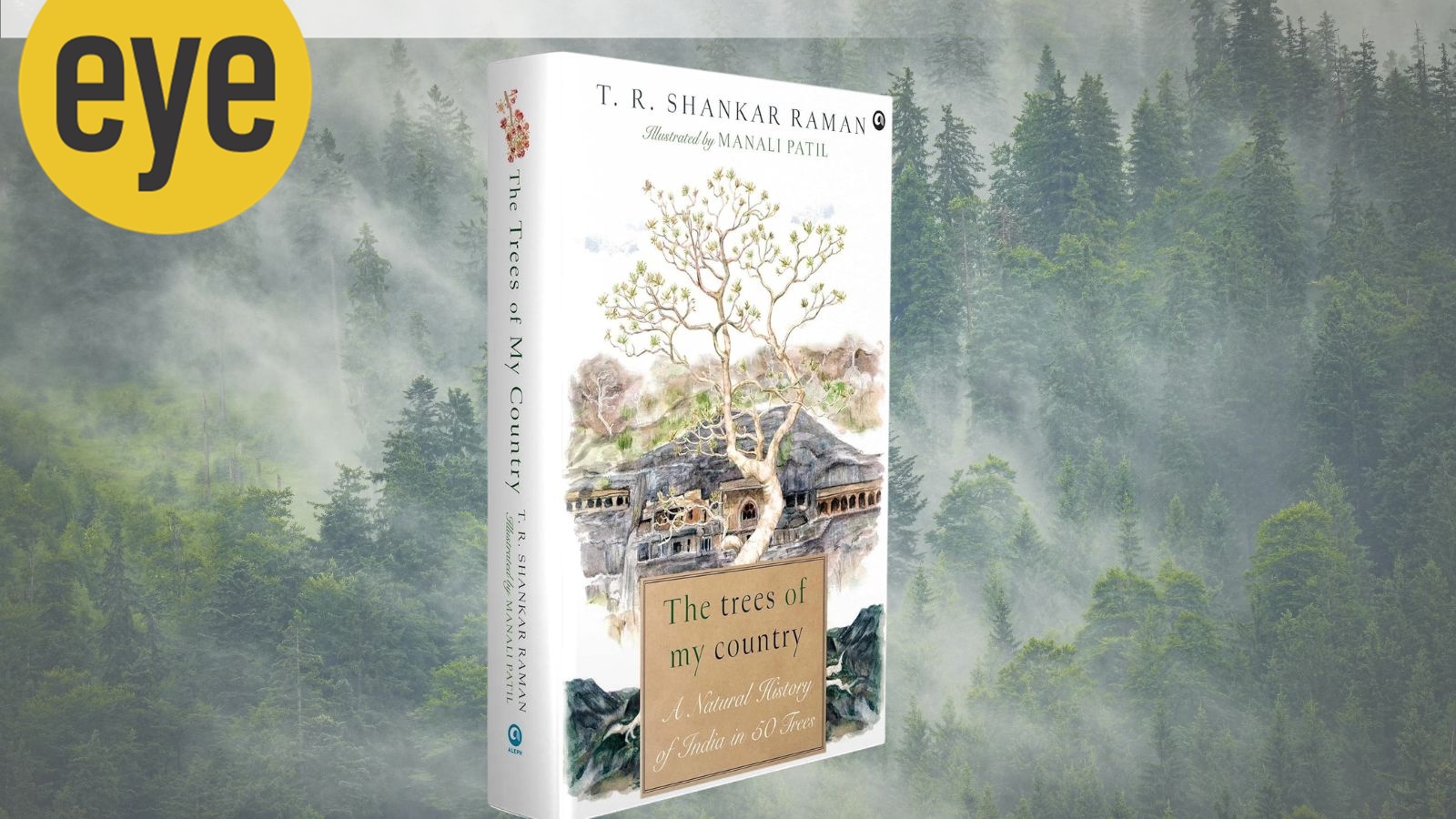
The Trees of My Country: A Natural History of India in 50 Trees by T R Shankar Raman. (Source: via amazon.in)
4 min readJul 11, 2026 10:00 AM IST
First published on: Jul 11, 2026 at 10:00 AM IST
In this book, T R Shankar Raman, who describes himself as a writer-turned-wildlife scientist-turned-writer, profiles 50 native Indian trees to be found through the length and breadth of the Indian subcontinent and beyond (the Andamans and Nicobar and Lakshadweep Islands). There is a personal connect with each of the species, which he has seen and admired during his scientific surveys and studies, in the varied landscapes of the country.
Each tree is accorded its taxonomic profile, its name in various Indian languages, the environmental conditions it grows in (grassland, desert, tropical rainforest), a detailed description of its physical attributes—size, shape of leaves, type of flowers and seeds, methods of seed dispersal et al, and the myriad uses we may have put to them to — felling for timber and firewood, harvesting of leaves, fruit and resin for fashioning brooms, thatching, furniture and even toothpicks, and the many medicinal properties they may or may not have.
Why some trees are worshiped
In addition, there are the cultural and religious aspects that are mentioned too: Why some trees are worshipped. What their historical connections are. Every tree is a storyteller, whether it has lived for 1,000 years or just 10. It is a witness to history that is told through its appearance, in the rings it develops on its trunks, the wildlife it provides sanctuary, food and drink to, its girth and height. While the trees are astonishingly varied in their character, one theme runs strongly through the book, applicable to possibly every species: The mindless, brainless, greed-driven, grasping, utterly destructive attitude we have towards our natural environment and every living thing that depends on it, and that may be seriously endangering many species. We are also radically short-changing the coming generations.
Trees are often on the frontline of this treatment — lush rainforests felled, in what can only be called genocide, for the building of dubious (but money-making for a few) colossal dams, and substituting with money-spinning plantation species such as oil palm, which suck up all the life from the earth. We say we will cut down a million trees in the Nicobar islands —many of them endemic — but, not to worry, we will make good by planting 10 million in dusty, arid Haryana. It is this foolish, ultimately self-destructive, mindset that needs a radical reboot.
Grove of panaceas
The bael helps treat a number of illnesses from cancer to heart to kidney to viral to ulcer ad infinitum. (Source: amazon.in)
Some of the qualities possessed by these trees are truly mind-boggling and we haven’t even got anywhere near to the bottom of it. The bael is a virtual pharmacy in its own right — a complete anti-all-illness (from cancer to heart to kidney to viral to ulcer ad infinitum) cure, besides making a refreshing summer drink and is naturally worshipped and revered.
Raman makes you wonder if the minister, possibly of environment, forests and climate change, sitting behind his magnificent teakwood desk in a deodar-panelled office ever pauses to think about the magnificent trees that may have given their lives for this privilege. The nature-loving Brits, of course, had no love lost for these grand trees and the forests they made, as they hacked them down en masse for the making of railway sleepers.
Of course, all of us are not manic tree-hackers. There are many individuals and communities who will protect them with their lives, if necessary. The women of the Chipko movement (a landmark forest preservation movement in 1970s’ India), for example, which governments disapprove of instead of celebrating and encouraging.
Manali Patil’s beautiful watercolor illustrations bring this book to life. Like its author, the book also needs a multi-hyphenate reader: a reader-turned-wildlife scientist-turned reader. Yes, a background in botany would be helpful but there’s enough prose to keep the average reader engrossed till the very end.
Lal is an author, environmentalist and birdwatcher
View original source — Indian Express ↗
Related stories

The Punch
WorldJul 11, 2026 · 1 min
How 44 abducted Oyo pupils, teachers were rescued – Army
The Punch
NPR
WorldJul 11, 2026 · 1 min
Trump administration rolls back a key protection for imperiled wildlife
NPR

Euronews
WorldJul 11, 2026 · 1 min
Spain score late winner to beat Belgium and set up clash with France
Euronews

Daily Trust
WorldJul 11, 2026 · 1 min
How mechanics, youths make money from Lagos floods
Daily Trust