Indian Express
The little piggy that beat extinction
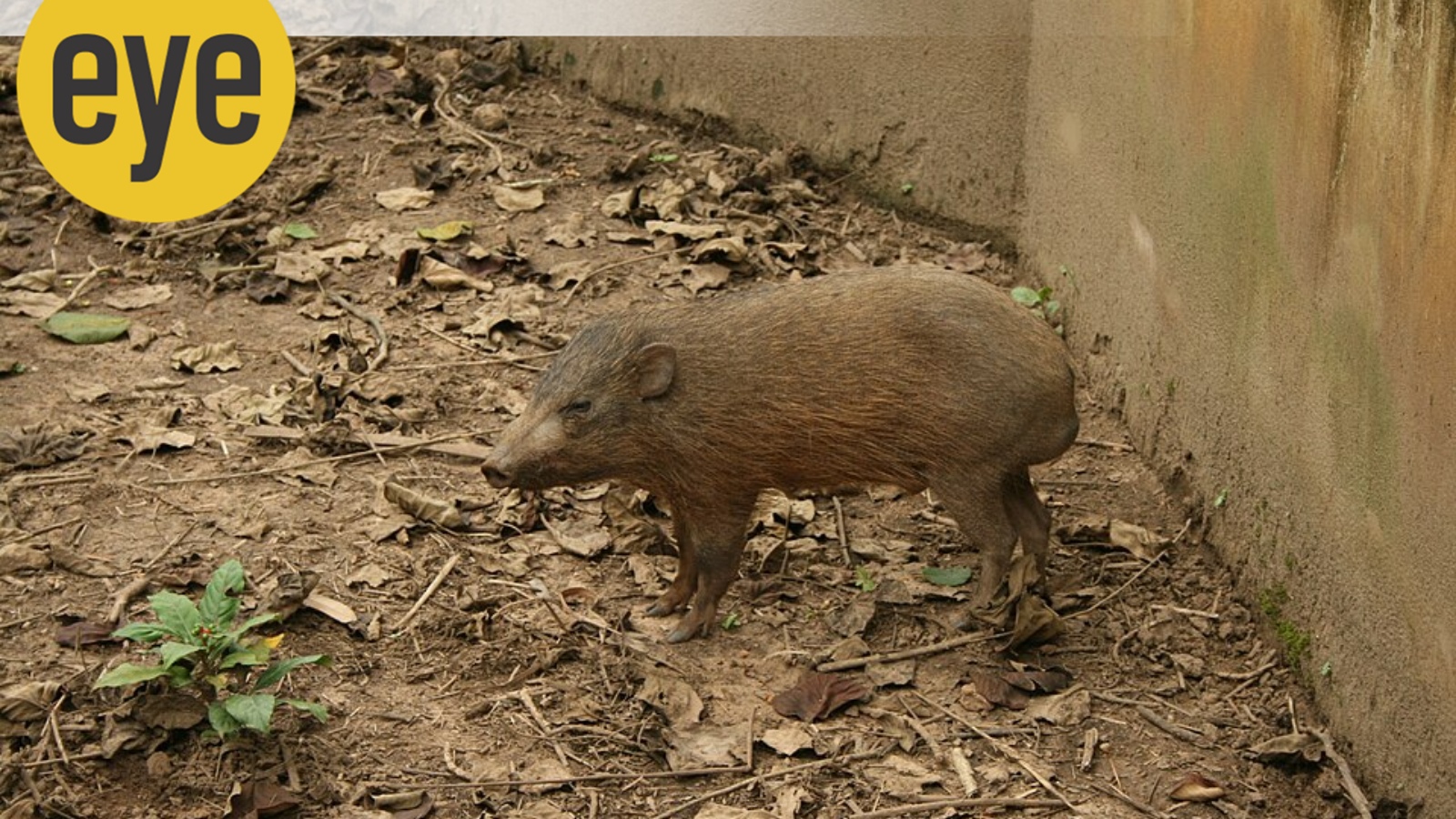
Pygmy Hog at the Pygmy Hog Research and Breeding Centre in Guwahati, Assam (Source: Wikimedia Commons by P Jeganathan)
I’ve always had a soft spot for pigs, be they wild boar, warthog, babirusas, or breakfast sausages. But my all-time favourite little piggy has got to be the diminutive, bristly pygmy hog, whose comeback story from the edge of extinction is quite remarkable. Back in the 1960s, these little piggies — once residents of the alluvial, wet grassland plains in the foothills of the North-eastern Himalayas, from western Uttar Pradesh through to Assam, via Bhutan — were considered extinct. Then, in the 1970s, a tea-planter friend of the late Gerald Durrell told him he was visiting Assam and asked, was there any animal he ought to look out for?
Pat came the reply: the pygmy hog. Luck would have it that at the time, there were rumours of little pigs being sold for meat in a Guwahati market. Apparently, they had been caught while fleeing a fire near a tea-estate, and the tea pluckers had taken them to market. The tea planter confirmed that these were indeed the rare and thought-to-be-extinct pygmy hogs. They informed Durrell, who set in motion a resuscitation exercise, which, in 1995, culminated in the formation of the Pigmy Hog Conservation Breeding Program, along with the IUCN, SSC Wild Pig Specialist Group, the Assam Forest Department, the Ministry of Environment, Forests and Climate Change, Ecosystems India and an NGO Aaranayeke, intending to put into place a captive breeding program.
Eleven pigmy hogs were initially caught in the Manas National Park, of which five had to be released as per Government orders. Six were retained for the program and taken to a facility in Baristha. Luckily, of these, three were pregnant females, so the count went up healthily in a short period of time – as much as 600% in two years. An additional breeding centre at Potasali in Nameri, Assam was established.
In the wild, these piggies live and thrive in a dangerous habitat: wet grassland plains, which are harvested for thatch every year, burnt once or twice a year and taken over for agriculture and infrastructure, in addition to being hunted (despite being on Schedule 1 of the WPA 1972). Their disappearance from these areas also boded ill for similar grassland-loving species such as rhinoceros, elephant and other herbivores, and thereby carnivores such as the tiger. Feeding on insects, small rodents, reptiles and roots, shoots and tubers, these piggies tilled and aerated the soil. They lived in small family groups, usually with two matrons in charge, the males being loners. Three to six hoglets usually scampered after their mom, learning the ways of hogdom. For shelter from rain, cold and heat and for nurseries, they built nests, snuffling up shallow indentations in the ground with their snouts. They then lined and roofed them with dried grass. For the toilets, they went outside. Unharmed, they would live for 8 to14 years.
Under the tutelage of the late William Oliver, sent by Durrell to oversee the program, the captive hogs were carefully nurtured and monitored. Before being released back into the wild, they had to be tutored on how to live, forage, and nest-build on their own without being mollycoddled by humans – a process which could take up to five months. Just before release, they were taken to a ‘pre-release’ site for two or three days. Between 2008 and 2016, over 100 pygmy hogs were released in Sonai Rupai, Orang and Barnadi National Parks. And just recently the news came in that 15 pygmy hogs had been released in the Manas National Park, bringing the total to 78 releases in the park. Even so, overall, their numbers are precarious: in 2024, the total stands at 515 animals, of which 95 are in breeding centres.
It’s the unprotected grasslands adjoining the protected areas that are most vulnerable. Grass-cutting for thatching, burning once or twice a year, overgrazing, agriculture, and ‘development’ activities leave the habitat in ruins for the little piggies and other herbivores (and therefore carnivores such as tigers and leopards). People in the surrounding areas need to be given alternative means of livelihood, and pucca housing provided so they don’t need grass for thatching. Grazing needs to be curtailed, and training could be given for wildlife protection work.
A 45-minute documentary on the pygmy hog conservation and breeding program by the Durrell Wildlife Conservation Trust, apart from telling the story of the hogs’ recovery, revealed one very heart-warming facet. The sheer sincerity, warmth and genuineness of the people in charge of the program, whose affection for the little piggy shines through and their desire that it flourishes. More such people are needed – especially in the Ministry of Environment, Forests and Climate Change and all the other plethora of ‘conservation’ bodies; in place of the po-faced, wooden bureaucrats we seem to be saddled with, who, brainwashed or not by their political bosses think that a tropical island rainforest, bursting with endemic species can be replaced and maybe even cloned, in arid Haryana! Big business needs to be reminded that you can have all the gold in the world, but you cannot eat a single golden sovereign. Recall what happened to the inhabitants of Easter Island.
We need to bow our heads before those few little piggies that went to market in Guwahati (dead though they were) and, in doing so, became responsible for the probable saving of their entire species. As for me, while doing so, I still, alas, enjoy my breakfast sausages!
View original source — Indian Express ↗
Related stories

The Hindu
WorldJul 11, 2026 · 1 min
Iran’s Supreme Leader pledges revenge for slain father and predecessor
The Hindu

Antara News
WorldJul 11, 2026 · 1 min
New carbon credit issuance supports sustainability: ministry
Antara News

Al Jazeera
WorldJul 11, 2026 · 1 min
China prepares as Typhoon Bavi leaves Taiwan
Al Jazeera
TASS
WorldJul 11, 2026 · 1 min
Iran's Supreme Leader vows to avenge death of Ali Khamenei, other Iranians
TASS