Indian Express
Court lets US Green Card holder depose via video in late husband’s will case
3 min readBengaluruJul 11, 2026 04:42 PM IST
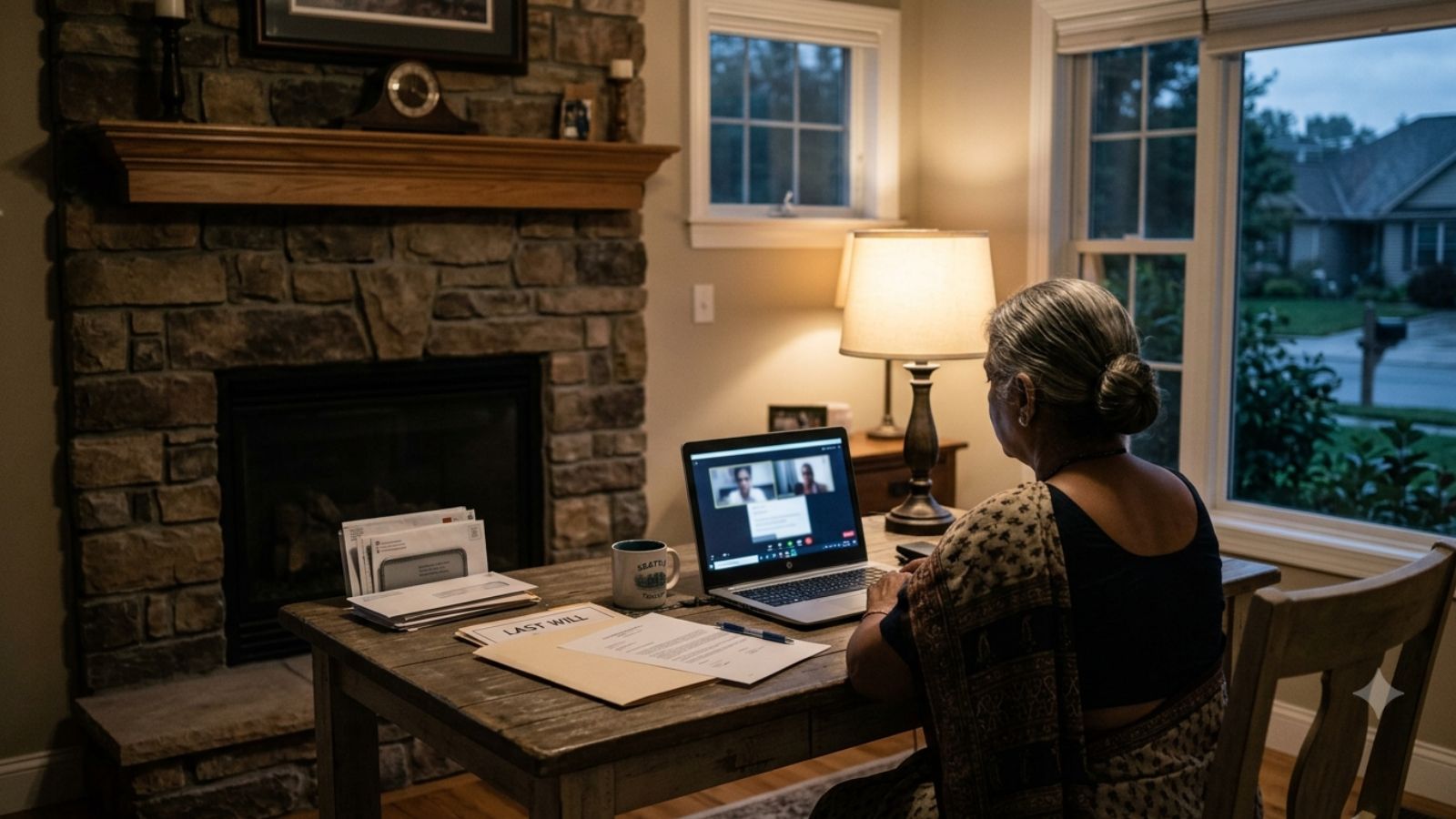
Rekha Gupta's advocate informed the Karnataka High Court that after her husband's demise, she relocated to the United States to stay with her son. (Image generated using AI)
The Karnataka High Court has allowed a 71‑year‑old Green Card holder in the United States to depose before a Bengaluru Rural court from abroad and seek a probate of her late husband’s will, which leaves her his movable and immovable property. A probate is a copy of a will certified under a court seal.
In an order dated July 3, Justice Tara Vitasta Ganju allowed Rekha Gupta’s petition, saying, “The petitioner is permitted to record her evidence without availing the services of the Indian Embassy.”
Girish Kumar, Gupta’s husband, died on September 29, 2024, leaving a will dated May 6 that named her as executor. She later filed a petition under the Indian Succession Act for a probate and also asked that the proceedings be held through videoconferencing.
Advocate Sameer Sharma, appearing for Gupta, informed the court that after Kumar’s demise, she relocated to the United States to stay with her son.
Delayed trial
On December 19, 2025, an application was filed before the trial court seeking to appoint a court commissioner to record her evidence through videoconferencing from the US. However, the matter has still not been decided by the court concerned.
Sharma also informed the court that Gupta is a senior citizen and the delay is causing great prejudice to her as she is unable to enjoy the fruits of the immovable and movable property bequeathed to her by her late husband.
He requested that the high court relax some of its videoconferencing rules, especially the one that mandates that an official from the Indian Consulate, Embassy, or High Commission should be present when someone overseas is examined or heard remotely.
Story continues below this ad
The bench noted that despite public notices issued through newspaper publication, there were no objectors to the will. The matter before the trial court has been adjourned for the petitioner’s evidence for the last year.
Decide in 3 months, trial court told
“As these proceedings are uncontested and the public notice issued by the learned Trial Court did not evoke any response, this court also deems it apposite to relax the Rule 5.3.1, in exercise of the powers conferred under Rule 18 of the Video Conferencing Rules, and permit the petitioner to record her evidence from her residence in the United States of America,” the bench noted.
Further, the court relaxed the requirement of a coordinator at the remote point and routing the proceedings through the Embassy, subject to Gupta filing an undertaking before the trial court that she shall not disconnect or permit any obstruction during the recording of her evidence. In the event of any disconnection attributable to her, the entire evidence tendered by her shall stand discarded, the court said.
Allowing the petition, the court also directed the trial court to decide the matter within three months.
View original source — Indian Express ↗
Related stories

Lovin Malta
WorldJul 11, 2026 · 1 min
Couple Donates €2,500 Reward To Puttinu Cares After Lost Dog Is Found
Lovin Malta

Philippine Daily Inquirer
WorldJul 11, 2026 · 1 min
NBI, BOC seize P960-M worth of smuggled cigarettes
Philippine Daily Inquirer

The Hindu
WorldJul 11, 2026 · 1 min
Iran’s Supreme Leader pledges revenge for slain father and predecessor
The Hindu

BBC
WorldJul 11, 2026 · 1 min
More homes evacuated in Coalsnaughton ground movement probe
BBC