Indian Express
‘Only smell no proof’: Bihar cop fired for consuming alcohol wins case
4 min readNew DelhiJul 11, 2026 06:00 PM IST
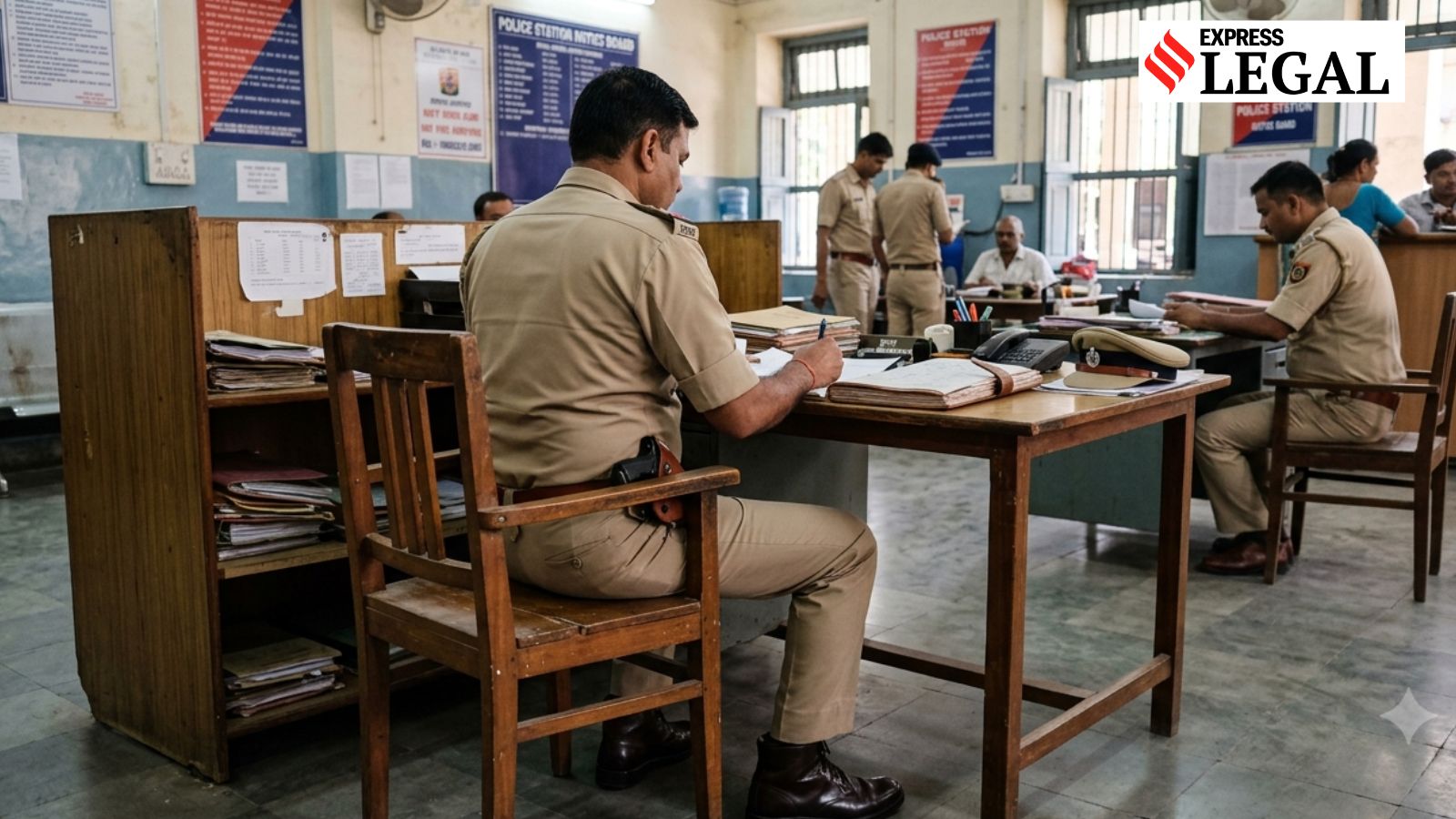
The officer was dismissed from service over suspected alcohol consumption. (Image generated using AI)
The Patna High Court has upheld the relief granted to a Bihar police officer who was dismissed from service for consuming alcohol in the dry state, holding that there was “no evidence” to prove him guilty. The court noted that the breath analyser report had never been proved, and the conclusion of alcohol consumption based solely on the smell of alcohol was flawed.
A bench of Chief Justice Meenakshi Madan Rai and Justice Soni Shrivastava dismissed the state government’s plea and affirmed an earlier single-judge order quashing the officer’s dismissal.
“In the case at hand, the materials on record go to show that the doctor’s report (breath analyser report) has not been proved in absence of the examination of the doctor and the conclusion of alcohol consumption only by smell, is a flawed conclusion,” the court noted in its order dated July 9.
Chief Justice Meenakshi Madan Rai and Justice Soni Shrivastava
Dismissal from service
The respondent-officer had served in the Bihar Police for about 32 years before being promoted as Assistant Sub-Inspector in 2020. While posted at the Motihari Police Line, he was subjected to a raid in connection with suspected liquor consumption.
An FIR was registered against him under the Bihar Prohibition and Excise Act and departmental proceedings were initiated. He was dismissed from service in July 2020, and his departmental appeal was also rejected.
The counsel for the state argued that after the enforcement of prohibition in Bihar, consumption of liquor constituted an offence and that Section 75(3) of the Bihar Prohibition and Excise Act made breath analyser reports admissible in evidence.
Opposing the plea, the officer stated that the allegation was based merely on the smell of alcohol detected through a breath analyser.
Story continues below this ad
He argued that no blood or urine test was conducted and that he had consistently explained he was undergoing treatment for tuberculosis and consuming prescribed cough syrups and medicines that could account for the smell.
Case of no evidence: Court
The court observed that the doctor’s report was never proved because the doctor who prepared it was not examined, and the inquiry report itself did not discuss or rely on the medical report in any meaningful manner.
It further noted that the witnesses examined during the inquiry merely stated that they noticed a smell of alcohol but admitted they had not seen the officer consuming liquor and had recovered no incriminating material from him.
The court held that the evidence that led to finding the officer guilty was merely based on conjectures and surmises and tantamount to a case of no evidence
Story continues below this ad
“The nature of evidence which had led to finding of guilt, on the face of the record, appears to be based merely on conjectures and surmises and tantamounts to a case of no evidence and any finding based thereupon would be patently perverse requiring interference,” the court noted.
It remarked that although the breath analyser report is admissible in evidence under the Bihar Prohibition and Excise Act, 2016, the same was not proved during the departmental inquiry and there was no other blood or urine test conducted which could act as conclusive proof of consumption of alcohol.
“Taking into account the illegalities committed in the departmental proceeding and considering that the order of the disciplinary authority is visited with perversity, as the same appears to be virtually based on no evidence and also in total disregard of the defence taken by the respondent with regard to his medical condition and the use of medication, we are of the considered view that the disciplinary action taken against the respondent based on vitiated inquiry report, would not be legally sustainable,” the order read.
Finding no error in the single judge’s decision, the bench dismissed the State’s appeal.
Ashish Shaji is a Senior Sub-Editor at The Indian Express, where he specializes in legal journalism. Combining a formal education in law with years of editorial experience, Ashish provides authoritative coverage and nuanced analysis of court developments and landmark judicial decisions for a national audience.
Expertise
Legal Core Competency: Ashish is a law graduate (BA LLB) from IME Law College, CCSU. This academic foundation allows him to move beyond surface-level reporting, offering readers a deep-dive into the technicalities of statutes, case law, and legal precedents.
Specialized Legal Reporting: His work at The Indian Express focuses on translating the often-dense proceedings of India's top courts into clear, actionable news. His expertise includes:
Judicial Analysis: Breaking down complex orders from the Supreme Court and various High Courts.
Legal Developments: Monitoring legislative changes and their practical implications for the public and the legal fraternity.
Industry Experience: With over 5 years in the field, Ashish has contributed to several niche legal and professional platforms, honing his ability to communicate complex information. His previous experience includes:
Lawsikho: Gaining insights into legal education and practical law.
Verdictum: Focusing on high-quality legal news and court updates.
Enterslice: Working at the intersection of legal, financial, and advisory services. ... Read More
Tags:
Patna High Court
View original source — Indian Express ↗
Related stories

The Punch
WorldJul 11, 2026 · 1 min
What you need to know: UK tightens immigration rules affecting work, study, family visas
The Punch
The Punch
WorldJul 11, 2026 · 1 min
Over 43,000 new voters register in Adamawa CVR exercise – INEC
The Punch

Philippine Daily Inquirer
WorldJul 11, 2026 · 1 min
No jackpot winner in Grand Lotto, Lotto 6/42 draws for July 11
Philippine Daily Inquirer

Philippine Daily Inquirer
WorldJul 11, 2026 · 1 min
Lotto draw results, July 11, 2026
Philippine Daily Inquirer