CNA
Your child wasn't invited to a birthday party? Here's why you should pause before reacting
Last Christmas, my daughter was almost banished from a kingdom.
She and my friend's daughter, both under seven years old, were happily playing make-believe at my new friend's home when, suddenly, the game changed.
My friend's child crowned herself queen in their imaginary world and brusquely told my daughter that she couldn't be queen, too.
My instinct was to dethrone the tiny sovereign. But I decided not to get into any disagreement with her parents, so I held my tongue and redirected their play instead.
Other parents I spoke to had similar stories about exclusion.
One friend's five-year-old didn't get to attend a kindergarten classmate's birthday party after the host rescinded the invitation sent to the whole class, claiming the response from my friend was late – even though there was no deadline stated.
One parenting expert recalled how her six-year-old son was shooed away when he asked to join a football kickaround at the playground, with boys shouting, "Go play with the girls". He left the playground in tears.
Another friend said her bright, bookish son was repeatedly left out of game and movie nights throughout his upper primary and secondary school days, because his schoolmates assumed that he "would not enjoy such activities".
At 17, he still struggles with self-doubt and finds it difficult to form new friendships, she added.
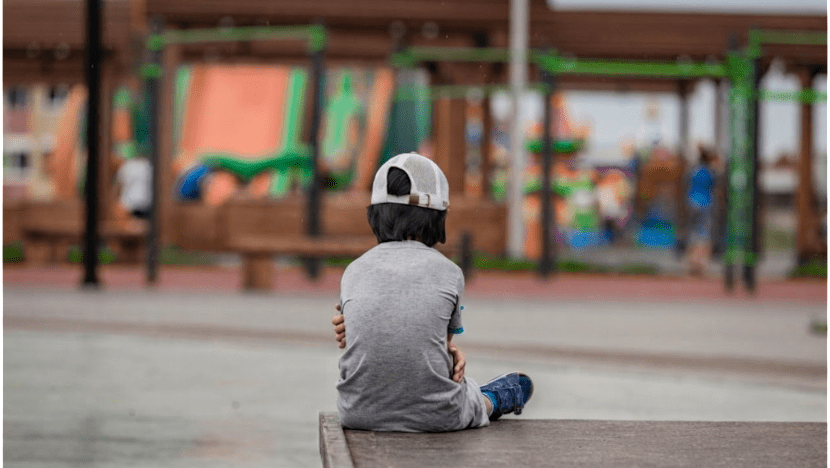
While occasional rejection is an inevitable part of growing up, parenting experts and counsellors cautioned that deliberate and repeated exclusion can leave children questioning their self-worth – and that how parents respond in those moments may matter more than the exclusion itself.
Early brain development specialist Patricia Zoey Tan, 54, from The Early Brain Academy, which offers mentorship programmes for parents with children under three, said that the effects of exclusion are generally felt more acutely in the teenage years, because adolescents are more emotionally sensitive and self-aware.
They are also likelier to see social media posts about events they are left out of, making exclusion feel even more acute.
Parenting educator Jacinth Liew, 40, said brain scans show that exclusion activates the same part of the prefrontal cortex that feels physical pain – especially when it is sustained and involves a clear imbalance of power.
The founder of Our Little Play Nest, which provides teaching resources as well as courses for parents, added: "If it's a chronic case of exclusion and bullying, the challenge is that the child is going to feel that it is about them. This could affect their confidence and their ability to make new friends."
So how should parents respond when their children are being excluded? And can these experiences build resilience?
SUPPORT, DON'T RESCUE
Experts generally cautioned parents against jumping in to defend their children too quickly.
Doing so may signal to the children that they are powerless to manage difficult situations on their own.
Behavioural therapist and parenting coach Claire Chong said a parent's role is to provide emotional safety, not instant solutions.
Ms Chong, 37, who has two children aged six and two, added: "Many parents understandably feel intense protective instincts when their children are excluded.
"Sometimes, our own childhood wounds get activated, too. We remember what it felt like not to belong."
Rather than removing obstacles, parents should first sit with their children's hurt, frustration or confusion, and reassure them that their feelings make sense.
When children feel emotionally understood, their nervous systems settle down and they can begin to problem-solve, she added.
Once children are in the problem-solving mode, parents can guide them towards agency.
Ms Chong suggested that parents offer them choices or open-ended questions such as, "Would you like me to just listen first?" and "Do you want help thinking about what to do next?".
She applied this method with her six-year-old after he was turned away from the football game at the playground.
Instead of confronting the group of boys, she listened as he shared with her how he felt.
The next evening, he returned to the playground on his own and, within a couple of days, found his own group of friendly buddies.
Ms Chong, the author of The Freckled Fort, a journal that helps children practise self-regulation through play and reflection, said: "The experience showed him that while being excluded can feel sad and disappointing, it’s something he can handle and grow through.
"He is learning that he can do hard things."
She added that parents who react more strongly than their children may unintentionally signal that rejection is catastrophic or that something bad is happening – when the child may not even notice or register it.
In the case of the preschooler who didn't get to join the birthday party, experts said that parents should first process their own hurt, disappointment and frustration, before helping their children distinguish between what they can and cannot control.
They cannot control the host's guest list, but they can choose how to respond, such as by giving a birthday card or gift anyway.
TURNING REJECTION INTO RESILIENCE
Mrs Grace Lio, a senior learning and behavioural therapist at Mindful Bear, a counselling centre for children and teenagers, said that parents can also teach their children to respect others' choices, and to expect and accept discomfort.
One of her clients, a 15-year-old international student ostracised by her cohort, is learning to be "comfortable with being uncomfortable".
Mrs Lio, who has three children aged 23, 22 and 12, said: "We want our children to be able to say that it's okay, that they are okay, and that they can go somewhere else (and find people and places where they belong) in the face of rejection."
Ms Liew the parenting educator, who has two children aged 12 and 10, agreed: "We don't necessarily want to eliminate these experiences from a kid.
"The key is to support them so that they do not become hysterical or feel they are unworthy."
The experts added that since children may not always talk about difficulties they have with friends, parents should build strong connections with their children from an early age by having daily conversations with them.
Ms Tan from The Early Brain Academy said that these conversations should deepen as children get older.
"Don't just talk about schoolwork. Build their emotional intelligence by unpacking emotions. Let them know that you're interested in how they feel, without judging them."
Helping children understand and express their feelings lays the foundation for a stronger sense of identity, and a secure home environment buffers against the sting of social rejection, she added.
In Ms Chong's case, she recalled how her mother always availed herself but would hold back from rushing to solve her problems when she was a teenager.
"I would knock on her door and cry on her bed until I fell asleep. She didn't offer solutions. She gave me her time, and that built my sense of self-worth."
COACH, DON'T CONTROL
Parents can certainly take a proactive approach by creating opportunities for their children to socialise.
Ms Tan encouraged parents to organise play dates from the time their children turn two years old, when social awareness begins to develop.
She recommended bringing together children from different circles to expose them to a range of personalities and social situations. For older children, team sports provide similar opportunities.
Such experiences help children develop confidence in social settings and build positive experiences they can draw on when facing rejection.
Ms Liew said parents can also guide children in building social skills, from helping quieter or more introverted children initiate conversations to teaching more dominant children to recognise social cues and adjust their behaviour.
Don't just talk about schoolwork. Build their emotional intelligence by unpacking emotions.
Parents should also teach their children to articulate their boundaries clearly and respectfully.
In my daughter's "queen" incident, Ms Chong suggested guiding her to respond to her peer by saying, "Can we choose different roles?", "I'm going to find another game", or "This doesn't feel fun for me".
Mrs Lio said parents could help children shift the focus from conflict to collaboration by asking, "Everyone wants to be the queen, so how can we achieve that or make things fair?"
Social confidence, Ms Lio added, means being able to say "no" to situations that feel uncomfortable and learning to separate the person from the problem.
Parents can encourage empathy and guide children to focus on solutions rather than blame.
Not all acts of exclusion are malicious, Mrs Lio pointed out.
A child behaving "poorly" might be going through a difficult day.
And children, especially younger ones, may lack the social awareness to understand how their words or behaviour affect others.
In a couple of years, my daughter will begin primary school. Like many parents, I feel the urge to shield her from the social knocks that inevitably come with a bigger community.
However, the experts reminded me that children need calm, empathetic adults more than overly protective rescuers ready to fight their battles for them.
More than protecting my daughter from every disappointment, I hope to help her build the skills to navigate differences, handle rejection without losing perspective, and hold her boundaries without hostility.
If she can do that, perhaps she will find the reasons why friendships are worth pursuing in the first place.
Source: CNA/ma/sf
Related stories

The Punch
WorldJul 11, 2026 · 1 min
What you need to know: UK tightens immigration rules affecting work, study, family visas
The Punch

Dawn
WorldJul 11, 2026 · 1 min
'Our land, our sky:' West Bank Palestinians fly kites in defiance of Israeli settlers
Dawn

Straits Times
WorldJul 11, 2026 · 1 min
US delegation in Lebanon to discuss Israel ‘pilot zone’ withdrawal: official
Straits Times

BBC
WorldJul 11, 2026 · 1 min
'Where can I get blonde highlights?': The most unusual requests to British embassies
BBC