Indian Express
The nightingale who sang in twenty tongues: The life and legacy of S Janaki
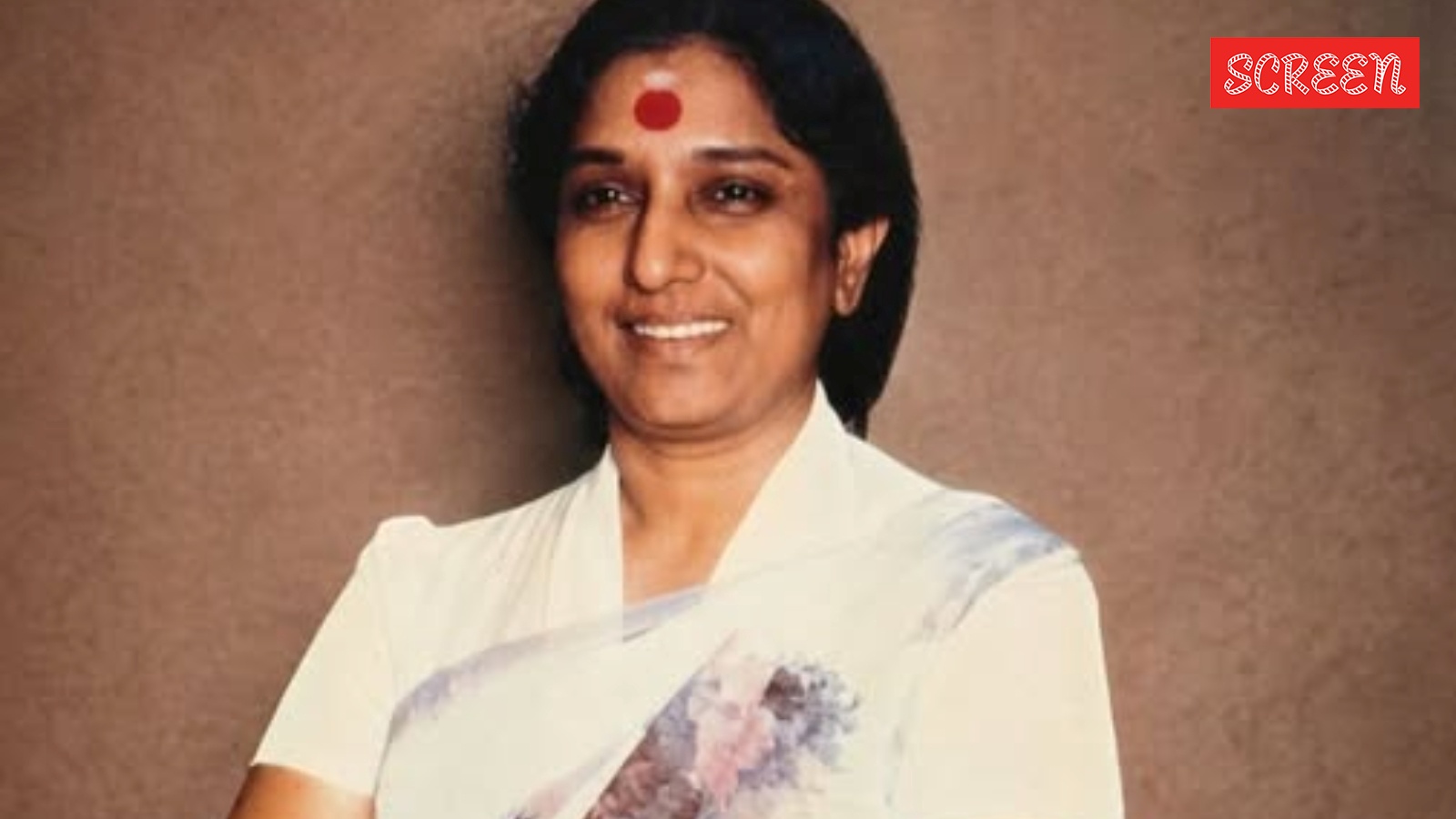
S Janaki, the playback singer whose voice carried South Indian cinema through six decades and roughly 20 languages, died on Saturday at Apollo BGS Hospitals in Mysuru after suffering multiple cardiac arrests. She was 88.
For an artist known as “Janaki Amma” to generations of listeners who never met her, the tributes flowing in today read less like obituaries and more like a chorus of gratitude, for a voice that, as one composer once put it, could sound like a child, a bride or a grandmother in a single song.
Born Sistla Janaki on 23 April 1938 in Pallapatla, a village in Guntur district of what is now Andhra Pradesh, Janaki grew up with little in the way of formal classical training. Her early grounding came from a local nadaswaram player, Paidiswamy, who noticed her talent when she was still a child performing on makeshift stages. She got her first real public break in 1956, winning second place in an All India Radio light-music competition and receiving her prize from the President of India, a moment she would later describe as the turning point that convinced her family music could be more than a hobby.
Janaki’s uncle encouraged her to try her luck in Chennai, then the beating heart of South Indian film production, and in her twenties she joined AVM Studios under composer R. Sudarsanam. Her playback debut came in 1957 with the Tamil film Vidhiyin Vilayattu. What followed was extraordinary even by the standards of Indian cinema: in that same debut year, she recorded songs in five or six different languages, including her first Telugu song for M.L.A. and her first Malayalam and Kannada recordings.
Also Read: Legendary playback singer S Janaki dies at 88; granddaughter shares emotional note
It was an early sign of what would become her defining trait, an almost uncanny ability to master the phonetics, rhythm, and emotional register of languages she hadn’t grown up speaking. Over a career spanning more than six decades, she would go on to record in around 20 Indian and foreign languages, including Tamil, Telugu, Kannada, Malayalam, Hindi, Odia, Bengali, Punjabi, Tulu, Sanskrit, and even Japanese, German, and Sinhala. By most estimates, her total output runs past 40,000 songs.
Ruling four industries at once
Janaki’s rise through the 1960s and 70s was not confined to a single film industry, which is part of what set her apart from contemporaries. In Kannada cinema, where she ultimately sang the largest share of her songs, she became the industry’s default female voice, working closely with composers G.K. Venkatesh, Rajan–Nagendra, and later Hamsalekha, and forming an enduring on-screen musical partnership with actor-singer Dr. Rajkumar.
Story continues below this ad
In Malayalam, she built a reputation as the most sought-after female singer of her generation. Despite not being a native speaker, she remains the only non-Malayali singer to have won the state’s top playback award as many times as she did. Composers like V. Dakshinamoorthi, M.S. Baburaj, and Salil Chowdhury leaned on her for everything from devotional numbers to romantic duets.
In Telugu and Tamil, where her presence had been comparatively lighter in the late 1950s, she came to dominate by the mid-1970s, winning a dozen Nandi Awards in Andhra Pradesh alone. Her Tamil career reached new creative heights through her long association with composer Ilaiyaraaja and singer S.P. Balasubrahmanyam, a trio whose collaborations from the late 1970s through the 1990s produced some of the era’s most beloved film songs. In Hindi cinema, composer Bappi Lahiri, struck by a Hindi song she had recorded for a Tamil film, brought her to Bollywood, where she recorded duets with Kishore Kumar and other leading voices of the day.
Also Read: Vijay’s Jana Nayagan sells thousands of tickets in UK in first hour of advance bookings
Her 1990s work with a young A.R. Rahman introduced her voice to a new generation; her rendition of “Margazhi Thinkal Allava” won her a Tamil Nadu state award well into the fifth decade of her career, a rare feat of longevity in an industry not known for patience with age.
Story continues below this ad
Janaki’s mantelpiece tells its own story: four National Film Awards for Best Female Playback Singer, more than 30 state government awards across Tamil Nadu, Kerala, Andhra Pradesh, and Karnataka, an honorary doctorate from the University of Mysore, and lifetime achievement honours from Filmfare and SIIMA, among others.
But she is remembered as much for an award she declined as for those she accepted. In 2013, when the Government of India announced a Padma Bhushan for her, Janaki publicly refused it, saying the recognition had come “too late” and pointing to what she felt was a long-standing neglect of artists from South India in the national awards system. The gesture, unusual for its bluntness, cemented her reputation as an artist unwilling to trade her convictions for ceremony.
Janaki formally retired from playback singing in 2016–17. She had long said she wanted to leave the stage while her voice, famously supple enough to sound like a child, a young woman, or an elderly matriarch depending on the scene, was still recognisably her own, rather than let age dictate the terms of her exit.
Janaki’s career predates the streaming era by decades, yet her catalogue continues to find new listeners through digital platforms and curated retrospectives, proof, fans say, that a voice built to carry emotion across twenty languages doesn’t need a translator to be understood. As South Indian cinema continues to reckon with its golden-age soundtrack, Janaki Amma’s name remains inseparable from the idea of what a playback singer can be: not merely an interpreter of someone else’s melody, but a co-author of a film’s emotional life.
View original source — Indian Express ↗
Related stories

The Hollywood Reporter
EntertainmentJul 11, 2026 · 1 min
Norway vs. England: Where to Watch the World Cup Quarterfinal Match Online
The Hollywood Reporter

Deadline
EntertainmentJul 11, 2026 · 1 min
Larry Birkhead “Not Involved” With Anna Nicole Smith Movie Based On Dr. Sandeep Kapoor’s Book, Filed Complaint With…
Deadline
Indian Express
EntertainmentJul 11, 2026 · 1 min
S Janaki (1938-2026): Rajinikanth, Chiranjeevi and others pay tribute to legendary singer
Indian Express
Indian Express
EntertainmentJul 11, 2026 · 1 min
The Odyssey premiere: Nolan, Damon, Holland sip chai; Dimple Kapadia, Shruti Haasan attend
Indian Express