ABC News
Can Australia avoid the next round of the global energy crisis?
The crackly distress call from a clearly panicked captain was picked up across the Gulf in the early hours of Tuesday morning.
"Mayday, mayday, mayday. This is vessel Al Rekayyat, LNG vessel Al Rekayyat.
"We are being hit by drone on port side, top of engine room.
"Status: engine room fire and full of smoke. Unable to assess further damage."
The Al Rekayyat, a Qatari-owned LNG tanker, had been travelling in the dark, fully laden, towards the Strait of Hormuz hoping to be among the first LNG tankers to exit the Persian Gulf since Israel and the US first began bombing Iran in late January.
Instead it has become the first to be attacked.
With its transponders turned off in a bid to avoid detection from the Iranian Revolutionary Guard Corps it set a course tracking the Oman side of the narrow waterway that once again has become the epicentre of a looming global energy crisis.
The tanker, capable of carrying 216,000 cubic metres of LNG, was bound for India in a market that has become desperately short of the vital industrial and household fuel.
Liquified Natural Gas is a highly volatile fuel, far more so than crude oil, and fears immediately mounted that the ship could explode.
While Saudi Arabia has an overland pipeline to shift oil across to ports on the Red Sea, there is no alternative transport for gas other than ships.
As the conflict has dragged on, gas prices have soared and now threaten to up-end the economies of Europe and Asia, the world's biggest buyers, and ignite yet another inflationary spike.
The great global gas shortage
Oil prices have confounded the experts ever since the war began.
Having peaked at $US120 a barrel, well below expectations, they're now only slightly above pre-war levels despite the renewed outbreak in hostilities.
That's not the case with gas. In Asia, LNG is now more than 60 per cent more expensive than in February and a little under 50 per cent higher in Europe.
The US, a relatively new entrant in the gas export game but now the world's biggest, has attempted to fill the breach by ramping up supplies.
But that has still left Asian and European markets short, and competition for supply is heating up as blisteringly hot summers across the Northern Hemisphere boost demand.
There are reports ships are being diverted mid journey from Europe to Asia as desperate Asian buyers outbid rivals for cargo.
That's good and bad for Australia.
As a major gas exporter to Asia, the federal government is expecting a bump in LNG exports to $65 billion, a rise of about 10 per cent which will deliver a boost to the budget bottom line.
But the sharp increase in energy prices to Asian buyers is likely to add to inflation given the extent to which Australia relies upon imports.
Gas reservation policy already paying off
When Vladimir Putin launched his invasion of Ukraine five years ago, an operation that was supposed to be over in a matter of weeks, energy prices went into orbit.
European markets desperately tried to wean themselves off Russian gas and find alternatives. Spot LNG prices soared.
Australian exporters rushed to take advantage of the global price hikes, and east coast gas prices surged.
That, in turn, caused a cascading inflationary burst as soaring electricity prices jolted households and ultimately led to a brutal round of interest rate hikes.
This time around that hasn't happened.
The outcry from industry and households over the profiteering of Australia's three east coast gas exporters, and the subsequent introduction of a gas reservation policy, has curbed their behaviour.
While the federal government policy doesn't kick into gear until next year, the exporters, particularly the Santos-led Gladstone LNG consortium, have opted to maintain decent supply levels to Australian industry for fear of government reprisals.
The consortium's chief executive Stephen Harty told a gas conference back in April that draining the domestic market to maximise export profits "would be suicide".
"Doing that, there is no doubt that there would be very serious repercussions from a political point of view," he said.
Under the reservation policy, LNG exporters must supply 20 per cent of their total export volumes to the domestic market.
Had the policy been in place in 2021, Australia's inflation outbreak, and the Reserve Bank response, would not have been so severe. For now, even the threat has been enough to rein in the exporters.
The lull before the oil storm?
When it comes to energy costs, most of the focus during this conflict has been on oil and refined fuels.
Despite earlier fears that oil would breach $US150 a barrel if the conflict continued, prices have been restrained as Saudi Arabia pumped oil across the country to its export facilities on the Red Sea.
Back in March, the International Energy Agency also authorised the release of an unprecedented 400 million barrels of oil, which has helped stabilise the market.
Those reserves are fast approaching their limit, which explains why the Trump administration has been desperate to bring the conflict to an end.
There are other problems too.
While the signing of the US and Iran memorandum of understanding saw a flood of oil leave the Persian Gulf, Ukraine's spate of attacks on Russian oil facilities has severely damaged refining capacity.
Russia is one of the world's biggest oil and gas exporters, but the attacks across the country have led to domestic fuel shortages, transport restrictions and fist fights at petrol stations.
Rabobank analysts note that "global refineries already couldn't process the backlog easily" even before Ukraine's assaults.
Facing domestic shortages, Russia has banned exports of diesel until the end of this month.
The Ukrainian drone attacks have even turned the country into a net importer of refined products, putting more pressure on energy supplies.
Until now, the worst economic impacts of the Iran war have been kept in check. But time is rapidly running out for a resolution.
View original source — ABC News ↗
Related stories

The Punch
PoliticsJul 11, 2026 · 1 min
2027: Reject godfatherism, political criminality, Kwara NDC urges voters
The Punch
The Punch
PoliticsJul 11, 2026 · 1 min
IPCR lauds Tinubu, security chiefs over rescue of abducted Oyo pupils
The Punch
South China Morning Post
PoliticsJul 11, 2026 · 1 min
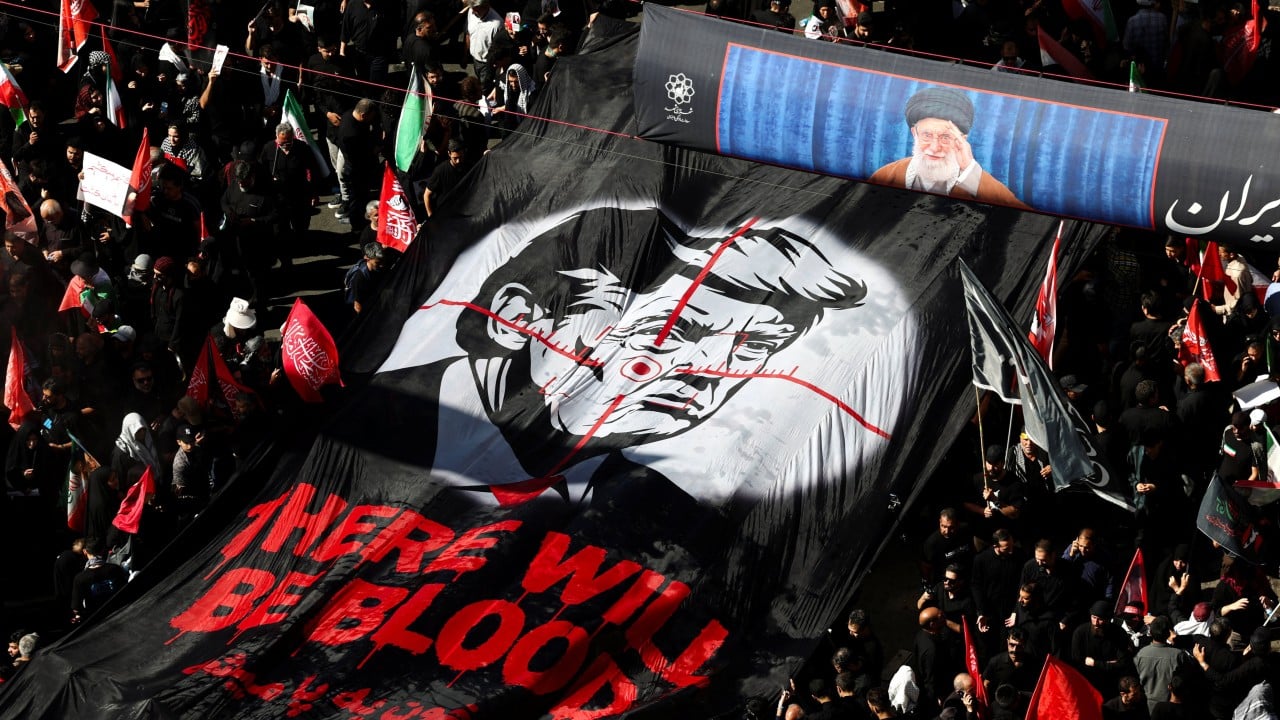
Assassinations unleashed under Trump haunt Iran war endgame
South China Morning Post

The New York Times
PoliticsJul 11, 2026 · 1 min
How Will Maine Democrats Replace Graham Platner? Here’s What to Know.
The New York Times