Times of India
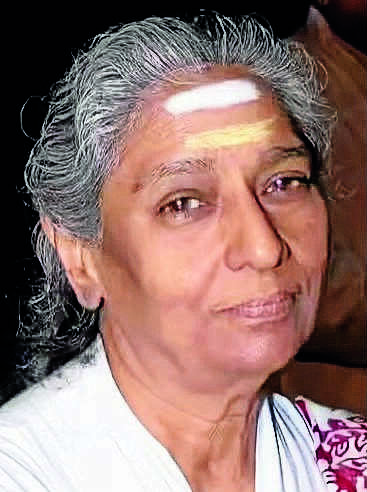
S Janaki, the voice of south Indian cinema, passes away at 88
S Janaki
CHENNAI: Few playback singers have shaped Tamil cinema the way S Janaki did. For nearly six decades, she wasn’t merely a singer lending her voice to heroines, she was the emotional fulcrum of Tamil films.
Whether it was romance, sorrow, devotional, folk music or a light comedy, Janaki could alter the texture of her voice to suit the character on screen, making audiences forget there was a singer behind the actor.Janaki died at a private hospital in Mysuru due to age-related ailments, sources said on Saturday. She was 88. She developed breathing issues on Friday night and was subsequently hospitalised. Born in Andhra Pradesh, Janaki moved to Chennai in the mid-1950s on her uncle’s advice and joined AVM Studios.
Her playback journey began in 1957 with the Tamil film ‘Vidhiyin Vilayattu’. Though her first recording remained relatively unnoticed, it marked the beginning of one of Indian cinema’s greatest musical careers.Her breakthrough arrived with ‘Singara Velane Deva’ from ‘Konjum Salangai’ (1962). Singing alongside the nadaswaram of Karakurichi Arunachalam, Janaki displayed extraordinary control, effortlessly matching the nuances of the classical instrument.
The song remains one of Tamil cinema’s greatest musical achievements and announced her arrival as a singer adept at blending classical finesse with cinematic expression.While M S Viswanathan initially relied heavily on established voices, he soon recognised Janaki’s remarkable versatility. Throughout the 1960s and early 1970s, she delivered a string of memorable hits under his baton. Songs like ‘Unnidathil Ennai Koduthen’ from ‘Avalukendru Or Manam’ cemented her place among Tamil cinema’s leading female playback singers.While MSV championed Janaki, it was Ilaiyaraaja who elevated her to legendary status. Their collaboration, often alongside S P Balasubrahmanyam, transformed Tamil film music from the late 1970s through the 1990s.Ilaiyaraaja repeatedly trusted Janaki with his most demanding compositions because of her unmatched ability to shift effortlessly between western melodies, Carnatic ragas, rustic folk numbers and emotionally charged ballads.
Songs such as ‘Senthoora Poove’ from ‘16 Vayathinile’, ‘Inji Iduppazhagi’ from ‘Thevar Magan’ (1992), ‘Ponmeni Uruguthey’ from ‘Moondram Pirai’ (1982), ‘Dhoorathil Naan Kanda’ from ‘Nizhalgal’ (1980) and several others showcased not just vocal excellence but extraordinary acting through voice.Janaki’s greatest strength was her ability to perform a song rather than merely sing it. She laughed, cried, whispered, giggled, teased and even mimicked voices whenever the situation arose. Directors often remarked that she could understand a character’s emotional graph after a single narration. Unlike many playback singers whose voices retained a fixed identity, Janaki’s voice constantly evolved depending on the heroine, be it Sridevi, Revathi, Radha or Radhika.
View original source — Times of India ↗
Related stories

TASS
WorldJul 12, 2026 · 1 min
Over 10 blasts heard in Iranian city of Bandar-e-Jask — IRIB
TASS
ABC News
WorldJul 12, 2026 · 1 min
Perth man, 26, charged over death near Fremantle entertainment strip
ABC News
ABC News
WorldJul 12, 2026 · 1 min
Numbat population improves amid warning there is a long way to go
ABC News

South China Morning Post
WorldJul 12, 2026 · 1 min
Youth suicides in Hong Kong hit 10-year high: court report
South China Morning Post