Indian Express
Moshi garbage depot accident: Families of victims recount final moments
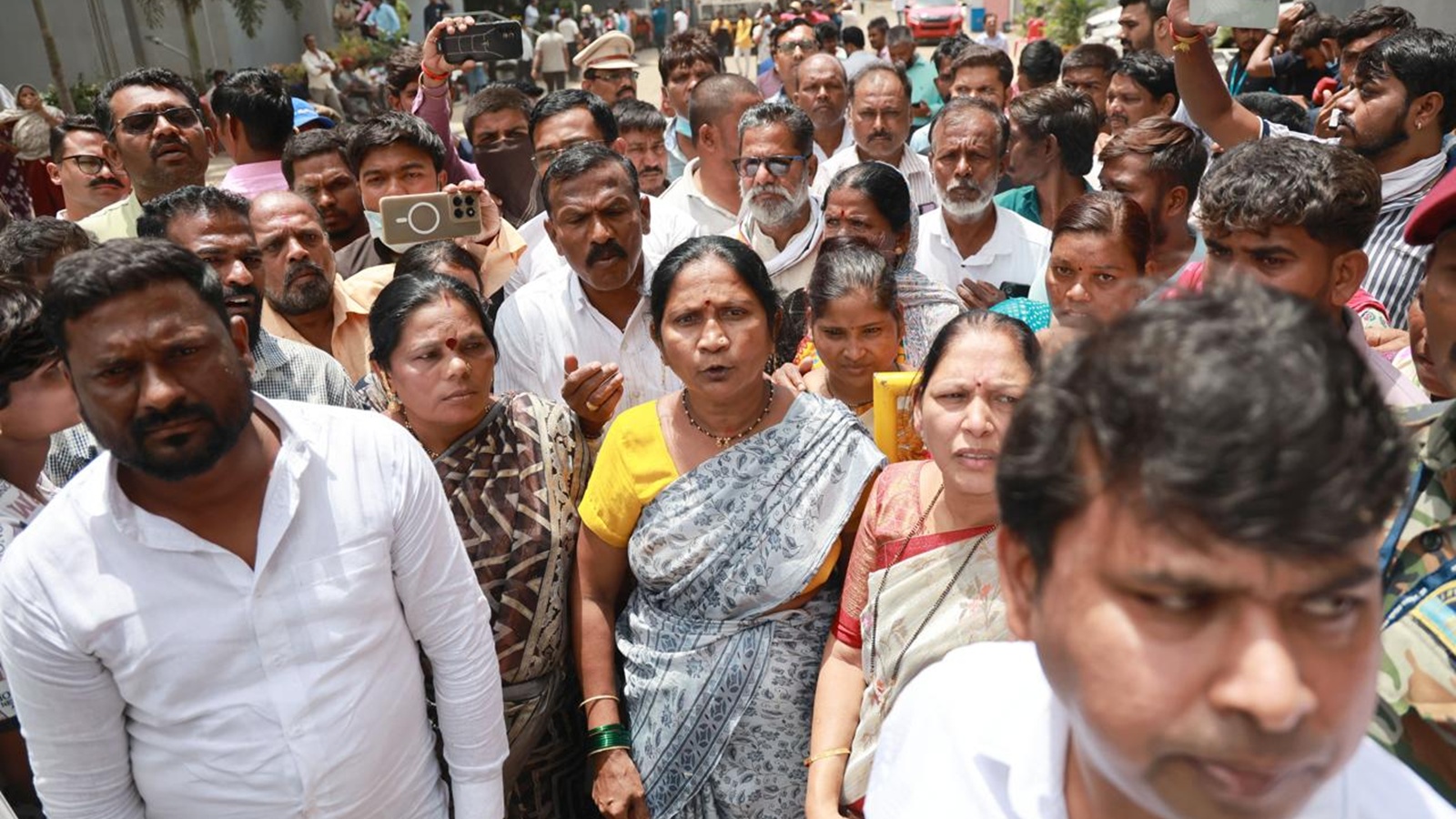
A newly married husband who never finished his lunch. A 25-day-old baby who will never know his father. A young mother of two toddlers, suddenly widowed. As rescue teams continue to comb through the debris at the garbage depot in Moshi, grieving families are left piecing together the final hours of seven men whose lives were cut short in the collapse – and demanding answers for what they call administrative apathy and delayed rescue efforts.
Mahesh Suresh Kumbhar, a resident of Chhatrapati Sambhaji Nagar, had joined the waste-to-energy plant as an Executive HR in March 2025, his elder brother Santosh Kumbhar said. He was married just weeks ago, on June 22, and had been living at Adarsh Nagar in Moshi. The family was informed of the incident on Wednesday evening.
Kumbhar completed his MBA in 2019 from a college in Chhatrapati Sambhajinagar, a college classmate recalled. In their last conversation, about a week before the tragedy, Kumbhar had spoken of wanting to change jobs – he had already interviewed for positions back home in Sambhajinagar so he could live closer to his family. He is survived by his wife, father and elder brother.
Nagesh Gaikwad (26)
Nagesh Sarjerao Gaikwad, a resident of Sanjay Gandhi Nagar had travelled from Georai taluka in Beed district for work, and had been employed at the garbage depot for three years. He leaves behind his wife, two young daughters aged two and one-and-a-half, and his parents.
His elder brother, Shubham Gaikwad, questioned why the rescue took so long despite the presence of numerous excavators already working at the Kudalwadi demolition site. As the sole breadwinner of the family, Gaikwad’s death has left his relatives pressing authorities to provide his wife with a job at the earliest to secure the family’s future.
Akshay Sawant (35)
Akshay Raju Sawant of Moshi had married with much celebration only two months earlier, on April 25 in Alandi, after which he began job-hunting and had recently taken up work as a driver at the depot, said his cousin Sahil Sawant.
On Wednesday afternoon, just before sitting down to eat, Akshay sent his wife Harshada a message: “I am about to have his lunch”. That was the last anyone heard from him. When repeated calls to his phone went unanswered, Harshada sensed something was wrong and alerted the family. The Sawants, originally from Vagheri village in Raigad district’s Mahad taluka, had moved to Pune in search of work – a new married life and a fresh job both cut short.
Story continues below this ad
Sunil Korke (40)
Sunil Korke of Sun Planet Society in Alandi had worked as Assistant Manager at the Moshi project for a decade. Originally from Pandharpur, he would typically take leave every year to attend the Sant Dnyaneshwar Maharaj Palkhi, but this year he chose to stay at work.
He was sitting down for a meal with colleagues on Wednesday afternoon when a loud noise sent him rushing outside – moments later he was trapped beneath a collapsing slab. Korke’s son was born just 25 days before the tragedy, leaving the infant fatherless before he could know him.
Sunny Mane (39)
Sunny Ashok Mane, a resident of Gandharvanagar in Moshi, had worked as a driver at the depot for five years and was the sole earner for his family, which includes his wife, two sons aged two and eight, and his parents – Mane was their only son.
His cousin, Prafulla Dolas, recalled that because Mane lived close to the depot, he often came home for lunch. On Wednesday, his mother had prepared biryani and called him home, but his senior at work insisted the team eat lunch together in the office instead – a decision that preceded the tragedy.
Story continues below this ad
Ranjit Patil (22)
Ranjit Jaywant Patil, who hailed from Karad, had worked as a lab assistant at the depot for a year and a half. His cousin, Shritej Gurav, was among the most vocal in criticising the rescue effort, alleging it was slow-paced and marked by negligence and administrative apathy.
Gurav said heavy machinery was brought in only after two-and-a-half days, when it could have been deployed on Wednesday itself, and believes some lives could have been saved with a faster response. He further alleged that the company bore equal responsibility, as staff warnings about the garbage collapsing had gone unaddressed, and pointed out that even the machinery available with the Pimpri Chinchwad Municipal Corporation (PCMC) was limited. He said the tragedy must serve as a lesson for authorities to ensure a swifter emergency response in future.
View original source — Indian Express ↗
Related stories

Philippine Daily Inquirer
WorldJul 12, 2026 · 1 min
Iran Guards say struck second vessel in Strait of Hormuz – state media
Philippine Daily Inquirer

Philippine Daily Inquirer
WorldJul 12, 2026 · 1 min
41 years later: Cebu groups renew call for justice for Fr. Rudy Romano
Philippine Daily Inquirer

France 24
WorldJul 12, 2026 · 1 min
Live: US launches new strikes as Iran closes the Strait of Hormuz
France 24

Deutsche Welle
WorldJul 12, 2026 · 1 min
Gas queues grow as Ukraine targets Russia's fuel supply
Deutsche Welle