Indian Express
Inside Khabar Lahariya: the fearless women reporters rewriting rural journalism in India
News
Books and Literature
Inside Khabar Lahariya: the fearless women reporters rewriting rural journalism in India
Premium
A polyphonic narrative history of Khabar Lahariya, The Good Reporter celebrates resilient journalism through intimate vignettes
The Good Reporter is a narrative history of Khabar Lahariya (KL), a media space that has been championing women-led journalism.
Written by: Srikar Raghavan
5 min readJul 12, 2026 10:00 AM IST
First published on: Jul 12, 2026 at 10:00 AM IST
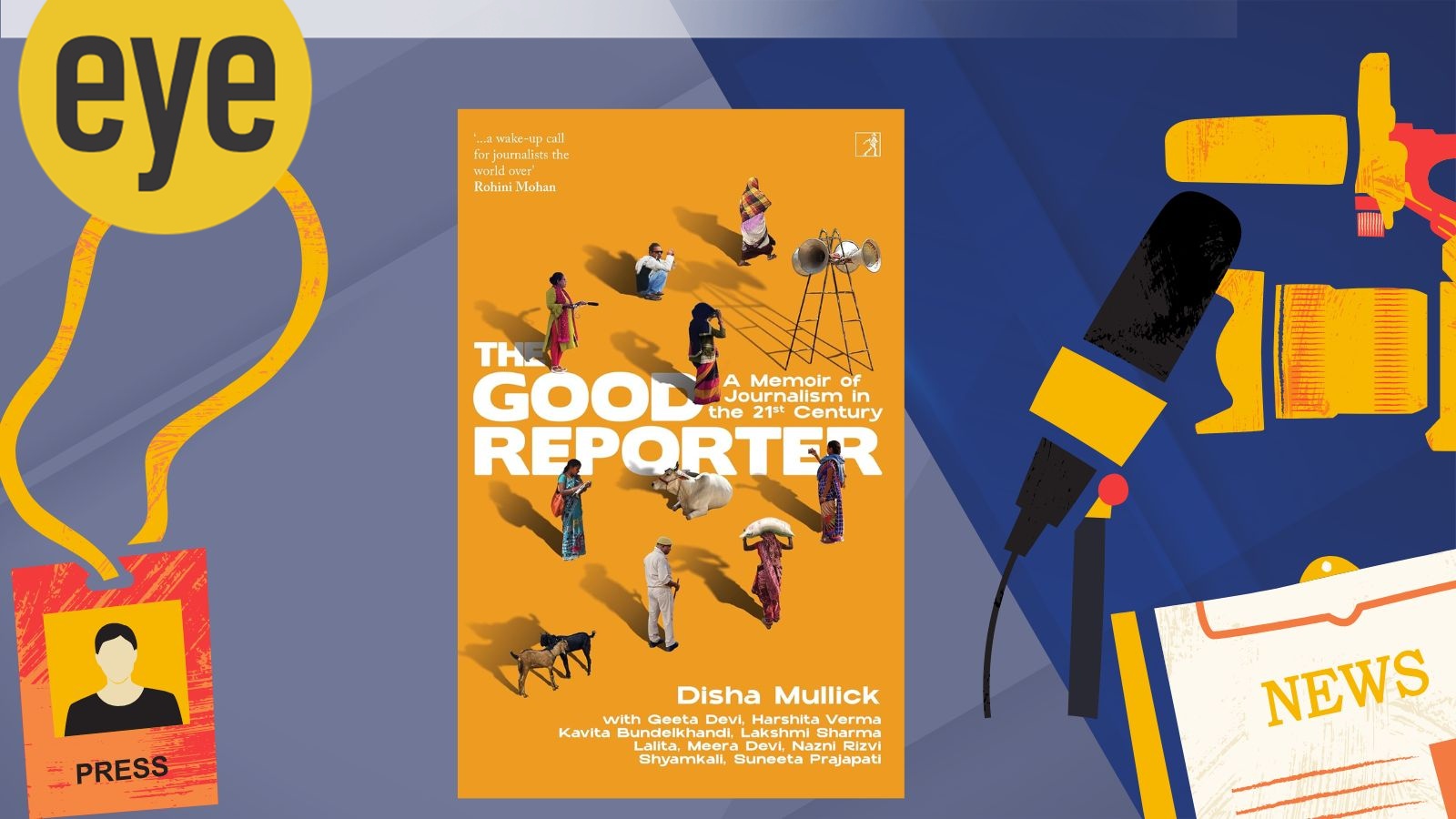
The cover is a real screamer — we see women writing, striding, listening, clicking photos, carrying loads, while the men (appropriately enough) are either policing or loafing. The book is authored by Disha Mullick, but its full writership is (rightfully) shared by multiple women journalists from across the social spectrum.
An unusual biography of a feminist organisation, written with disarming candidness and style, The Good Reporter is a polyphonic narrative history of Khabar Lahariya (KL) — a maverick media space that has been championing hyper-local, women-led journalism in the patriarchal boondocks of Bundelkhand. Having begun as a door-to-door newspaper in the early 2000s, KL has now transformed into a video-centred digital platform that reaches millions of viewers every month. At its core, it has always been a tight-knit web of female reporters, predominantly from underprivileged backgrounds, reporting from several districts of Uttar Pradesh and Madhya Pradesh.
Khabar Lahariya remains a fiercely mutinous and embattled community. We learn that “in the past two decades, we have had long-time team members confront or succumb to acid attacks, long illnesses, accidents, suicide. This is in addition to the intense violence we have witnessed in our work, and still do, on a daily basis.”
The grim old cliff of adversity emerges constantly in the narrative but the writer(s) also emphasise just how personally liberating this adventure of journalism has proved to be — “a buffer, a protective aura, a role we could forget ourselves in for a brief time” — especially in these violently conservative portions of rural India. The spectre of male incompetence (and not just domestic violence) keeps surfacing too. One of the reporters spends a lakh to buy her unemployed husband a sound system plus vehicle so he can ply a DJ business. “And then he ran someone over with it, and I had to bail him out with my savings.”
The prose is generously replete with Hindi phraseology, which gives it a distinct and flavourful tadka. But how does the book accommodate its 10 authors, this grand profusion of voices? “Our primary languages are different, our castes are different, our histories — ranging from bonded labour to foreign education — are vastly different.”
To create this book, the writers came together at multiple workshops to pool their thoughts and recollections. Lots of back-and-forth translations between Hindi and English ensued. Long direct quotations extracted from these group discussions, either italicised or indented, are at the heart of the narrative. These are intimate, experiential, visceral and moving vignettes that continually push the reader into the narrators’ shoes. They put the ‘journal’ into journalism, a personal day-to-day diary of observations and feelings, revealing details that their own families might not be privy to, sometimes also exposing grievances and conflicts with fellow Khabar Lahariyites. Indeed, the book’s biggest strength is how it consciously evokes the messy arena of turbulent co-existence — fierce, radical honesty is really what makes these deep relationships sustainable and meaningful. “It was never complete, and always imperfect, this fashioning of the feminist workplace.”
A digital transition
The Khabar lahariya team
In 2017, KL transitioned from print journalism to a purely digital space, a necessary move to stay in vogue, which brought new challenges to the fore. Faces once hidden under a collective byline would now be firmly visible in the new audio-visual landscape. Mirrors and lipsticks become as necessary as diaries and pens. The ambit of their stories expands into wider, more politically significant terrains, and the “editorial prerogative became a thornier, riskier affair.” New roles and urban-rural hierarchies grapple with the instantaneous reach and excitement of social media, which is a double-edged sword, for falsehoods can now be amplified irrevocably. “An untruth by a powerful man — a Rajput pradhan’s son — about a woman reporter taking a bribe could spread across the new digital world and damage the credibility we had built.”
Across six chapters (and refreshing notes) that fuse the personal and the professional, we are offered a ringside view of KL’s hard-fought triumphs and travails. In parallel, one takes away an immersive portrait of Bundelkhandi society — a land of daakus, kaands and samjhautas. Inspiring and humbling to read, the book is a song of solidarity, sisterhood and resilience. But it is equally a book that celebrates the maza of irreverence, laughter, hard work and self-criticism. One might compare KL to the People’s Archive of Rural India (PARI), another exemplar of ground reportage but its unique praxis of feminist exclusivity makes it stand out still. So go read The Good Reporter or, better yet, follow Khabar Lahariya’s work on Instagram and other platforms — it is unlikely you’ll catch a glimpse of these worlds anywhere else.
Raghavan is an author and a New India Foundation fellow
View original source — Indian Express ↗
Related stories

The Hindu
WorldJul 12, 2026 · 1 min
Pakistan, Saudi Arabia express concern over escalation in West Asia conflict
The Hindu
Indian Express
WorldJul 12, 2026 · 1 min
Rebel TMC ‘draws in’ more Mamata loyalists to boost claim on party with EC. Here is the list
Indian Express

Philippine Daily Inquirer
WorldJul 12, 2026 · 1 min
Beyond diplomas: Why UP students hold lightning rallies at graduation
Philippine Daily Inquirer
Times of India
WorldJul 12, 2026 · 1 min
Bengaluru delivery agent arrested for sexually harassing woman inside her flat
Times of India