Indian Express
How Apple, OpenAI went from working together on AI to fighting over trade secrets
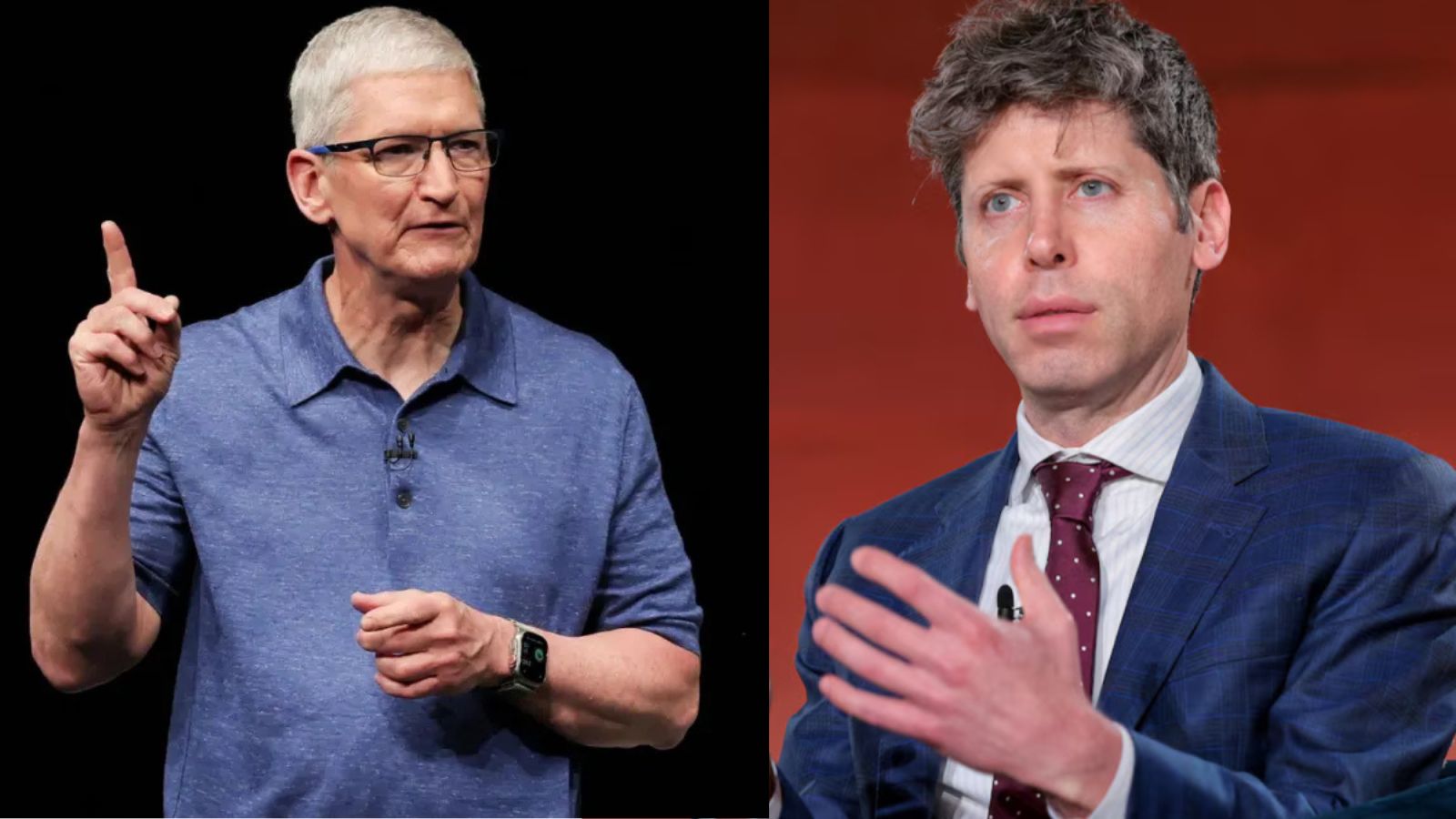
The ChatGPT-maker was accused of stealing trade secrets in a lawsuit filed by Apple in the US District Court for the Northern District of California on Friday, July 10. Apple has accused OpenAI and its hardware chief of engaging in a coordinated campaign to steal information about its upcoming products as part of the AI startup’s efforts to develop its own lineup of AI-first devices.
As part of the litigation, Apple also named two former employees who have since joined OpenAI. One of them is Tang Tan, the chief hardware officer at OpenAI. Tan was previously Apple’s vice president of product design, and led development of the iPhone, smartwatch, AirPods, and several other offerings as part of the company’s hardware engineering division.
In 2024, Tan left Apple to launch an AI devices startup called io Products, alongside Apple design veterans Jony Ive and Evans Hankey. The startup was acquired by OpenAI last year for $6.5 billion. To be sure, Ive and Hankey are not named in the lawsuit.
Besides Tan, a former iPhone hardware engineer, Chang Liu, who joined OpenAI in January 2026, is also named in the lawsuit and accused of providing confidential materials.
The legal standoff between Apple and OpenAI underscores how the high-profile partnership between the two companies have soured. Beyond the courtroom, the dispute also reflects deeper strategic tensions over AI talent, intellectual property, and the race to define the next generation of AI-powered devices.
“At every level, from members of its technical staff to its chief hardware officer, and in coordination with business partners, OpenAI has been stealing Apple’s trade secrets and confidential information, As a natural result, OpenAI’s nascent hardware business now rests on the shakiest of foundations, rotten to its core by its illegal reliance on misappropriated trade secrets,” Apple said in its lawsuit.
Story continues below this ad
Denying the accusations laid out in the lawsuit, OpenAI responded by saying, “We have no interest in other companies’ trade secrets. We remain focused on building innovative technology that empowers people everywhere.”
What are Apple’s allegations against OpenAI?
–Details of secret projects: OpenAI allegedly asked job candidates from Apple to share details about secret projects at the iPhone-maker and even bring unreleased device components and prototypes to their interviews.
-Downloading confidential files: Apple also accused Chang Liu of downloading internal documents from a laptop owned by the company to share with OpenAI.
“Over several weeks, while developing hardware for OpenAI, Mr. Liu surreptitiously accessed and downloaded dozens of Apple’s confidential hardware-related files, including voluminous, detailed in formation about unreleased products, engineering presentations, technical specifications and proprietary project data,” according to the lawsuit.
Story continues below this ad
-Teaching employees how to leave: Apple alleged that OpenAI offered to actively coach its employees on how to handle their exits from the Cupertino-based tech giant.
“OpenAI has counseled departing employees not to disclose their next employer and given advice on how to avoid the ‘dreaded walk out’ that would promptly remove them from the company rather than giving them a standard two weeks in which they could continue to access Apple’s confidential information and trade secrets,” the lawsuit read.
-Reaching out to Apple partners: OpenAI allegedly used confidential material shared by Apple employees to reach out to the latter’s manufacturing partners, one of whom was even asked to demonstrate Apple’s technique for finishing metal on its devices, the lawsuit said.
-No response from OpenAI: Apple claimed that it sent a letter to OpenAI in February 2026, warning that confidential information could be “making its way to OpenAI’s business improperly.” However, the startup allegedly did not respond to Apple’s letter, according to the lawsuit.
Story continues below this ad
In the lawsuit, Apple said it is seeking a jury trial case. It is further seeking an injunction that would prevent OpenAI from possessing, using or sharing Apple’s trade secrets, as well as an order requiring OpenAI to return Apple’s intellectual property.
Apple also wants OpenAI to be directed by the court to cease its practices and destroy any proprietary materials. It wants OpenAI to redesign upcoming products so they do not include any of its technology.
How did the Apple-OpenAI partnership unravel?
The legal dispute between Apple and OpenAI marks a dramatic turn in their partnership over the past few years. In 2024, Apple struck a deal with OpenAI to use the startup’s ChatGPT technology as part of its overhaul of products, including its Siri digital assistant.
The partnership was announced at Apple’s Worldwide Developers Conference that year, with OpenAI CEO Sam Altman sitting in the audience. At the time, Apple software head Craig Federighi described the startup as the “pioneer and market leader” in AI.
Story continues below this ad
The deal allowed users to access ChatGPT results within Siri and tap into the AI chatbot to generate text and analyse surrounding objects via the iPhone’s Visual Intelligence feature. The arrangement was also later expanded, with Apple adding ChatGPT as an option for creating images in its Image Playground app and analysing on-screen content.
However, tensions have been brewing between the two since last year following reports that OpenAI has been disappointed in how ChatGPT has been integrated into Siri. While the two companies only worked together on AI features used by the iPhone and other products, and never had a partnership to develop hardware devices, OpenAI enlisting former Apple design visionary Jony Ive to help develop devices is said to have made matters worse.
Earlier this year, Apple announced that it was teaming up with Google to leverage its Gemini AI technology in order to power Siri and its other AI products. In response, OpenAI has mulled legal options against Apple as the startup said it failed to see the expected benefits from the partnership and even considered sending a breach of contract notice.
Meanwhile, OpenAI has also managed to lure away a vast number of Apple employees with the lawsuit stating that more than 400 ex-Apple staffers are now at OpenAI, including the top executive who used to be in charge of Apple’s smart glasses project till last month.
Story continues below this ad
Another aspect highlighted by the case is the next-generation of AI devices coming to Silicon Valley, with Apple, OpenAI, Meta, and several others racing to develop new gadgets that puts AI at the centre in a post-smartphone future. For its part, Apple is reportedly working on a range of devices, including smart glasses, pendants, and camera-equipped AirPods.
OpenAI, on the other hand, is reportedly working on a phone that could place autonomous AI agents at the forefront, instead of the app-based model that has been championed by Apple and Google over the years.
View original source — Indian Express ↗
Related stories

ZDNet
TechnologyJul 12, 2026 · 1 min
The best email hosting for small businesses in 2026: Expert tested
ZDNet
TechRadar
TechnologyJul 12, 2026 · 1 min
How to watch MotoGP 2026: FREE live streams, TV channels, schedule
TechRadar

TASS
TechnologyJul 12, 2026 · 1 min
Woman dies, four wounded as Ukrainian drone hits Energodar bus stop
TASS

The Hindu
TechnologyJul 12, 2026 · 1 min
Indian-origin woman shot dead in U.S.; husband arrested
The Hindu