Times of India
Burning lemon peels and cloves: The surprising benefits explained
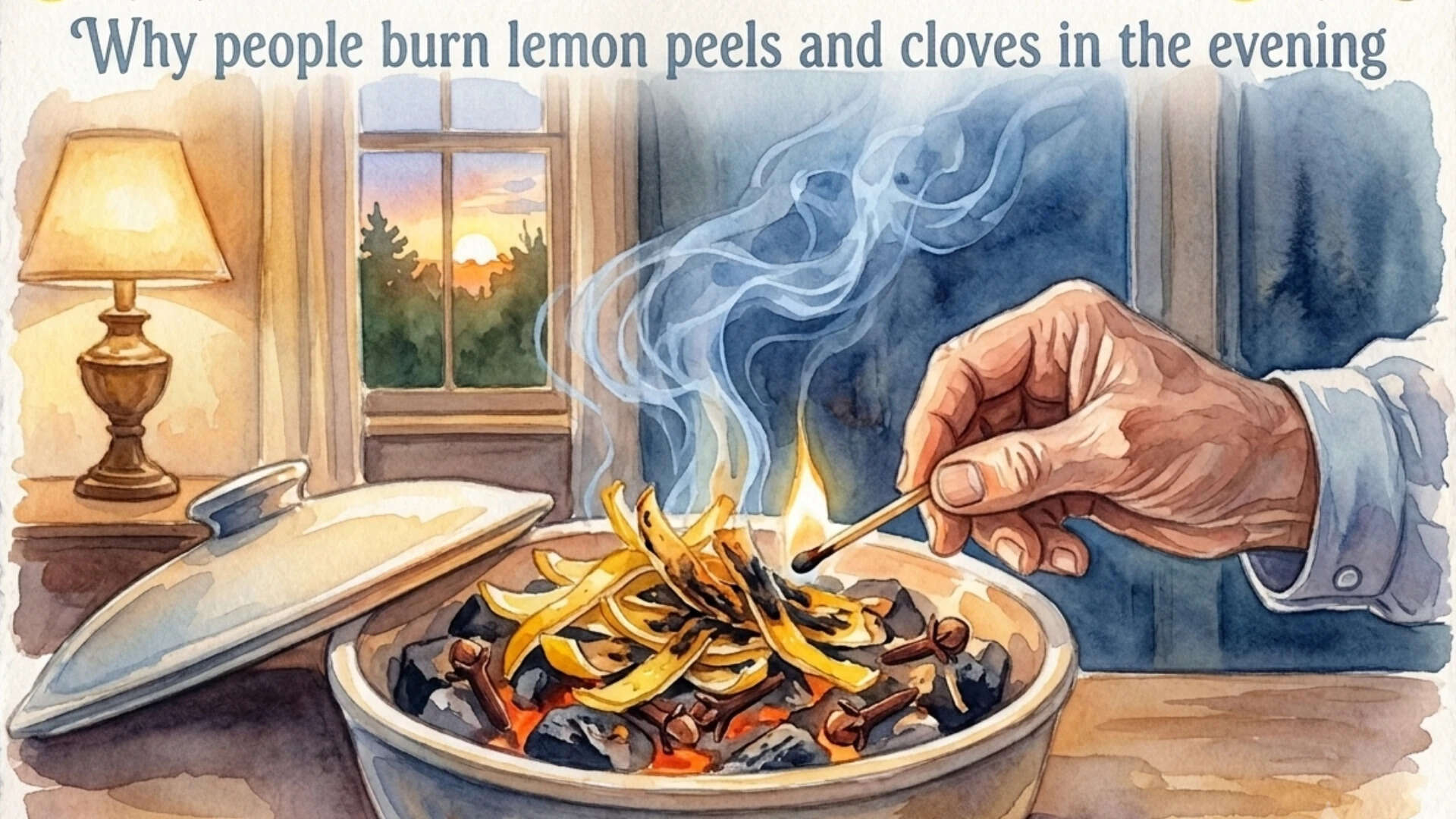
Image generated using AI
If you somehow chanced upon a time machine and set it to a couple of centuries back, you'd probably expect London or Delhi or Florence to smell like history books never mention. Think smoke, drains, animals, unwashed wool.
And what you might not expect is how people walking on those streets were carrying a small piece of fruit stuck full of cloves, either tucked into their pockets or hung from a chain.In the evenings, if you entered a home, either in the countryside or the city, you would find something smouldering on a plate near the doorway. Lemon peel, curling at the edges, with cloves pressed into it like tiny black studs. Though no one in that room could have explained the chemistry, they just knew that when the sun went down, this was what you did.
And even today, you might have had the pleasure of witnessing it. That familiar aroma of strong citrus and warm cloves that welcomes you every time you visit your pops and nonna.
Why has burning lemon peels and cloves become a treasured tradition?
A habit that people followed for different reasons
If you look back, there is a clear trail that suggests this practice runs through medieval Europe, but in the form of a pomander, a ball of fragrant material. Back then, people believed that carrying or wearing strong fragrances would guard them against illness carried by foul air.
Lemon and clove were also used in traditional Ayurveda for centuries. Before air fresheners and mystifiers came into being, people burned cloves to cleanse the air and protect against illness.
They burned lemon peels to mask the aroma of kitchens and also as disinfectants. The habit stuck around long after the original belief behind it faded. First as a symbol of status, later as a Christmas craft, and somewhere in between, as a household ritual practised for reasons nobody bothered to write down.
Even today, people practise this old remedy of burning lemon peels and cloves when they have a cold or flu.
What’s in the smoke?
Image generated using AI
Strip away the folklore, and there's real chemistry behind it. If you have ever opened a box of cloves, you might know the punch. This strong punch comes from eugenol, a compound researchers have studied numerous times. A 2012 study published in the Journal of Pediatric Nursing found that, when topically applied, clove oil may have antimicrobial, antibacterial, and antiseptic properties against infections, and act as a vermifuge (anti-worm).
Cloves are also known for their insect-repellent properties, so back in the day, it was a great way to keep danger away. Lemon peel oil, meanwhile, contains d-limonene, the molecule behind that unmistakable citrus brightness and the subject of a growing body of aromatherapy research.
Clove oil can keep bugs away
At a time when spray cans didn’t exist, people used cloves to keep mosquitoes away. Cloves acted as a functional deterrent. A 2025 study examined the mosquito-repelling effects of clove and cinnamon oils, along with four plant-based compounds: 2-PEP, geraniol, eugenol, and eugenyl acetate. It found that these plant-derived compounds, including those in clove oil, were effective in keeping mosquitoes away. In some cases, higher concentrations were even more effective. Another study on dengue-carrying mosquitoes found that clove bud oil, rich in eugenol, provided longer complete protection than several other essential oils tested.
So, the evenings, when mosquitoes are most active and windows tend to be open, are exactly when you'd want that smoke in the room.
The calming effect of lemon peels
Besides the refreshing citrus aroma, lemon peels can also have a calming effect. A 2023 meta-analysis published in the journal Frontiers found that lemon essential oil eased trait anxiety, but not immediate, in-the-moment anxiety. Another controlled study on limonene suggests it may lift mood, partly because many people find the smell of lemon pleasant.
Now, that’s something most of us need after a tiring day.While this age-old tradition may be good for your home, it is important to know that burning anything indoors, including natural substances, still produces smoke. So, this ritual may not be favourable for anyone with asthma or a respiratory condition, especially if it is done in a small or poorly ventilated room.
View original source — Times of India ↗
Related stories

Straits Times
WorldJul 12, 2026 · 1 min
Iran newspaper lists Trump, European leaders as revenge targets
Straits Times

Times of India
WorldJul 12, 2026 · 1 min
Ukraine steps up attacks on Russia, killing one and targeting refinery and tanker
Times of India

South China Morning Post
WorldJul 12, 2026 · 1 min
Why China’s ethnic unity law marks shift in policy towards assimilation
South China Morning Post

Times of India
WorldJul 12, 2026 · 1 min
Badrinath temple donation theft: U'khand govt orders action against officials
Times of India