Indian Express
India’s first hydrogen train: 6 things passengers should know before its launch
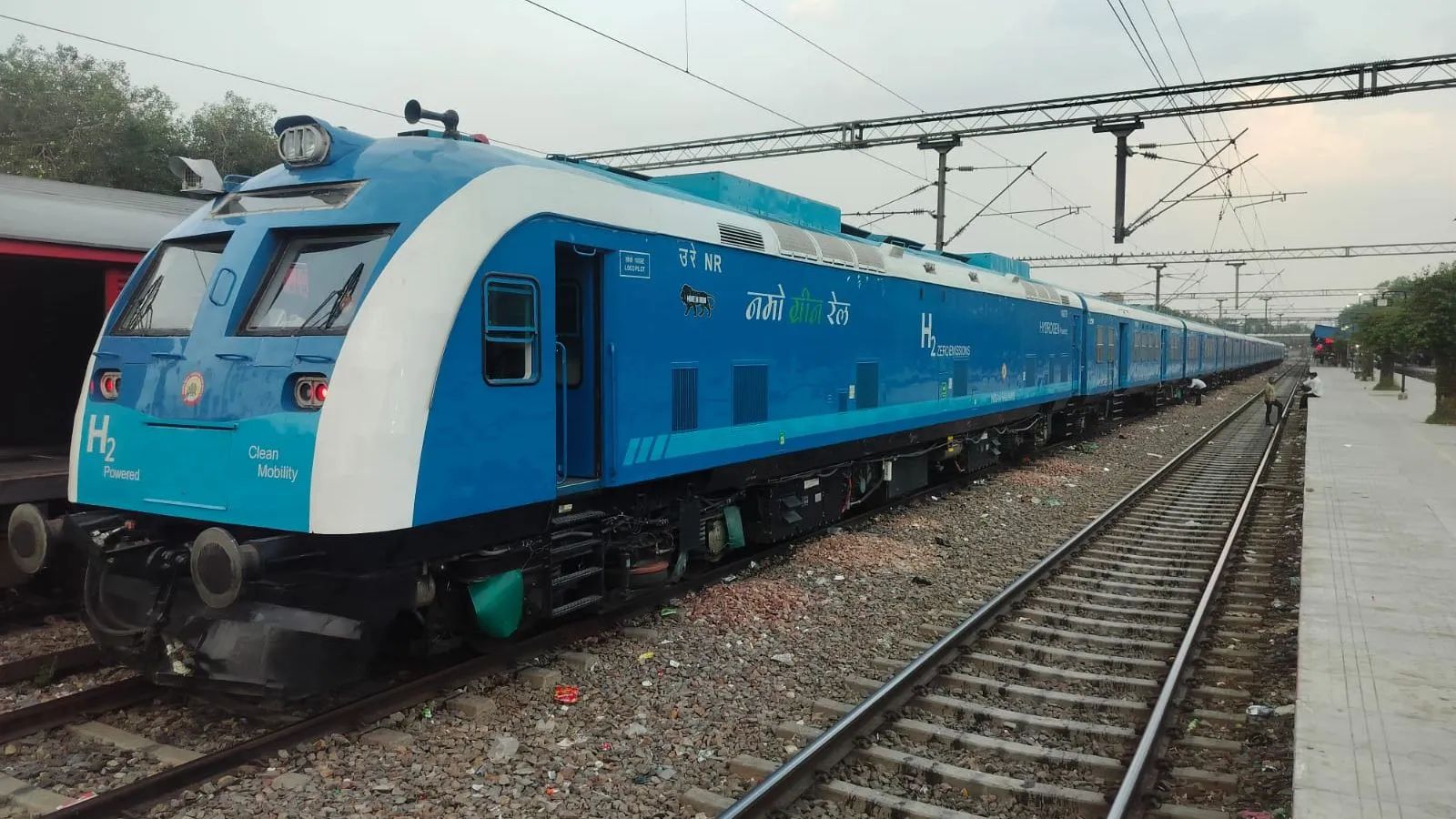
Hydrogen train in India: The much-anticipated hydrogen train is expected to launch soon. Developed by the Chennai-based Integral Coach Factory (ICF), the train will be flagged off by Prime Minister Narendra Modi.
The hydrogen-powered train has undergone multiple trials conducted by the Research Designs and Standards Organisation (RDSO). In May 2026, the Railway Board (RB) approved the introduction of India’s first hydrogen trainset. In a letter dated May 22, 2026, addressed to RDSO and Northern Railway, the RB conveyed its approval for introducing the hydrogen-powered train.
India’s first hydrogen-powered train is expected to begin operations soon (Image: Ministry of Railways/Enhanced with AI)
6 things to know about India’s first hydrogen train
India’s first hydrogen train to run on Jind-Sonipat route
The country’s first hydrogen-powered trainset will run on the Jind-Sonipat route. The 89-km-long stretch falls under the control of Northern Railway’s Delhi Division. During its journey between Jind and Sonipat, the hydrogen train will stop at 12 stations. These are: Jind City, Pandu Pindara, Lalit Khera, Bhambeva, Ishapur Kheri, Butana, Khandrai, Gohana, Rabhra, Lath, Mohana Haryana, and Barwasni. It will run as train number 74010/74009.
Jind-Sonipat hydrogen train to run at 75 kmph
The Jind-Sonipat hydrogen train will operate at a maximum speed of 75 kmph. The 10-car trainset will include two Driving Power Cars (DPCs) with a capacity of 1,200 kW each, providing a combined power output of 2,400 kW, along with eight passenger coaches.
With its launch, the train is set to become the world’s longest hydrogen trainset and the most powerful hydrogen train on the Broad Gauge ( BG) platform.
Inside India’s hydrogen train: From diesel DEMU to hydrogen fuel cell power
As the name suggests, the Jind-Sonipat hydrogen train will be powered by hydrogen fuel. The train will use a 1,200 KW hydrogen fuel cell propulsion system, which will generate power to operate the train. This hydrogen train is a converted version of a Diesel Electric Multiple Unit (DEMU) rake.
Story continues below this ad
In a statement, the national transporter said: “Hydrogen is a high-energy-density fuel (120 MJ/Kg) in comparison to diesel (43 MJ/Kg), with low maintenance and a manageable Carbon footprint. In the proposed hybrid power system, the primary energy source is a Proton Exchange Membrane Fuel Cell (PEMFC) and the secondary energy source will be a battery bank to meet the average and peak power requirements.”
When India’s first hydrogen train was being manufactured at Chennai-based ICF (Image: Ministry of Railways)
Hydrogen train’s only direct emission is water vapour
According to the Ministry of Railways, hydrogen fuel cell technology generates electricity through a chemical reaction involving hydrogen. The process produces only water vapour as an emission, making it a cleaner alternative to conventional fossil fuel-based traction systems.
How India’s first hydrogen train will be refuelled
To refuel India’s first hydrogen trainset, a hydrogen storage and refuelling facility has been set up at Haryana’s Jind. The facility has received the license from the Petroleum and Explosives Safety Organisation (PESO) for the storage and dispensing of compressed hydrogen gas.
“A hydrogen compression system has been provided for refuelling operations, along with necessary technical support and critical spares to ensure reliable and fail-safe functioning. Provision of a standby compressor unit is also being ensured.
Story continues below this ad
Various safety sensors, including hydrogen leak detectors and flame detectors installed at the hydrogen production, storage and dispensing facility, will be regularly inspected and cleaned to prevent dust accumulation and ensure safe operation,” the Railways said.
India joins global hydrogen train race
With its launch, India will join a select group of countries, including Germany, Japan, China and the United States, that are exploring hydrogen-powered trains for cleaner rail transportation. Recently, Switzerland also unveiled a hydrogen train; however, it was developed for a narrow-gauge (NG) railway network.
View original source — Indian Express ↗
Related stories

Philippine Daily Inquirer
WorldJul 12, 2026 · 1 min
SBMA chief hails West PH Sea arbitral ruling as ‘beacon of hope’
Philippine Daily Inquirer

Times of India
WorldJul 12, 2026 · 1 min
Watch: Sonam Wangchuk looks visibly weak as hunger strike enters day 15th
Times of India

BBC
WorldJul 12, 2026 · 1 min
Nothing to suggest Widdecombe killing was politically motivated, police say
BBC

Straits Times
WorldJul 12, 2026 · 1 min
Drownings surge as heat stifles Germany
Straits Times