Indian Express
The hidden animal mystery inside a 1611 painting has finally been solved
3 min readNew DelhiJul 12, 2026 03:06 PM IST
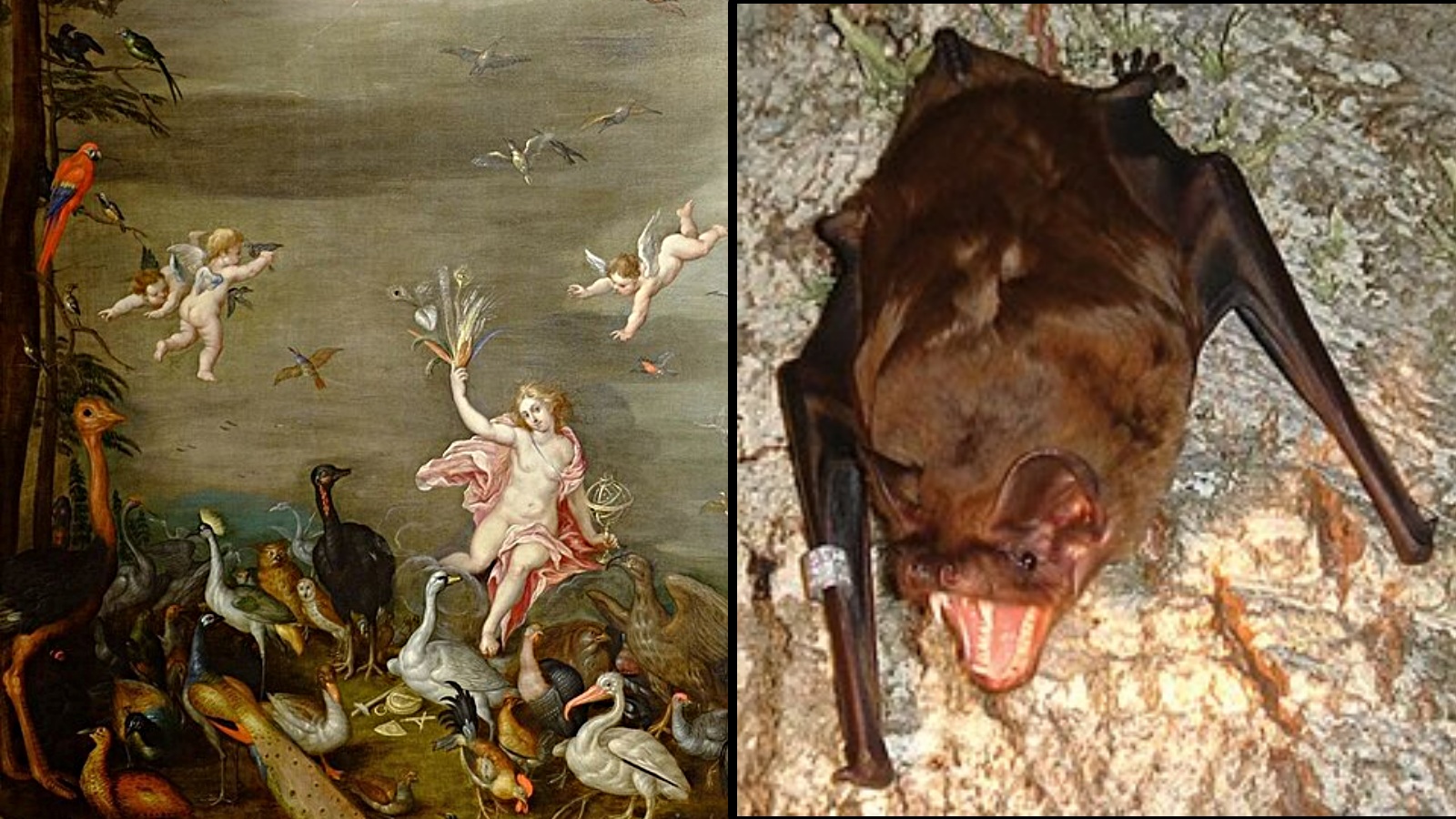
Researchers say a Renaissance painting may hold clues to this bat’s secret eating habit (Images: Wikimedia commons)
Who would have thought a centuries-old painting could hold a clue to modern scientific research? But that’s exactly what researchers have found.
A tiny detail hidden inside “Air”, a 1611 painting by Flemish artist Jan Brueghel the Elder, may have captured a strange animal behaviour more than 400 years before scientists officially confirmed it. The surprising finding has been published in the journal Proceedings of the National Academy of Sciences.
The animal in question is the Greater noctule bat (Nyctalus lasiopterus) — Europe’s largest bat and one of the few known to hunt birds.
Scientists only directly documented this behaviour last year. It all started when ecologist Pedro Romero-Vidal, who has been working on a project about identifying animals in historical paintings, spotted something unusual in Brueghel’s artwork.
In Frame: Air (painting) by Flemish painter Jan van Kessel the Elder (Photo Credit: Wikimedia Commons)
“I had never encountered a similar scene in any of the many paintings I had previously examined,” he told Science News.
In the top-right corner of the painting, a bat appears to be holding a small bird in its mouth. While it may seem like a minor artistic detail, but the bat’s reddish-brown fur, round ears and long wings closely resemble the greater noctule. And the prey looks like a songbird — the same kind of bird the bat is now known to hunt.
The painting itself features more than 60 airborne creatures, from parrots and swans to bats and owls. But this one small scene stood out because it closely mirrors what modern science has only recently confirmed.
Story continues below this ad
For years, researchers had found feathers from as many as 31 songbird species in the bat’s droppings, hinting at its unusual diet. Since these hunts happen high in the sky and mostly at night, they are rarely seen.
That’s what makes the painting so fascinating. It suggests that long before science had cameras, tracking tools or field studies, people may have already noticed what these bats were eating — and one artist quietly painted that observation into history.
View original source — Indian Express ↗
Related stories
The Guardian
EntertainmentJul 12, 2026 · 1 min
Experts warn of ways screwworm could spread in the US and new difficulties in keeping it at bay
The Guardian

Indian Express
EntertainmentJul 12, 2026 · 1 min
Mandira Bedi breaks down revealing how therapy healed her after husband’s death
Indian Express

Times of India
EntertainmentJul 12, 2026 · 1 min
'It's me, hi, I'm the problem': CJP uses Taylor Swift song to mock Dharmendra Pradhan
Times of India

Indian Express
EntertainmentJul 12, 2026 · 1 min
Anshula Kapoor shares unseen wedding reception photos; Ranveer Singh, Arjun Kapoor party hard
Indian Express