Indian Express
Know Your City | Madras Sappers Museum in Bengaluru now open for public visits
4 min readBengaluruUpdated: Jul 12, 2026 05:30 PM IST
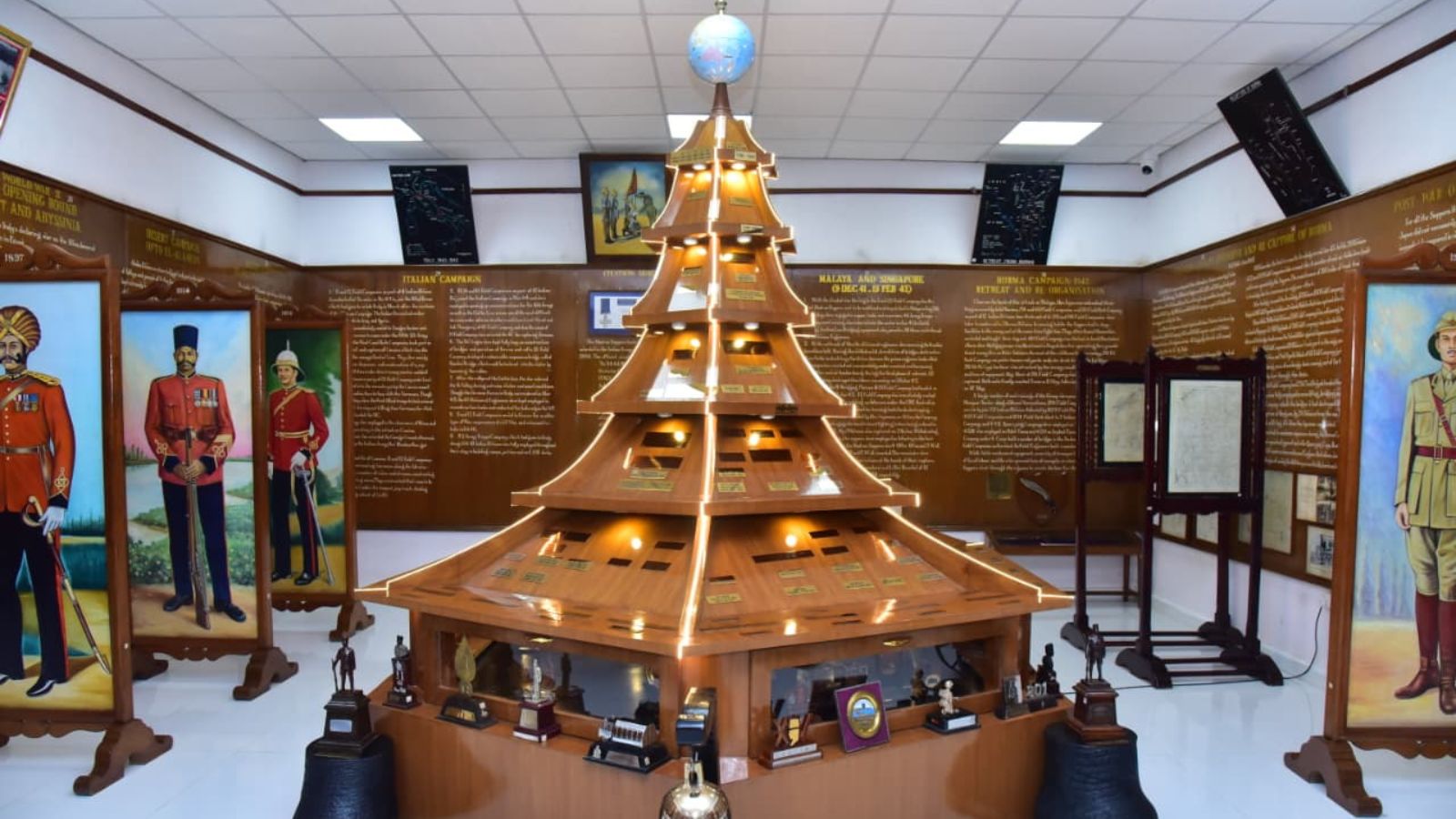
The museum at the Madras Engineering Group HQ off Kensington Road displays centuries of history and artefacts across three dedicated halls. (Photo Credit: Layerone Studios)
For centuries, Bengaluru has been shaped by its military history – from the time of Kempe Gowda to the modern Cantonment area – which the Madras Sappers had no small hand in creating. For those Bengaluru residents interested in the history of the Sappers, their Museum is now open to members of the public who register to visit on certain days.
The Sappers have a long and storied history from their roots as the Madras Pioneers, in legendary battlefields across India and the world.
They were at Assaye, which Duke Wellington (who would later face generals of the calibre of Napoleon and Jean Soult) remembered as one of the bloodiest battles he had ever seen. They were at Meeanee, where their lightly-armed men came to the aid of the 50th Cheshire Regiment in dire straits, prompting the Englishmen to later exchange their “shako” hats as a mark of respect (surviving even today in the form of the “doopta” headgear).
What’s on display
Today, the museum at the Madras Engineering Group HQ off Kensington Road displays centuries of history and artefacts across three dedicated halls. A curious visitor can see the history of the Sappers writ in the medals on display – from the Carnatic War to Srirangpatnam, from Egypt to the Himalayas. A large world map is also an aid to the visiting history enthusiast, tracing the Sappers’ path across the globe.
Armaments from across the world are also on display here. Workhorses such as an AK-47 or archaic weapons from the British era might be expected, but not so much the Japanese katanas in the collection, reminding visitors that the Sappers faced Imperial Japan in Burma. Those interested in the internal evolution of the Sappers will also be able to see the progression of their official uniforms throughout the years, alongside a sculpture detailing the structure of the unit beginning from its time as the Madras Pioneers.
A large collection of photographs from the Sapper archives also provides a window into the past. This section boasts a detailed map of Bengaluru in 1935, giving visitors a perspective on how the city has changed in some ways and remained the same in others.
Heritage walks
The new visibility of the museum comes from a directive from the Engineer-in-Chief of the Corps of Engineers, with the result that the historical collection of all the Sappers of India is now becoming visible to the public. Courtesy a directive from the Sappers’ own Commandant, a tie-up with Bengaluru Prayana is bringing heritage walks to the museum.
Story continues below this ad
An internship program has also commenced, catering to the educational institutions of Bengaluru from the pre-university to PhD level, on the topics of Military History and Military Psychology.
According to the Madras Sapper Museums and Archives Director Colonel (Retd) Uday Sankeshwar, “Since the Museum has opened, we are immensely proud and surprised at the interest shown by the general public. We are also focused on making the museum more friendly to the younger generation, as they are the citizens of tomorrow… We are also going to try and make it more interactive by means such as touchscreens, where you can access the information via computers.”
He added, “This particular museum was built in the late ’70s… it is one of the first military museums opened up to the public to showcase what this part of the Indian Army is all about.”
Ticket prices
Visitors can access the museum on Wednesdays and Saturdays (when most visits are currently being clubbed) after making prior enquiries and obtaining permission via [email protected]. Tickets are priced at Rs 50 for adults and Rs 20 for children below the age of 10.
Story continues below this ad
The museum also provides for entry of large groups at a rate of Rs 1,500-Rs 2,000, depending on the size of the group.
View original source — Indian Express ↗
Related stories

The Guardian
WorldJul 12, 2026 · 1 min
Zohran Mamdani riding high despite New York Post’s daily demonization
The Guardian

The Guardian
WorldJul 12, 2026 · 1 min
Ann Widdecombe death: a timeline of events and how the investigation unfolded
The Guardian

South China Morning Post
WorldJul 12, 2026 · 1 min
Hong Kong’s dog-friendly licence scheme triggers fierce online debate
South China Morning Post

Stuff
WorldJul 12, 2026 · 1 min
Wairoa cleans up and counts cost of yet another flood
Stuff