Times of Israel
IDF said to present probe into fatal 2024 Lebanon incident to slain soldier’s family
Grandfather of Sgt. Gur Kehati says commanders acknowledged no operational need for civilian researcher Ze’ev Erlich to have joined mission in which Kehati was killed, but stopped short of accepting responsibility
By Emanuel Fabian
You will receive email alerts from this author.
Manage alert preferences on your profile page
You will no longer receive email alerts from this author.
Manage alert preferences on your profile page
Today, 3:19 pm
Edit
Emanuel (Mannie) Fabian is The Times of Israel's military correspondent
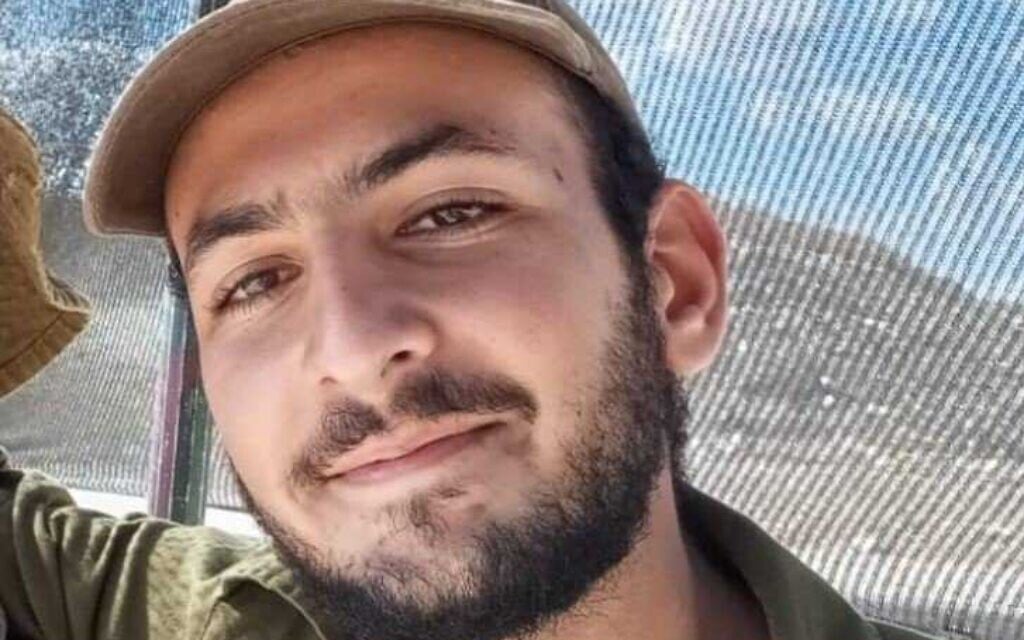
A year and eight months after Sgt. Gur Kehati, 20, was killed during an unauthorized visit by a civilian researcher to southern Lebanon, the IDF reportedly presented his family with its operational investigation into the incident on Friday.
On November 20, 2024, Col. (res.) Yoav Yarom — who served as chief of staff of the Golani Brigade in the reserves — allowed researcher Ze’ev Erlich, 71, to enter the western sector of southern Lebanon, in IDF uniform, to examine an archaeological site without the necessary approvals.
The visit took place at the height of an Israeli ground offensive against Hezbollah in southern Lebanon, a week before a ceasefire between Israel and the terror group brought a temporary halt to more than a year of hostilities.
Yarom and Erlich were joined by a team of soldiers as they entered a medieval fortress in the southern Lebanese village of Shamaa, revered by Christians and Shiite Muslims as the 1st-century burial place of Saint Peter.
Believing the area had been cleared of threats, Yarom led Erlich and accompanying troops, including Kehati, to the site, where two Hezbollah operatives ambushed the forces, killing Erlich and Kehati. An officer was seriously wounded, and Yarom himself was moderately wounded, before the gunmen were killed.
Get The Times of Israel's Daily Edition
by email and never miss our top stories
By signing up, you agree to the terms
Kehati’s grandfather, Assaf Agmon, told the Ynet news site on Sunday that the IDF scheduled its presentation of the investigation on July 10, the final day that the family had set as a deadline before filing a petition to the High Court against the military.
“Our darkest fears turned out to be correct,” Agmon told Ynet after seeing the investigation’s findings. “It is absolutely clear from what the commanders told us that there was no operational need whatsoever for Ze’ev to join the mission.”
“The IDF knows this. The commanders know this. But they’re hiding behind carefully worded language to avoid saying it explicitly,” he added. “When you read the investigation, you understand it.”
In January 2025, Kehati’s family accused military authorities of blurring the circumstances of the incident, saying they only learned that he had died outside ordinary combat activity from the media.
The IDF has not yet publicly published the findings of the investigation.
Yarom asked to resign from his position a week after the incident, though he was already slated to be dismissed after recovering from his wounds. In December 2025, Yarom was officially dismissed from reserve duty and ended his service in the IDF. A criminal investigation into Yarom’s actions was closed that same month.
After the investigation dropped the charges against Yarom, relatives of Kehati staged a protest by uprooting their family member’s headstone from a military cemetery and placing it in front of the office of the General Staff at IDF headquarters in Tel Aviv.
If you’d like to comment, join
The Times of Israel Community.
View original source — Times of Israel ↗
Related stories
South China Morning Post
PoliticsJul 12, 2026 · 1 min
First session of Syria’s parliament convenes after Assad’s ousting
South China Morning Post

Straits Times
PoliticsJul 12, 2026 · 1 min
New Syrian parliament meets for first time in Damascus
Straits Times

Al Jazeera
PoliticsJul 12, 2026 · 1 min
Ukraine’s Zelenskyy announces cabinet reshuffle, replaces PM Svyrydenko
Al Jazeera

TASS
PoliticsJul 12, 2026 · 1 min
Presenting Crischock as BiH high representative lacks legal basis, Russian MFA says
TASS