Indian Express
Supreme Court stays Tamil Nadu cow slaughter High Court ban
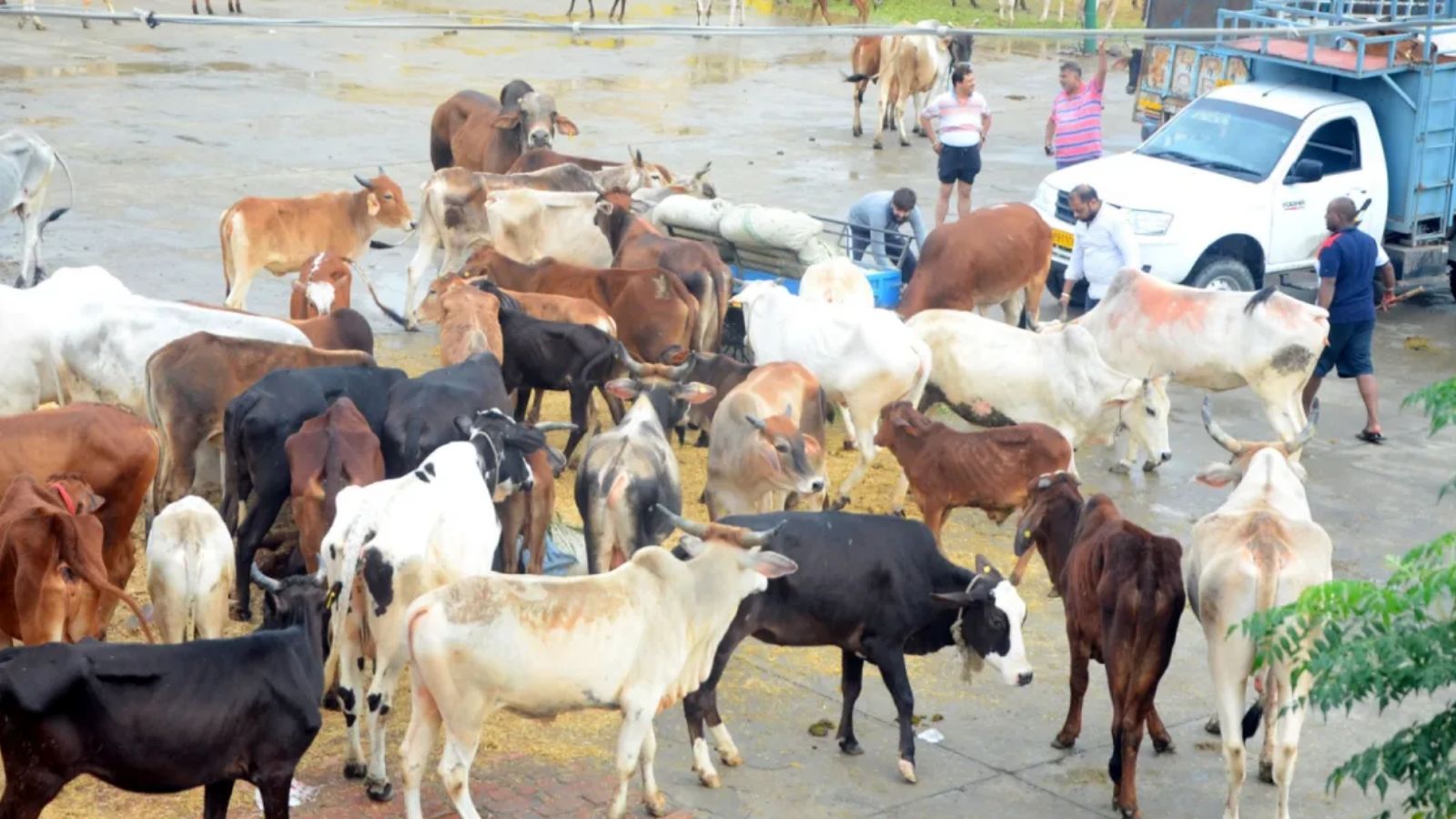
The Supreme Court Monday stayed a Madras High Court order directing the Tamil Nadu government to ensure that no cows or calves are slaughtered anywhere in the state.
Issuing notice on the Tamil Nadu government’s appeal challenging the May 27 High Court order, a bench of Justices Vikram Nath and Sandeep Mehta directed that the judgement should remain on hold in the interim.
The plea, filed on June 9 through the state’s counsel, Jayasree Narasimhan, said the High Court order imposed a blanket ban on cow slaughter even in the designated slaughterhouses, and this is unsustainable in law. The state said the original plea only raised the question of whether cows and calves could be sacrificed in places not designated as slaughterhouses on the occasion of Bakri Eid, but a division bench went further and ordered an absolute and blanket ban.
‘Judicial lawmaking’
The Tamilaga Vettri Kazhagam (TVK) government contended that the High Court order contravenes the provisions of the Tamil Nadu Animal Preservation Act, 1958, which permits the slaughter of cows over 10 years of age if a competent authority declares them unfit for work and breeding.
The state also argued that even legislations such as the Prevention of Cruelty to Animals Act, 1960, the Prevention of Cruelty to Animals (Slaughter House) Rules, 2001, the Tamil Nadu Urban Local Bodies Act, 1998 and the Tamil Nadu Urban Local Bodies Rules, 2023, do not impose any total ban on slaughter but only prescribe conditions for it.
The High Court’s action, it argued, amounts to “judicial lawmaking”. The appeal also contested the conclusion that the relevant authorities had conceded the veracity of the averments in the petitioner’s affidavit filed in support of his writ petition. It said the state’s stand was that it had already taken necessary action to prevent slaughter in public places and that any sacrifice would be allowed only in confined spaces, away from the public.
High Court’s constitutional interpretation
Coimbatore resident K Surya Prasanth had approached the High Court alleging that authorities had made arrangements for the ritual sacrifice in areas not designated as slaughterhouses. Though he submitted a representation to the authorities, it was not considered, following which he moved the High Court.
Story continues below this ad
In a counter-affidavit before the High Court, the state police had said that officials visited the scene and inspected the place designated for cow slaughter. The authorities concerned had erected a temporary shed for conducting the slaughter in a non-public area, without causing any obstruction to traffic or offending the religious sentiments of persons belonging to other communities, the counter-affidavit added.
In its judgement, the High Court bench of Justices G R Swaminthan and V Lakshminarayanan cited Article 48 of the Constitution of India, stating that it mandated that the state should take steps to prohibit the slaughter of cows, calves, and other milch or draught cattle.
“During the debates in the Constituent Assembly, it was pointed out that cow is a revered animal and that it has been associated with our civilisation from the time of Lord Krishna. During the rule of many Muslim kings, cow slaughter was abolished,” the High Court stated.
“Cow protection was an issue so dear to Mahatma Gandhiji. The eminent scholar Shri Dharampal pointed out that only to cater to the dietary requirements of the colonial army, cows came to be slaughtered in very large numbers. After India attained independence, several States passed legislations and those legislations had also been upheld,” it added.
Story continues below this ad
Past Supreme Court rulings
The High Court also cited past Supreme Court rulings to emphasise that the sacrifice of a cow is “not an obligatory overt act for a Musalman to exhibit his religious belief” and is “neither essential to nor necessarily required as part of the religious ceremony”.
The High Court, which interpreted the Tamil Nadu Animal Preservation Act, 1958, said that it permits slaughter only when the animal is over 10 years old and unfit for work and breeding.
The division bench also noted that a 1976 Tamil Nadu government order banned the slaughter of cows in the state, with a view to promoting milk production and improving the rural economy.
“Since the executive power is co-terminus with the legislative power, a government order issued by the Government banning cow slaughter is very much sustainable and has to be enforced, as it has the force of law,” the High Court said.
Story continues below this ad
The High Court then directed the state government to ensure that no cows or calves are slaughtered on the eve of Bakri Eid or on any other day. It instructed the chief secretary and the additional director general of police (law and order) to issue appropriate instructions to all relevant officials to ensure compliance with its order.
View original source — Indian Express ↗
Related stories

The Punch
WorldJul 13, 2026 · 1 min
Gunmen kidnap 60-year-old Oyo headmaster, demand N30m ransom
The Punch
The Punch
WorldJul 13, 2026 · 1 min
Sowore unveils free education plan, pledges to scrap WAEC, NECO fees
The Punch
The Punch
WorldJul 13, 2026 · 1 min
Our hope gone, family mourns slain army officer in Oyo rescue operation
The Punch
The Punch
WorldJul 13, 2026 · 1 min
Lagos warns residents of rainfall, urges vigilance
The Punch