
CNBC
U.S. and Iran exchange strikes as Strait of Hormuz standoff escalates
This frame grab taken from AFPTV video footage on July 12, 2026 shows cargo ships anchoring near the Strait of Hormuz off the eastern coast of the United Arab Emirates at Khor Fakkan.
- | Afp | Getty Images
Iran responded to a fresh wave of strikes from U.S. forces by launching an attack on American military bases in several Gulf states, deepening a standoff over the strategically vital Strait of Hormuz.
The latest exchange casts further doubt over the future of the interim peace agreement signed last month, a deal that had sought to pave the way to reopen the Strait of Hormuz and end the war after 60 days of negotiations.
Iran's strikes targeted U.S. bases in Kuwait, Bahrain, Jordan, Oman and Qatar, according to the country's state media outlets, describing them as retaliatory measures to renewed U.S. bombings.
Sirens sounded for the third time in Bahrain on Monday, Reuters reported, citing the country's interior ministry. The Islamic Revolutionary Guard Corps (IRGC) said it had targeted U.S. military facilities in Bahrain and radar systems in Oman as part of its latest retaliatory attacks.
U.S. Central Command said Sunday that American forces had successfully hit dozens of targets at multiple locations to degrade Tehran's ability to continue attacking vessels traversing the Strait of Hormuz.
watch now
American forces struck Iranian military air-defense systems, coastal radar sites, missile and drone capabilities and small boats using U.S. fighter aircraft, naval vessels, one-way attack aerial drones and one-way attack sea drones for the first time, Centcom said in a post on X.
The U.S. and Iran also issued conflicting accounts over whether the Strait of Hormuz remains open to shipping.
Located in the gulf between Oman and Iran, the Strait of Hormuz is recognized as one of the world's most critical energy choke points. The narrow waterway typically handles around 20% of the world's oil traffic.
Read more
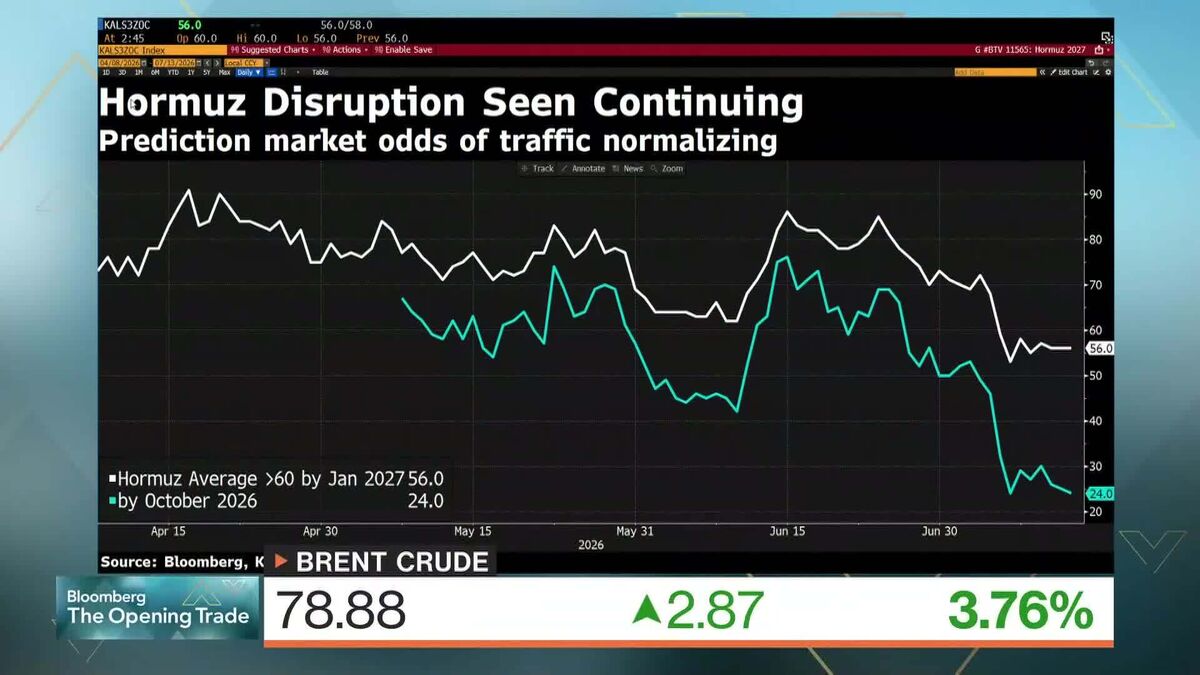
Oil prices surged on Monday morning as the latest cycle of attacks and counterattacks renewed fears of further disruption to flows through the Strait of Hormuz.
International benchmark Brent crude futures with September delivery advanced 4% to trade at $79.02 per barrel, while U.S. West Texas Intermediate futures with August delivery gained 4.1% to $74.27.
"The era of one-sided deals is OVER. We told you: keep your word or pay the price. Reality is knocking," Iran's parliament speaker Mohammad Bagher Ghalibaf said Sunday in a social media post.
Ghalibaf's comments were posted alongside an image of Article 5 of the U.S.-Iran memorandum of understanding, which relates to the reopening of the Strait of Hormuz.
U.S. President Donald Trump on Friday said the U.S. and Iran had agreed to continue peace talks, but said the ceasefire established in last month's peace deal had been scrapped.
Related stories
Bloomberg
BusinessJul 13, 2026 · 1 min
The Three Pillars of Graham's Legacy
Bloomberg

Rio Times
BusinessJul 13, 2026 · 1 min
Brazil’s Digital Invoice Enters Live Testing, Eyeing Cheaper SME Credit
Rio Times

Rio Times
BusinessJul 13, 2026 · 1 min
Brazil’s Correios Pauses Its Rescue Plan After Workers Threaten Strike
Rio Times
Bloomberg
BusinessJul 13, 2026 · 1 min
Oil Jumps as US Conducts Wave of Strikes Against Iran (Video)
Bloomberg