Indian Express
Supreme Court rejects West Bengal madrasa teachers’ plea for regularisation, benefits
2 min readNew DelhiJul 13, 2026 01:16 PM IST
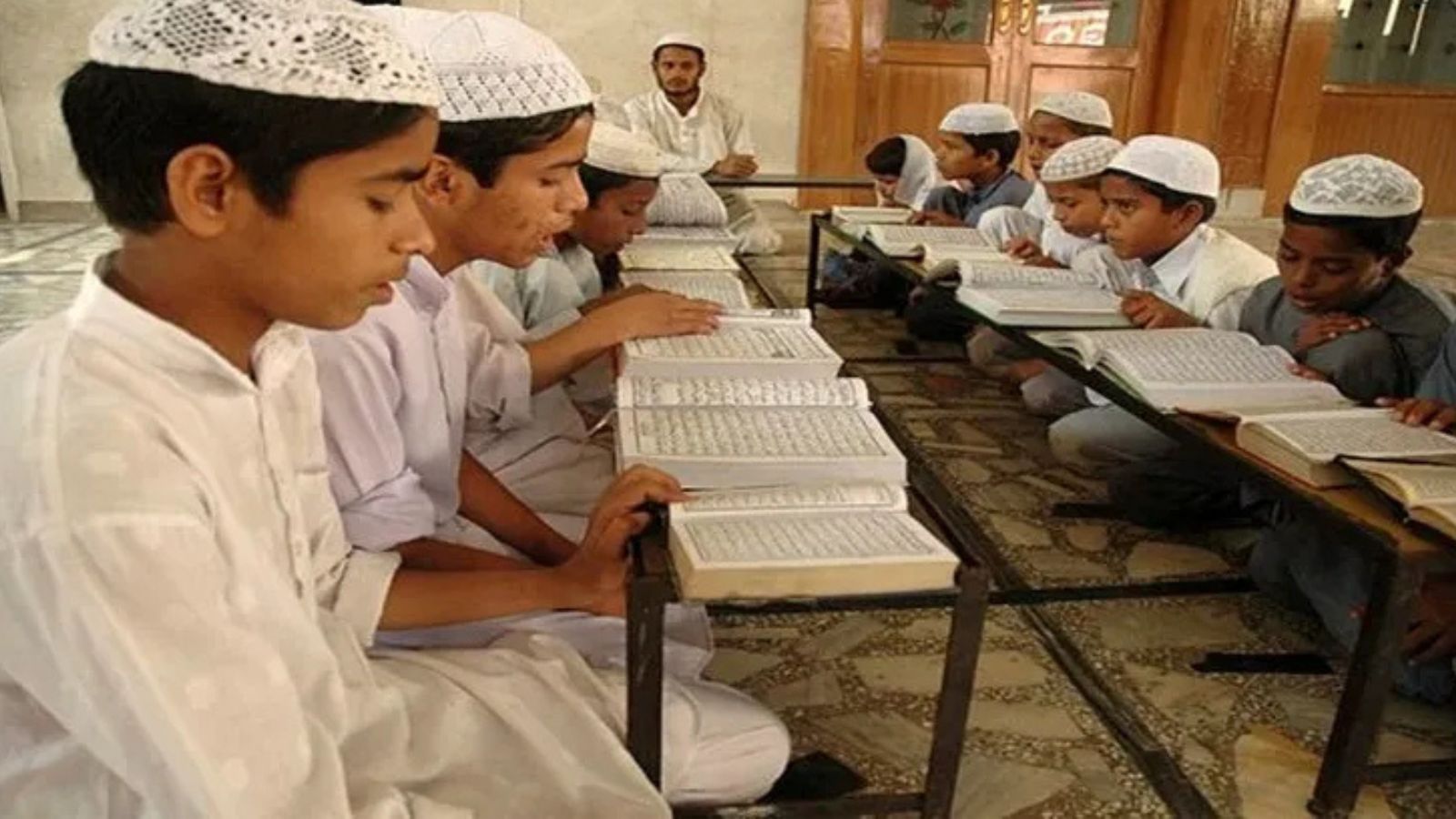
The Supreme Court dismissed petitions by West Bengal madrasa teachers and staff seeking regularisation and benefits (File photo for representative use).
The Supreme Court Monday dismissed a clutch of petitions by teachers and non-teaching staff of madrasas in West Bengal seeking regularisation of their appointments and claims for salaries and allowances under the state government’s grant-in-aid scheme.
A bench of Justices Dipankar Datta and A G Masih examined 13 such claims out of 350 and said none of them could persuade it to grant relief.
“Pursuant to our order, particulars of 13 petitioners out of more than 350 were screened and placed before us. We proceeded on the basis that if one of the 13 would persuade us to hold, we would look into the claims of other cases. Unfortunately, neither of the 13 could persuade us. All writ petitions are without merit and hence dismissed,” the bench ordered.
Origins of dispute
The dispute has its origins in petitions concerning the validity of the provisions of the West Bengal Madrasah Service Commission Act, 2008, which established a statutory commission to recommend the appointment of teachers in aided madrasas. It stripped local madrasa managing committees of their traditional power to appoint teachers independently.
A single-judge bench of the Calcutta High Court struck down the Act in 2014, and a division bench upheld this a year later, in 2015. The High Court declared the Act unconstitutional, holding that it was violative of Article 30 of the Constitution, which provides that all minorities shall have the right to establish and administer educational institutions of their choice.
In January 2020, however, the Supreme Court upheld the constitutional validity of the 2008 Act. In February 2023, the Supreme Court set up a committee to examine the validity of appointments made after the High Court’s 2015 decision holding the Act unconstitutional and its own January 2020 order upholding it.
The committee found the appointments invalid, but hundreds of staff members hired outside the commission’s framework during the years of legal limbo challenged the decision in the Supreme Court.
Ananthakrishnan G. is a Senior Assistant Editor with The Indian Express. He has been in the field for over 26 years, kicking off his journalism career as a freelancer in the late nineties with bylines in The Hindu. A graduate in law, he practised in the District judiciary in Kerala for about two years before switching to journalism. His first permanent assignment was with The Press Trust of India in Delhi where he was assigned to cover the lower courts and various commissions of inquiry.
He reported from the Delhi High Court and the Supreme Court of India during his first stint with The Indian Express in 2005-2006. Currently, in his second stint with the daily newspaper, he reports from the Supreme Court and writes on topics related to law and the administration of justice. Legal reporting is his forte though he has extensive experience in political and community reporting too, having spent a decade as Kerala state correspondent, The Times of India and The Telegraph. He is a stickler for facts and has several impactful stories to his credit. ... Read More
Tags:
Calcutta High Court
madrasa
supreme court
West Bengal
View original source — Indian Express ↗
Related stories

The Punch
WorldJul 13, 2026 · 1 min
Lagos ADC gov candidate Rhodes-Vivour loses mother
The Punch
The Punch
WorldJul 13, 2026 · 1 min
Ashton Hall names Nigeria favourite African destination, calls Lagos ‘African Miami’
The Punch
The Punch
WorldJul 13, 2026 · 1 min
UBEC backs unified learner identity system
The Punch
The Punch
WorldJul 13, 2026 · 1 min
Name school after slain Oyo teacher, cultural advocate urges Makinde
The Punch