Times of India
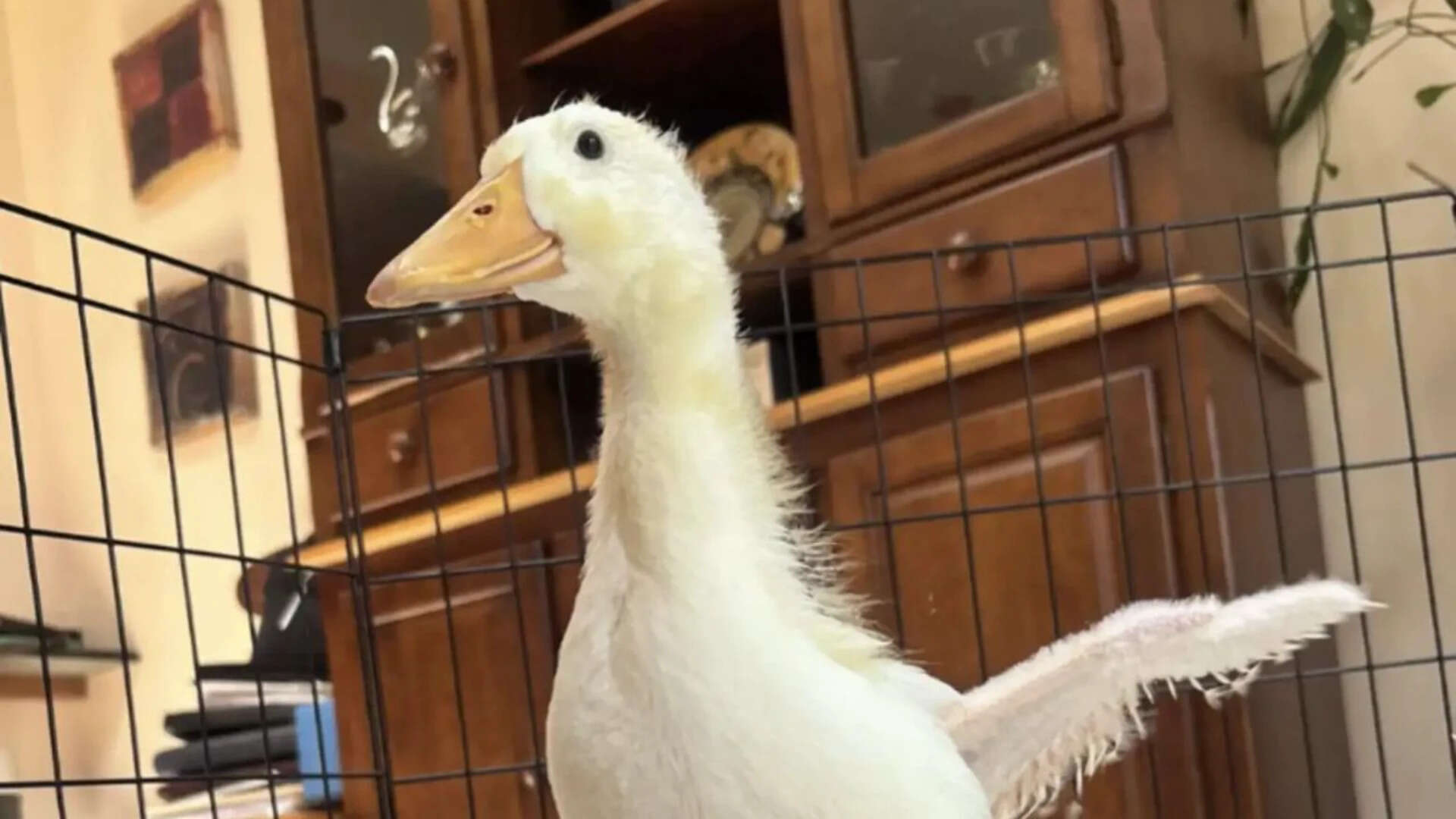
Meet Rudy, smart duckling who chased humans every day to get rescued
A duckling chasing after you at full speed while you are on your calming morning walk in a park can have you running faster than an athlete in panic. Sometimes, it is play for them, but other times, it could be something more, maybe a plea for help.
In Brooklyn, New York, a duckling was chasing walkers in the park, making them run away. But it was Mary Beth Artz who realised that the little baby was asking for help.The entire tale is like a story from a children's book, that of a brave and determined duckling named Rudy. In June, Rudy's former caretakers brought her to Prospect Park in Brooklyn and left her behind. All alone and looking for her humans, the little duckling often raced behind park-goers, hoping for someone to come to her aid in videosthat went viral online. Since she had already imprinted on humans, she trusted and relied on them fully, making her initiate the contact.
She wasn't suited for a life in the wild and the confused passersby did not understand."People were running away, not realising it was just a baby looking for help," said Mary Beth Artz of They All Want to Live, a local rescue group, to The Dodo.
Rescuing the duckling
“She will have a human family who will love her forever,” Artz said.
Eventually, a pair of Good Samaritans approached the Wild Bird Fund and told them of Rudy. The organisation contacted Artz, who quickly raced to the park with her friend and rescue partner, Sarah.
“When I got the call, my heart sank,” Artz said. “It is nonstop with domestic ducks being dumped in city parks.”At the park, she found Rudy snuggled on a blanket with a pair of good-natured park-goers. “It was an easy rescue because [she] was so conditioned to people,” she said. “I just picked [her] up.”Artz, who also works with W.I.L.D. for Prospect Park, a community advocacy group, knows how important it is to look after the feathered neighbours, especially those who don't belong in the wild.
Eventually, she took Rudy back home to recuperate.Later, she got in touch with another duck expert who offered to give Rudy a permanent place to land. “She will have a human family who will love her forever,” Artz said. “And another imprinted duck for a best friend.”
Do ducks imprint on humans for life?
Imprinting is a form of learning in which an animal gains its sense of species identification. Birds don't automatically know what they are when they hatch and thus imprint on their parents during the critical period of development.
If a bird imprints on humans, they will identify with humans for life and reversing the process is impossible.When it comes to ducks, they have a period of time known as the "sensitive period" where they capture the images of their mother and siblings, permanently solidifying them as creatures to follow. The process lasts for about two days and if a bond is not formed in this window, no bond ever will.In the absence of a duck, ducklings imprint on other moving objects such as humans.
If humans act as their primary caregivers in this critical window, the duckling accepts them as their mother. It will follow humans everywhere, mimic their actions and exhibit high levels of distress when separated.They grow up having no fear of people and this can make them territorial towards humans. If released in the wild, they have difficulty communicating with other birds of their own species due to a difference in vocalisations, postures and a fear of humans that other birds learn from their parents and siblings.Ultimately, they find themselves in a grey area where they can neither gel in with the birds nor interact with humans. This poses a huge problem for wildlife rescuers in the USA since they have to rehabilitate thousands of orphaned and injured ducklings that are returned to nature. Major facilities such as the Minnesota Wildlife Rehabilitation Centre receive up to 2,000 to 4,000 such ducklings annually.The next time, a duckling is chasing behind you, maybe wait and see if it's another Rudy lost in the wildlife.
View original source — Times of India ↗
Related stories

The Punch
WorldJul 13, 2026 · 1 min
Enugu bus driver, conductor snatch police AK-47, knock down officer
The Punch
The Punch
WorldJul 13, 2026 · 1 min
Anambra arraigns blogger over fake reports on Soludo, son
The Punch
The Punch
WorldJul 13, 2026 · 1 min
ICPC arraigns ex-minister Nnaji, court grants N20m bail
The Punch
The Punch
WorldJul 13, 2026 · 1 min
Resurfaced 2024 video shows Davido revealing his biggest fear in music
The Punch