Indian Express
With 4 new benches, how the Supreme Court plans to clear its oldest pending cases
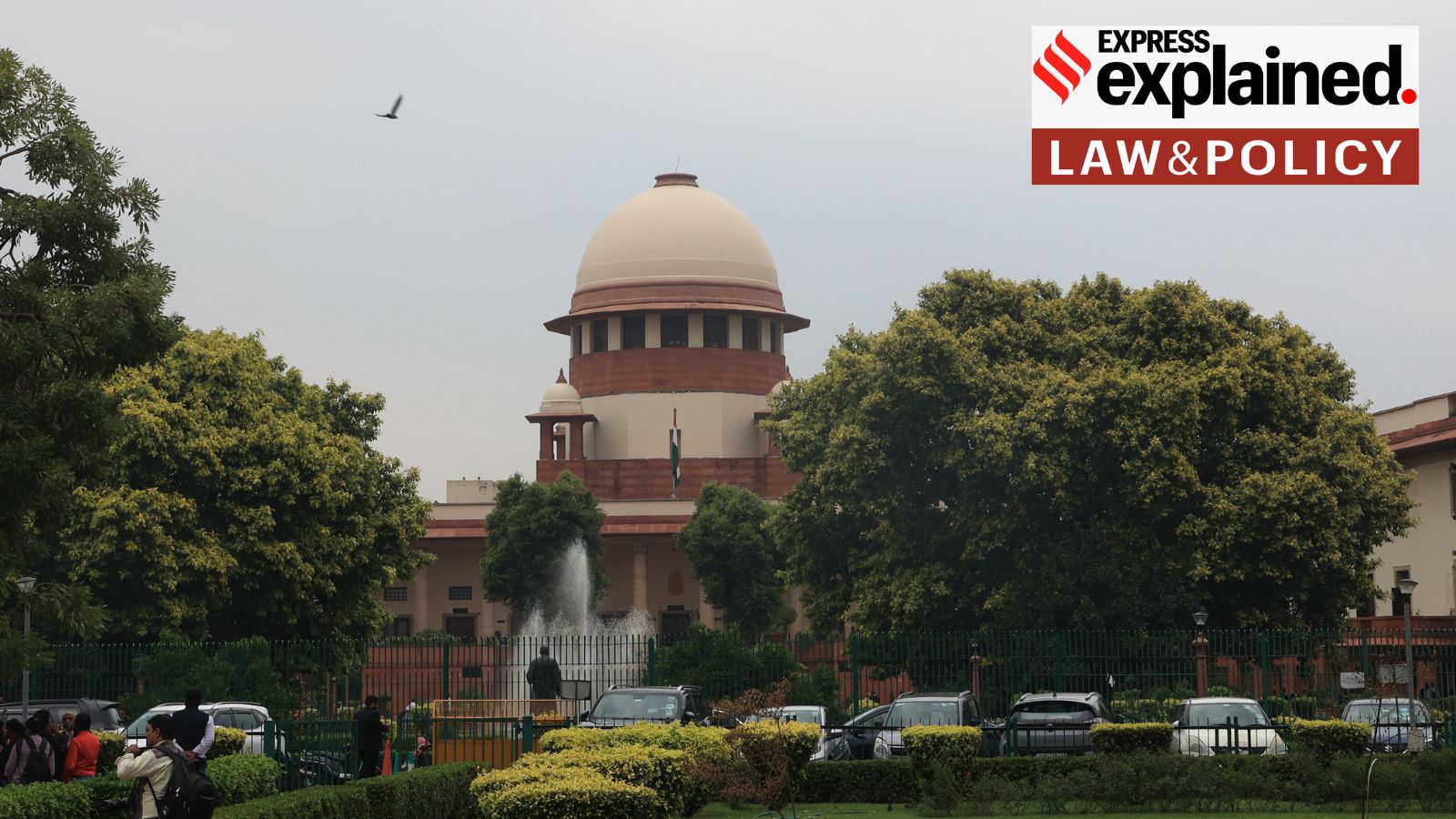
To tackle the mounting backlog of cases in the Supreme Court, Chief Justice of India Surya Kant has, in a significant move, created four specific benches exclusively to hear the oldest pending civil and criminal matters. This marks a structured attempt to ensure the conclusion of decades-old disputes pending before the apex court.
According to the new roster notification, two division benches, headed by Justices P K Mishra and S V N Bhatti and comprising two judges each, will focus solely on the oldest civil cases.
Two other division benches, led by Justices Manoj Misra and Ujjal Bhuyan, will be dedicated solely to the oldest criminal matters.
These special benches will operate on “non-miscellaneous days”, which are Tuesdays, Wednesdays and Thursdays. In the Supreme Court’s parlance, Mondays and Fridays are “miscellaneous days” reserved for fresh filings and preliminary hearings. The middle of the week is meant for “regular matters” that require detailed, lengthy arguments.
By freeing these four benches from the regular burden of miscellaneous hearings, the court will be able to give uninterrupted judicial attention to its longest pending cases.
Scale of the backlog
Data from the National Judicial Data Grid provides a glimpse at the enormity of the backlog these benches are meant to address. The Supreme Court currently has 96,045 pending cases. Civil matters make up most of this burden, standing at 74,244 cases, while criminal matters account for the remaining 21,801.
Within this backlog, there are 24 civil cases and two criminal cases that have been pending before the court for over 30 years. The oldest civil case has been pending since 1986, while the oldest criminal case was registered in 1991.
Story continues below this ad
Another 525 civil cases and seven criminal cases were registered between 1996 and 2005, and have been pending ever since. The bulk of the older backlog lies in the 10– to 20–year bracket, which accounts for 7,993 civil cases and 1,585 criminal cases.
Pendency paradox
This growing backlog presents a productivity paradox. Over the last five years, the Supreme Court has actually increased its rate of clearing cases, picking up markedly from the pandemic years – when courts operated at reduced functioning – to record its best-ever disposal figures. However, the overall pendency figure has continued to rise.
This is primarily because the rate of new case intake is outpacing the rate of disposal. With the court becoming more accessible to citizens nationwide through e-filing and virtual hearings, case intake has risen exponentially. In 2025 alone, the total number of cases filed reached an unprecedented 75,402.
How different Chief Justices have attempted to address pendency
Different Chief Justices have deployed varying strategies to unclog the docket over the last few years. Former CJI U U Lalit, during his short tenure in 2022, introduced a rigorous listing mechanism that carved out distinct time slots for fresh matters and long-pending regular hearings to ensure that old cases did not get buried under new filings.
Story continues below this ad
His successor, CJI D Y Chandrachud, leveraged technology to streamline processes. Under his tenure, the court launched the SC-JUDICARE project to automate the classification of pending cases and group matters with similar legal issues so they could be heard together. He also constituted special benches for specific categories, such as death penalty references, and organised a Special Lok Adalat week to clear cases.
Following him, former CJI Sanjiv Khanna shifted the focus toward “admission matters” – fresh cases that often clog the system before they are even admitted for detailed arguments. To clear this backlog, he temporarily halted the listing of older regular matters on Wednesdays and Thursdays.
He also tasked the court’s Centre for Research and Planning with identifying short, infructuous and old matters, successfully weeding out thousands of such cases. However, during the subsequent tenure of former CJI B R Gavai, a massive surge in new filings pushed the total pendency past the 90,000 mark, despite the bench functioning at high capacity.
Upon taking office towards the end of November 2025, CJI Kant had said that reducing pendency and formulating a unified national policy for disposing of pending matters would be among his top priorities. By dedicating four specific benches to the oldest civil and criminal cases for three days a week, the present CJI is shifting the court’s focus back to legacy litigation.
View original source — Indian Express ↗
Related stories

Antara News
TechnologyJul 13, 2026 · 1 min
DJI Puts Drones to the Test on the World's Highest Peak
Antara News

AllAfrica
TechnologyJul 13, 2026 · 1 min
Tanzania: Europe's Funding Question Puts Tanzania's Fragile Democracy On Trial
AllAfrica

TechRadar
TechnologyJul 13, 2026 · 1 min
Why AI infrastructure costs keep surprising IT leaders
TechRadar

The Next Web
TechnologyJul 13, 2026 · 1 min
Shein is set for its Hong Kong listing hearing on Thursday
The Next Web