CNA
A pension shift in Japan may hurt some foreign money managers
HONG KONG, July 13 : Global asset managers such as State Street and Legal & General face a potential hit of tens of millions of dollars in money management fees after Japan signaled a goal to channel more state retirement funds into domestic assets.
Investors bet that billions of dollars could be shifted into Japanese markets after Finance Minister Satsuki Katayama said on Friday the government aims to steer the country's vast state pension funds to "substantially" increase domestic asset investments.
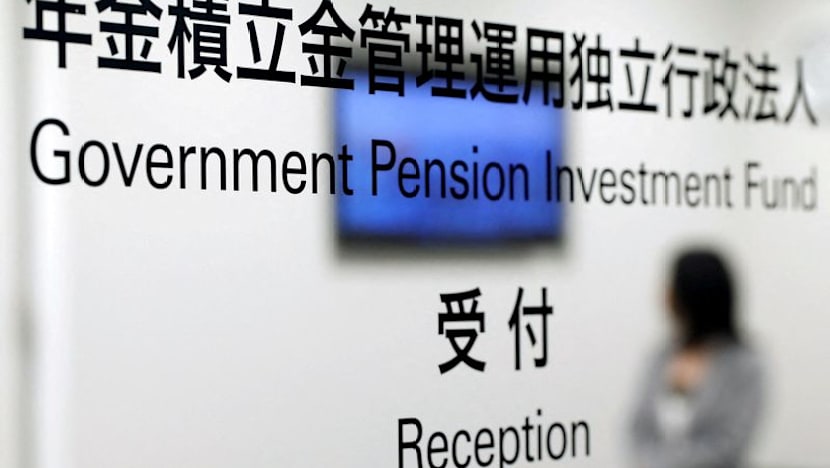
Foreign fund managers currently oversee nearly all of the $930 billion offshore exposure of the Government Pension Investment Fund (GPIF), the world's largest pension fund with $1.8 trillion in assets.
GPIF relied almost entirely on 35 external managers to invest internationally, who collectively earned about 21 billion yen ($129.57 million) in management fees in the year ended March 2025.
"Foreign passive managers could face some pressure, while managers with strong active Japanese capabilities may stand to benefit," Yoon Ng, head of APAC growth solutions at Broadridge, which tracks manager selections at large asset owners, told Reuters.
Sixteen external managers — including State Street and Legal & General — do not have domestic mandates with GPIF, potentially shrinking assets they manage for the mega pension fund if foreign portfolios are cut.
"We are waiting for more details, but if an official directive comes through, we could lose our more profitable foreign investment business," a senior global fund executive at a firm managing GPIF assets told Reuters, referring to a potential trimming of foreign stocks or alternative holdings.
Asset Management One, Fidelity Investments and Resona Asset Management are among fund firms which run sizeable active Japanese onshore strategies for GPIF, according to a Reuters analysis of the pension's latest disclosure, and may receive further allotment under any new allocation strategy.
GPIF paid 0.03 per cent in management fees on average to foreign equity managers in its fiscal year ending March 2025, three times the average paid to manage domestic equities and bonds. It paid 0.01 per cent to 0.02 per cent on average for foreign bonds management.
BlackRock oversaw 35.7 trillion yen ($220.28 billion) in GPIF offshore equities and bond assets as of March 2025, the largest share among its peers, followed by State Street Investment Management's 18.9 trillion yen and Legal & General Asset Management's 15.3 trillion yen, according to the breakdown available from the pension fund's latest annual report.
GPIF determines its portfolio allocation once every five years in a process involving multiple rounds of deliberations by its board to take into account return objectives established by Japan's government.
The current asset mix is effective for the five years from April 2025. The fund assesses the portfolio annually as appropriate, a GPIF spokesperson said on Friday.
GPIF, BlackRock, State Street and Legal & General did not immediately respond to requests for comment about the impact on external managers.
GRADUAL MOVES
Broadridge's Ng believes a sudden, wholesale termination of external managers would be unlikely, given fiduciary considerations, market impact and transition costs.
And market impact will likely take months, as the pension fund typically requires a one- to three-month notice period to terminate a mandate, according to the fund executive.
People with knowledge of government deliberations told Reuters Japan has no immediate plans to change target asset allocations of its state pension funds but could work within existing allowable ranges to boost domestic investment.
Driven by surging overseas returns, the pension fund sold roughly $26 billion in foreign equities last year to maintain its roughly equal 25 per cent allocation model across domestic and international assets, its annual report showed.
"The key question is whether political pressure leads to a formal revision" of GPIF's 50/50 split across onshore and offshore allocation, according to Ng.
($1 = 162.0700 yen)
Related stories

Rio Times
BusinessJul 13, 2026 · 1 min
How Brazil’s Pix Became a Target of US Financial Power
Rio Times

CNBC
BusinessJul 13, 2026 · 1 min
India's inflation accelerates to 4.38% in June, exceeding forecasts
CNBC
MarketWatch
BusinessJul 13, 2026 · 1 min
These biggest and ‘least loved’ stocks are the ones to pick ahead of earnings
MarketWatch

AllAfrica
BusinessJul 13, 2026 · 1 min
Malawi: CSOs Question Govt's Austerity Drive, Demand Evidence of Results
AllAfrica