The Guardian
‘A gasp-inducing thrill ride’: why The Polygamist should be your next TV obsession
Are you bored with your summertime entertainment already? Did you devour that buzzy novel at the beach? Finish your third Suits rewatch on the plane? Has your algorithm run out of ideas and started feeding you the same reels and memes you liked weeks ago? Have I got a recommendation for you.
The Polygamist is a rollicking, gasp-inducing thrill ride that delivers more hairpin turns, sudden drops and disbelieving exclamations than a day at the amusement park. You can’t beat the bang for buck: the cost of admission is already covered by your Netflix subscription, which gets you 22 half-hour episodes – a staggeringly generous haul that harks back to TV days of yore.
Don’t think you have the stamina for all 22 of them? The Polygamist will have you smashing the “next episode” button before Netflix can ask if you’re still watching. It’s the story of a self-made real estate tycoon who can’t keep it in his pants and proceeds to torch the lives of everyone around him before laying waste to his own. The effect is delectably soapy. Giddy online reviews of the show often describe it as a telenovela – remarkable for a series that’s South African-made.
The Polygamist doesn’t just use South Africa as a glamorous backdrop of vistas, fashion and opulence – one that’s sure to have viewers pawing for their passports. Its greatest trick is that it refuses to translate itself into something more familiar for international audiences. Cultural specificity is the point.
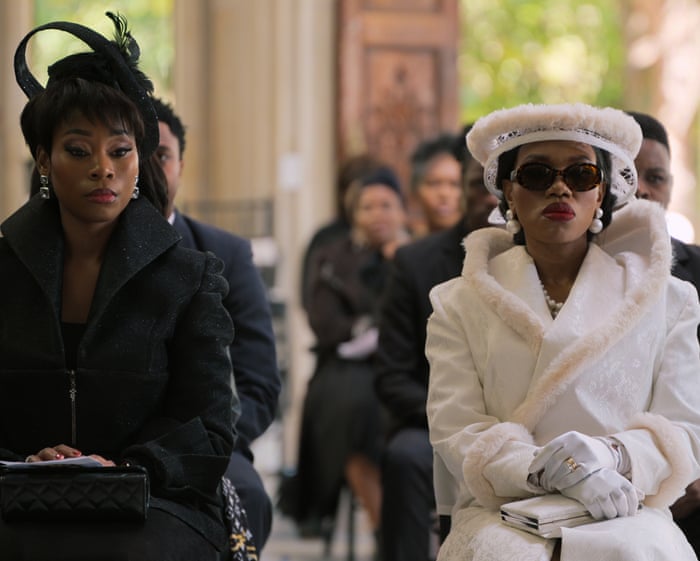
I was initially taken aback by the English overdub while watching the first scene: Jonasi at his own funeral. But that quickly went away when his long-suffering wife, Joyce, AKA the show’s emotional center, called him a “motherfucker” over his open casket in perfect sync with both the overdub and subtitles. It was a helpful reminder of the multilingual reality of South Africa, where people often move among languages (Zulu, Xhosa, Afrikaans) within the same thought or sentence, imparting layers upon layers of meaning.
The Polygamist doesn’t cater to the western gaze, either. There are no White Shadow characters to decipher this messy world for colonizing eyes. Skin tones run every shade of brown, reflecting the breadth of Blackness itself. Women sport Afrocentric hairstyles, come in a range of body types and are very much sought after – by Jonasi most of all. The Polygamist invites viewers into a lush world that feels lived-in rather than packaged for export, and doesn’t compromise cultural specificity for global appeal. It’s a K-drama-coded gamble that’s paying off big time: since its debut last month, the South African series surged into Netflix’s top-10 most-watched shows globally.
But what really elevates The Polygamist from guilty pleasure to full-blown summer obsession is its storytelling swagger – much of which derives from an acclaimed novel of the same name by Zimbabwean author Sue Nyathi. The series understands that suspense is not always about wondering what happens next; sometimes the pleasure comes from watching the disaster unfold in slow motion, mouth agape. Showrunner Akin Omotoso doesn’t rush things. Early episodes that initially feel meandering wind up laying the groundwork for bombshells that suddenly make everything that came before snap into place with a satisfying click.
The twists are too juicy to give away – and the ones you see coming hit every bit as hard as the ones you don’t. (Caveat emptor: if you’re wary of spoilers, unplug from the rest of the internet until you’ve finished.) Even introducing the main character at his own funeral, with his wife cursing his dead body as all hell breaks loose, is a flex that immediately leaves you asking: just who among God’s children was this guy? The answer: possibly one of TV’s most gloriously despicable villains. If you thought romantic betrayals couldn’t get much messier than Dallas’s JR Ewing cheating with his wife’s sister, buckle up.
The fun of Jonasi is that he isn’t just a mustache-twirling villain Tyler Perry might sketch up and over-explain. He is a man shaped as much by his improbable rise out of the township as by the women he charms, controls and ultimately destroys: Essie, the first love who nurtured his big dreams; Joyce, the socialite who dusted him off and put him on the map; Matipa, the work wife who provided an escape until she didn’t. All the while, the women struggle to reconcile their devotion to Jonasi with their own ambitions, independence and sense of right and wrong. The tension doesn’t just ring true; it helps you understand how these women could want to kill him and nurse him back to health in the same breath.
Jonasi doesn’t just expose the contradictions in the women around him; he reveals them in everyone. His daughter Mpume is daddy’s girl to a fault. His brother Magesh Gomora dutifully cleans up all the messes, reinforcing the core tragedy: the man everyone sees as the “good” brother keeps enabling the bad one. Jonasi’s eldest son Menzi is a source of shame to the old dog, precisely because he has so much reverence and respect for the women in their lives. That moral complexity is what keeps The Polygamist from collapsing into trite stereotypes or cultural caricature, even as it invites broader conversations about female agency and the complicated bargains people make in pursuit of status, security and love.
Is The Polygamist a perfect show? No, but it is the kind of wonderfully indulgent melodrama that perfection would only spoil. It’s colorful, spicy, with just the right balance of light and heaviness – it’s exactly what summer TV should be. Stream it while it’s hot.
View original source — The Guardian ↗
Related stories

BBC
EntertainmentJul 13, 2026 · 1 min
Sam Neill: A versatile actor whose roles went far beyond Jurassic Park
BBC

Philippine Daily Inquirer
EntertainmentJul 13, 2026 · 1 min
NBI witness: Sara Duterte threats vs Marcos ‘serious, real, and actual’
Philippine Daily Inquirer

E! Online
EntertainmentJul 13, 2026 · 1 min
Summer House's Ciara Miller Reveals If She's Returning for Season 11
E! Online

Deadline
EntertainmentJul 13, 2026 · 1 min
‘Peaky Blinders’ Team “Devastated” By Sam Neill’s Death: “We Will Be Forever Grateful”
Deadline