Indian Express
‘People’s mandate can’t be massacred’: Kerala High Court orders jailed councillor’s prison oath
5 min readNew DelhiUpdated: Jul 13, 2026 04:58 PM IST
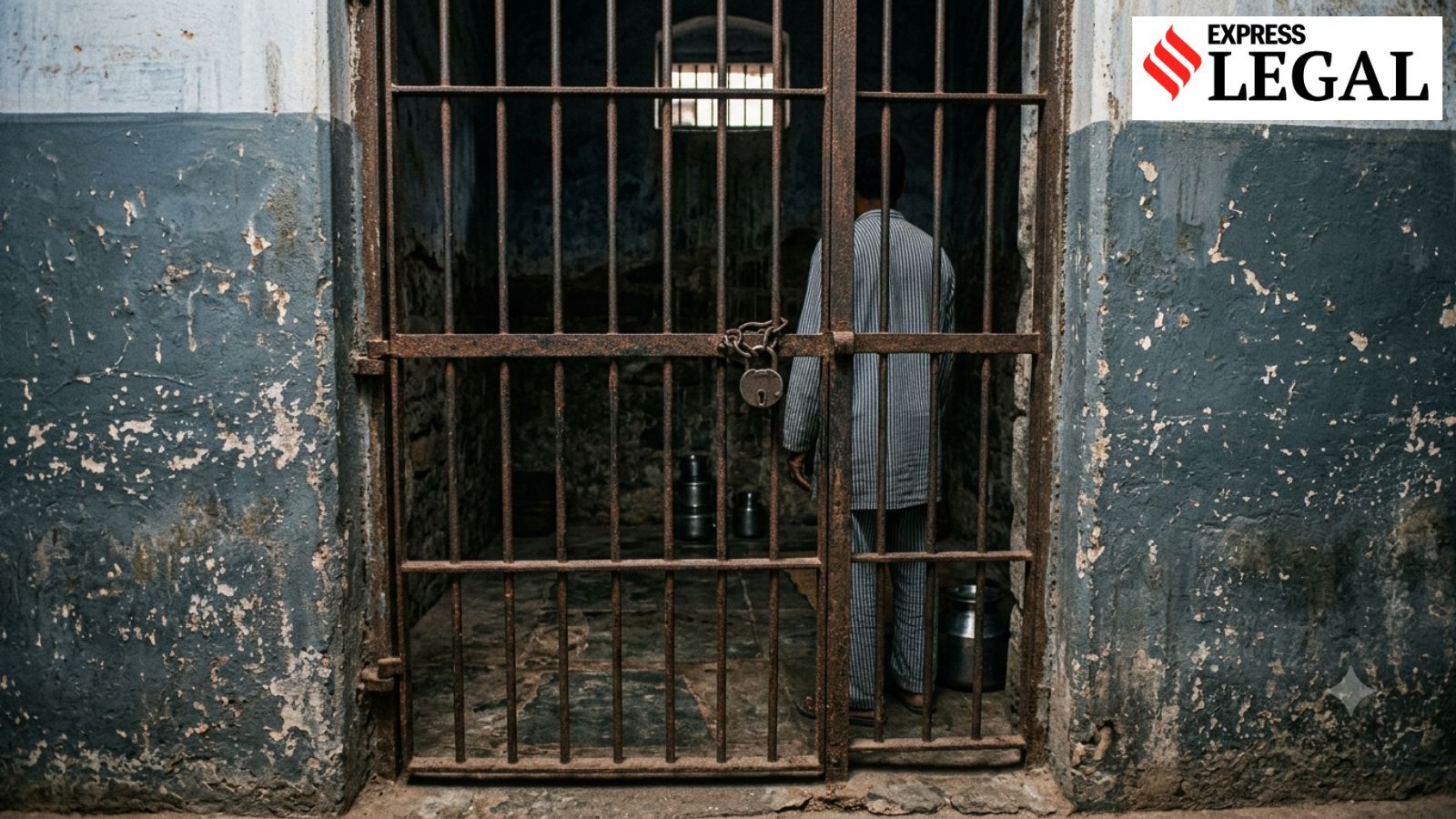
The Kerala High Court said democracy is not merely about numbers but about following constitutional procedures while respecting the mandate given by people. (Image generated using AI)
The Kerala High Court on Monday held that the people’s mandate cannot be “massacred” by a procedural lapse, allowing a jailed Thiruvananthapuram municipal councillor to take his oath of office inside prison, ruling that extraordinary situations demand extraordinary measures to protect democracy.
Justice P V Kunhikrishnan was hearing a petition by elected councillor Sugathan R, who sought permission to take a fresh oath after the high court earlier invalidated his original swearing-in. Detained under the Kerala Anti-Social Activities (Prevention) Act (KAAPA), he was unable to attend the ceremony scheduled for July 14 despite accepting the earlier judgment.
“When the very pulse of democracy is made to collapse over a solitary, disputed oath, the duty of this court is to uphold democracy. The court’s intention is only to see that the democratic procedures are strictly followed. But the people’s mandate cannot be massacred by a procedural lapse…When extraordinary situations arise, this court must take extraordinary decisions to protect democratic principles and the people’s mandate,” the judge said on July 13, directing authorities to conduct the swearing-in inside Viyyur Central Prison.
The court noted that all other councillors affected by its June 24 judgment had already retaken their oath, but Sugathan alone could not do so because of his preventive detention. Holding that democratic procedures must be followed without defeating the electorate’s verdict, the high court directed prison authorities, the Mayor and designated corporation officials to complete the swearing-in inside the jail, while also allowing accredited media to cover the ceremony.
Justice P V Kunhikrishnan said that democracy, as envisaged under the Constitution, is not a mere majoritarian exercise, but a structured process governed by established procedures and normative principles. (Image enhanced using AI)
Councillor to take oath again
Sugathan, 43, was elected from Ward number 20 (Vazhottukonam) of the Thiruvananthapuram Municipal Corporation in the local body elections held on December 9, 2025. The results were declared on December 13, and he took oath on December 21 before assuming office.
However, in a judgment delivered on June 24, 2026, the high court held that the oath taken by Sugathan and certain other councillors was not in accordance with the provisions of the Kerala Municipality Act. The court directed all of them to take a fresh oath within four weeks.
While the remaining councillors complied with the order, Sugathan could not because he had, in the meantime, been detained under the Kerala Anti-Social Activities (Prevention) Act (KAAPA). The Corporation subsequently fixed July 14 for the fresh swearing-in ceremony.
Story continues below this ad
The petitioner pointed out that although the Judicial First Class Magistrate Court-II, Nedumangad, had granted him interim bail in two criminal cases to facilitate the oath-taking, he continued to remain in custody because of the preventive detention order under KAAPA. Unable to leave prison, he approached the high court seeking directions to enable him to complete the statutory oath.
Detainee can’t be released
During the hearing, Director General of Prosecution T Asaf Ali submitted that a person detained under preventive detention could not be released from custody, referring to Article 22(3) of the Constitution, under which certain safeguards available to arrested people do not apply to preventive detainees.
At the same time, the state informed the court that if directed, it was willing to make arrangements for administering the oath inside the prison itself.
The court noted that it had earlier asked the state to explore whether such an arrangement was legally and administratively possible after being informed that the councillor’s inability to take oath could affect the functioning of the elected municipal body.
Story continues below this ad
No intention to massacre democracy
“While issuing directions… this Court neither conceived nor intended to massacre democracy; rather, the directions are issued in the background of the constitutional mandate to preserve and strengthen the rule of law,” the court said.
The judge further said democracy is not merely about numbers but about following constitutional procedures while respecting the mandate given by the people.
Observing that the consequences of denying the councillor an opportunity to take the oath would be serious, the court said, “When the very pulse of democracy is made to collapse over a solitary, disputed oath, the duty of this court is to uphold the democracy.”
This court neither conceived nor intended to massacre democracy; rather, the directions are issued in the background of the constitutional mandate to preserve and strengthen the rule of law.
Democracy, as envisaged under the Constitution, is not a mere majoritarian exercise, but a structured process governed by established procedures and normative principles.
This court is to see that the democratic process is conducted in a manner consistent with constitutional discipline, institutional integrity and the fundamental value of democracy.
In this case, if the petitioner is not allowed to take the oath, serious consequences will follow.
Oath inside prison on July 14
Allowing the petition, the high court directed the Superintendent of Central Prison and Correctional Home, Viyyur, to make all necessary arrangements for the swearing-in ceremony inside the prison at 11 am on July 14.
It also permitted the Mayor of Thiruvananthapuram and the minimum required Corporation officials to enter the prison to administer the oath and complete all legal formalities.
The court also directed that accredited media people should also be allowed inside the prison to cover the ceremony, observing that the swearing-in of an elected councillor forms an integral part of the democratic process.
Vineet Upadhyay is an Assistant Editor with The Indian Express, where he leads specialized coverage of the Indian judicial system.
Expertise
Specialized Legal Authority: Vineet has spent the better part of his career analyzing the intricacies of the law. His expertise lies in "demystifying" judgments from the Supreme Court of India, various High Courts, and District Courts. His reporting covers a vast spectrum of legal issues, including:
Constitutional & Civil Rights: Reporting on landmark rulings regarding privacy, equality, and state accountability.
Criminal Justice & Enforcement: Detailed coverage of high-profile cases involving the Enforcement Directorate (ED), NIA, and POCSO matters.
Consumer Rights & Environmental Law: Authoritative pieces on medical negligence compensation, environmental protection (such as the "living person" status of rivers), and labor rights.
Over a Decade of Professional Experience: Prior to joining The Indian Express, he served as a Principal Correspondent/Legal Reporter for The Times of India and held significant roles at The New Indian Express. His tenure has seen him report from critical legal hubs, including Delhi and Uttarakhand. ... Read More
Tags:
central prison
Democracy
Kerala High Court
View original source — Indian Express ↗
Related stories

The Punch
WorldJul 13, 2026 · 1 min
Defence ministry denies claims of unpaid house officers’ allowances
The Punch
The Punch
WorldJul 13, 2026 · 1 min
Atiku welcomes WAEC, NECO fee hike suspension, knocks govt ‘poor planning’
The Punch
The Punch
WorldJul 13, 2026 · 1 min
Sultanate Council urges Muslims to look out for Safar 1448AH crescent
The Punch
The Punch
WorldJul 13, 2026 · 1 min
Eight killed as assailants attack Benue community after burial
The Punch