Times of India
'Self-immolation, squatter evictions': Why Nepal's Gen Z protesters are back on the streets
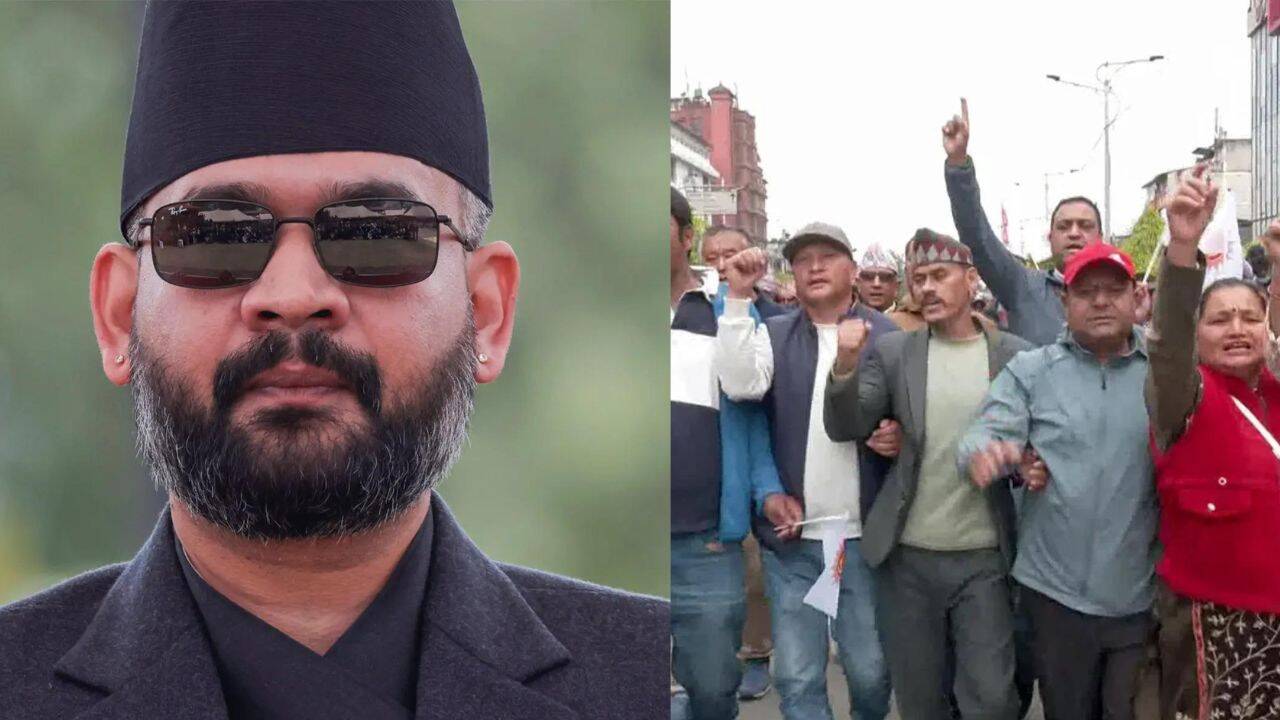
Public anger is mounting against Nepal Prime Minister Balendra 'Balen' Shah as protests over the eviction of landless squatters and growing frustration among young people converge into a major political challenge for his newly formed government.
The unrest intensified after the death of 25-year-old ride-sharing worker Ganesh Nepali, who allegedly set himself on fire outside Kathmandu’s Department of Passports following a dispute with metropolitan police over a motorcycle fine.The incident has revived youth-led anger months after Gen Z protests forced former prime minister KP Sharma Oli to resign in September last year. Hundreds of demonstrators gathered outside the Singhdurbar Secretariat on Sunday, accusing the government of failing to address concerns of economically vulnerable citizens.
What happened to Ganesh Nepali?
Ganesh allegedly poured petrol from his motorcycle and set himself ablaze after a confrontation with police officials who had locked his vehicle near the passport office. Police intervened and attempted to extinguish the flames, but he suffered severe burns.He was taken to the burn department of Bir Hospital in Kathmandu, where he later died, according to hospital sources. Reports said he had sustained around 60 per cent burns.
The Kathmandu metropolitan police said in a statement that “the tragic incident happened as we tried to implement traffic regulation.”
Why did the incident trigger public anger?
A week before the incident, Ganesh had reportedly told his nephew that police had seized his motorcycle and fined him NPR 1,000. His family alleged that repeated fines and pressure faced by low-income workers contributed to his distress.The government arranged for his treatment and planned to shift him to the All India Institute of Medical Sciences (Aiims) in New Delhi, but doctors advised against the transfer due to his unstable condition.Ganesh, originally from Mugu in north-western Nepal, was living in Kathmandu while preparing for foreign employment in Dubai and studying for government service examinations.According to the Nepal's local media outlet The Kathmandu Post, the case has also exposed a long-standing inconsistency in Kathmandu's enforcement system. Municipal police impose a Rs 1,000 fine for unauthorised parking under the 2023 Metropolitan Police Act, while traffic police levy a Rs 500 penalty for the same offence under the 1993 Vehicle and Transport Management Act, leaving two agencies enforcing different punishments for the same violation.His death triggered demands from youth groups and opposition parties for accountability and an impartial investigation. The protests later expanded to include anger over the government’s eviction drive against landless squatters.
Squatter evictions add to protests
The Joint National Squatters Front held a demonstration at Maitighar Mandala in front of the Singhdurbar secretariat against the eviction of landless settlers without alternative resettlement arrangements.Protesters carried placards with slogans including “end the atrocity against the poor people”, “respect human rights”, “stop illegal arrest”, and “provide shelter to the squatters”.The protests followed flooding at a Kirtipur holding centre where around 150 squatters were staying. Residents were evacuated with the help of security personnel.Earlier, the government’s eviction drive had displaced more than 15,000 people from 2,600 families, with 325 families staying in temporary holding centres, according to reports.
Gen Z protests, arrests and opposition criticism
On Saturday, Gen Z activists visited the Kirtipur holding centre to assess the situation but were allegedly baton-charged and arrested by police. One activist suffered facial injuries and was admitted to a local hospital, according to PTI.Nepal's congress President Gagan Kumar Thapa criticised the police action and demanded the release of those arrested.Police also arrested 26 people who staged a sit-in outside the Morang district police office in Koshi province, protesting the alleged mistreatment of Gen Z activists.According to PTI, after the Balendra Shah-led government came to power in March this year, it introduced stricter traffic regulations and proposed higher fines for violations, drawing criticism on social media.Opposition parties and some voices within the ruling alliance criticised the government’s response.Nepal congress lawmaker Basana Thapa said in Parliament, “Prime Minister (Balendra Shah), it is time to take off the dark glasses.
Citizens do not feel safe just by painting the green buses of Sajha Yatayat blue. Security is felt when the state provides justice, creates jobs and maintains good governance.”
Government orders probe into self-immolation case
Nepal’s Home Minister Sudan Gurung defended the government’s position in Parliament, saying the incident fell under local government jurisdiction.“We have a three-tier government... The traffic did not lock the wheels at that place...
It was the municipal police,” Gurung said.Following the incident, the government formed a five-member probe committee headed by deputy inspector general (DIG) Govinda Thapaliya.The committee will examine the circumstances leading to Ganesh Nepali’s self-immolation and investigate the role of police personnel involved.
View original source — Times of India ↗
Related stories

The Punch
PoliticsJul 13, 2026 · 1 min
ADC asks INEC to investigate rival faction over forgery claims
The Punch

Straits Times
PoliticsJul 13, 2026 · 1 min
Iraq's prime minister seeks big energy investments on US trip
Straits Times

TASS
PoliticsJul 13, 2026 · 1 min
Houthis blame Riyadh for the strikes on Sanaa airport
TASS

France 24
PoliticsJul 13, 2026 · 1 min
Middle East War: Iran claims strikes on US bases in multiple countries
France 24