Indian Express
Free speech or hate? Court refuses to drop charges against 11 over ‘anti-Hindu’ remarks
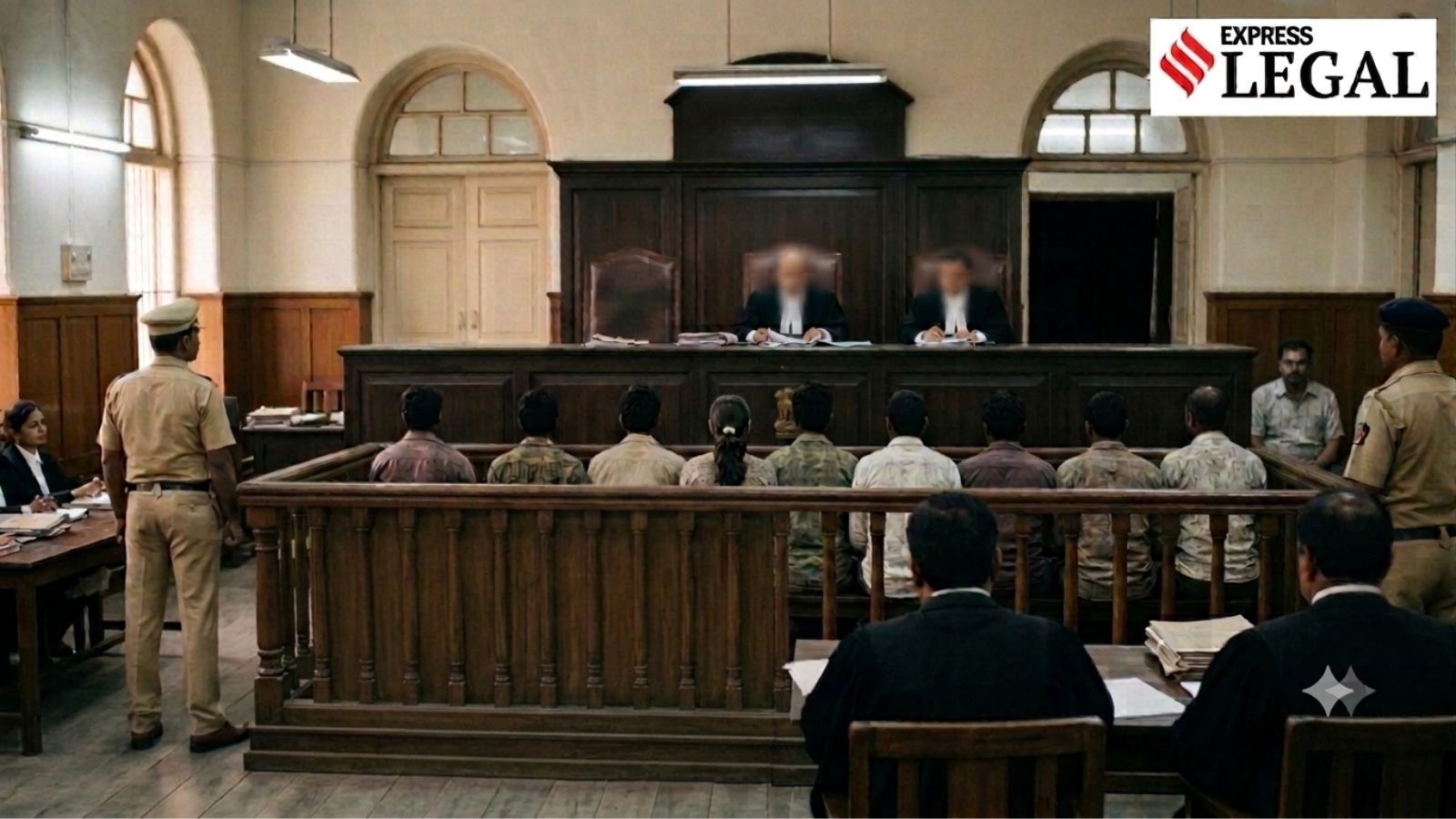
The Chhattisgarh High Court has refused to set aside criminal proceedings against 11 Bharat Mukti Morcha and Rashtriya Christian Morcha functionaries accused of making derogatory remarks against Hindus and describing them as “thieves, dacoits, robbers and slaves”, holding that whether the statements amounted to protected free speech or hate speech can only be decided during trial.
Chief Justice Ramesh Sinha and Justice Ravindra Kumar Agrawal were hearing a petition filed by the 11 accused, including a woman, seeking to quash the FIR, chargesheet, the order framing charges and all consequential criminal proceedings arising from a public meeting held in Kunkuri, Jashpur district in February 2024.
“The question whether the statements in issue amount to legitimate criticism or cross the threshold into conduct punishable under the penal provisions invoked by the prosecution is essentially a matter requiring appreciation of the context in which the statements were made, the audience to whom they were addressed, their tenor and their likely impact. Such an exercise necessarily involves appreciation of evidence and cannot appropriately be undertaken in proceedings seeking quashment at the threshold,” the court said on June 17.
The case originated from an FIR lodged by a member of the Vishwa Hindu Parishad (VHP) after a public meeting organised by Bharat Mukti Morcha and Rashtriya Christian Morcha at Saliyatoli Mini Stadium, Kunkuri, on February 27, 2024. The police alleged that speakers made derogatory remarks about the Hindu religion and certain public personalities, leading to the registration of an FIR on February 28, 2024.
After investigation, the police filed a chargesheet and the trial court framed charges under Sections 153A (promoting enmity between different groups), 153B (imputations prejudicial to national integration), 295A (deliberate acts intended to outrage religious feelings), 294 (obscene acts and words), 505(2) (statements promoting enmity, hatred or ill-will between classes) and 34 (common intention) of the Indian Penal Code.
Chief Justice Ramesh Sinha and Justice Ravindra Kumar Agrawal said the high court’s inherent jurisdiction to set aside criminal proceedings must be exercised sparingly.
Free speech, scientific temper
The petitioners argued that they were associated with social organisations working for socially and economically backward sections and that the speeches were delivered while expressing views on social, political and religious issues.
They submitted that their views were protected under Article 19(1)(a) (freedom of speech) of the Constitution, and were also consistent with the constitutional duty to develop scientific temper under Article 51A(h). According to them, even if every allegation in the FIR was accepted, the essential ingredients of offences relating to promoting enmity or outraging religious feelings were absent.
Story continues below this ad
Relying on Supreme Court judgments, including Bijoe Emmanuel v State of Kerala and State of Haryana v Bhajan Lal, they argued that criminal proceedings should be quashed because the allegations disclosed neither deliberate nor malicious intent to outrage religious feelings. They also contended that criticism or dissent against religious beliefs could not automatically amount to an offence under Section 295A IPC.
Speeches, electronic evidence
The state opposed the petition, arguing that the investigation had uncovered sufficient material to proceed with prosecution.
According to the prosecution, during the February 27, 2024 gathering, several speakers allegedly declared that “Hindu is not a religion but an abuse”, claimed the word “Hindu” meant “thief, dacoit, robber and slave”, made derogatory remarks against religious preacher Dhirendra Shastri and the Chief Minister of Chhattisgarh, and exhorted people to oppose elections conducted through electronic voting machines.
The state argued that these statements had to be viewed in the context of a large public gathering and their potential impact on communal harmony rather than in isolation. It also relied on witness statements, pamphlets, video recordings of the event and electronic evidence collected during investigation.
Story continues below this ad
‘Can’t hold mini-trial’
The high court reiterated that its inherent jurisdiction to quash criminal proceedings must be exercised sparingly and only in exceptional cases.
Referring to Supreme Court decisions, including Neeharika Infrastructure Pvt Ltd v State of Maharashtra and Pradeep Kumar Kesharwani v State of Uttar Pradesh, the bench observed that courts cannot conduct a “mini trial” while deciding petitions seeking quashing of criminal cases. At that stage, the court only has to determine whether the allegations and material collected disclose a prima facie offence.
The bench held that the prosecution case was supported by witness statements, documentary material, pamphlets and videographic evidence, and therefore could not be dismissed as speculative or inherently improbable.
It further held that whether the speeches constituted legitimate criticism protected by Article 19(1)(a) or crossed the line into punishable hate speech would require appreciation of evidence, including the context in which the statements were made, the audience, their tenor and likely impact.
Story continues below this ad
“The defence sought to be projected by the petitioners…constitutes a matter of defence,” the court observed, adding that disputed questions of fact cannot be decided while exercising powers under Section 528 (saving inherent powers of high court) of the Bharatiya Nagarik Suraksha Sanhita (BNSS).
Plea dismissed
Finding that the FIR, chargesheet and material collected during investigation disclosed a prima facie case, the high court dismissed the petition and allowed the criminal trial to proceed.
It clarified that the observations in the judgment were confined to deciding the quashing petition and should not influence the trial court while deciding the case on the basis of evidence led before it.
View original source — Indian Express ↗
Related stories

The Punch
WorldJul 13, 2026 · 1 min
Defence ministry denies claims of unpaid house officers’ allowances
The Punch
The Punch
WorldJul 13, 2026 · 1 min
Atiku welcomes WAEC, NECO fee hike suspension, knocks govt ‘poor planning’
The Punch
The Punch
WorldJul 13, 2026 · 1 min
Sultanate Council urges Muslims to look out for Safar 1448AH crescent
The Punch
The Punch
WorldJul 13, 2026 · 1 min
Eight killed as assailants attack Benue community after burial
The Punch