Indian Express
Can journalists be subpoenaed? Why the US summoned NYT reporters over Air Force One report
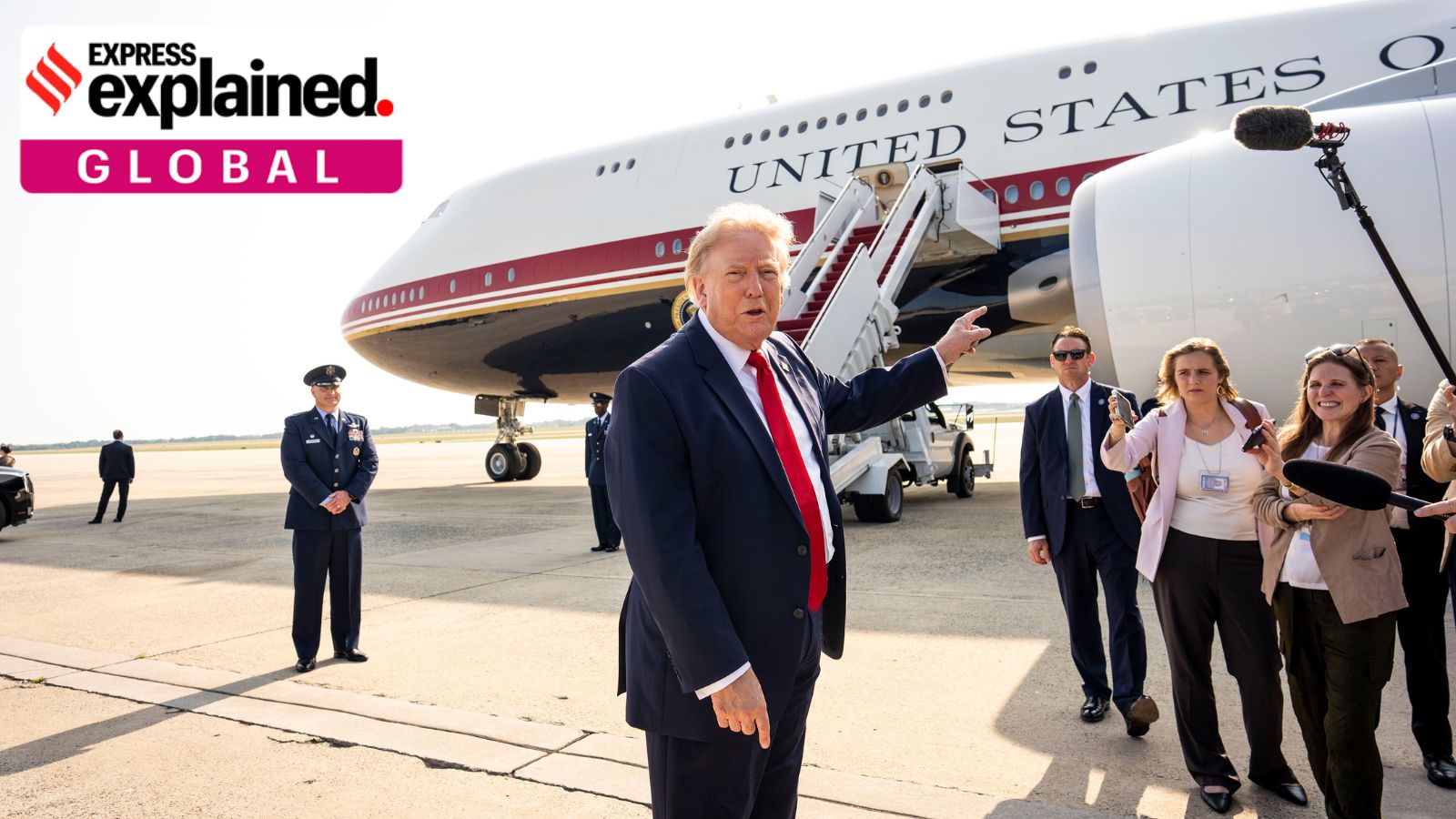
The US Department of Justice on Friday (July 10) issued subpoenas to four journalists with The New York Times over a report flagging security concerns about President Donald Trump’s Qatari-donated Air Force One plane.
The newspaper said the journalists are being summoned to testify before a federal grand jury in New York on Wednesday (July 15). The NYT denounced the action and called the subpoena “an extraordinary escalation in Trump’s efforts to threaten and intimidate independent news organizations.”
Citing unnamed officials, The NYT reported last week that the new plane lacked several of the defence capabilities found on older Air Force One planes, a question that American lawmakers have repeatedly flagged. While the White House did not address questions about the plane’s capabilities, it defended its security features on July 9. The journalists were subpoenaed a day later.
“Our journalists report the facts and advance the American public’s right to know how their government is operating and their taxpayer dollars are being used,” David McCraw, NYT lawyer, said in a statement Friday evening. “This brazen act should be seen as nothing more than an attempt to prevent the public from knowing what is happening in their country by intimidating journalists from doing their jobs.”
What did The NYT report say?
While Trump travelled aboard the new plane to the NATO summit in Turkey, he was forced to return to the US aboard the older, “baby blue” Boeing VC-25A plane, at the Secret Service’s insistence. In a social media post on July 8, the president announced that he would fly aboard the older aircraft “for old time’s sake”.
On July 8, The NYT reported that the new plane lacks the defensive countermeasures found in the existing Air Force One fleet, including its advanced anti-missile and secure communications capabilities. That report has become the subject of the leak investigation.
The report also flagged the risk the US president had taken in travelling aboard the Qatari-donated jet near an active war zone, noting that Trump was accompanied by a large entourage of White House staff, Secret Service officials, journalists and presidential guests.
Story continues below this ad
Also under scrutiny was the pace at which the donated plane was readied for presidential use. The report cited an official who oversaw the Air Force One programme during the Biden administration as saying a comprehensive retrofit of the 747 to become Air Force One would take more than a year of work. Retrofitting work on the Qatari jet began in September 2025, while Trump took his inaugural flight this month.
SAM 29000, one of two VC-25As used as Air Force One, approaching Dayton International Airport in October 2012. (Wikimedia Commons)
Despite their age, the existing VC-25A aircraft incorporate decades of bespoke communications, defensive systems and hardening that cannot simply be installed overnight.
The report also said that the FBI had asked the newspaper not to publish aspects of the story on national security grounds, a request the paper declined.
Why were the journalists subpoenaed?
The Trump administration has emphasised that the investigation concerns the leak of classified information and that it is concerned with plugging the leak.
Story continues below this ad
However, the release of The NYT report drew significant attention while Trump was travelling abroad and raised fresh questions about the aircraft’s readiness and security.
Can journalists be subpoenaed? What makes the present case so unusual?
Any person or organisation, including newspapers, publishers and journalists, can be subpoenaed in the US, subject to constitutional protections and procedural rules.
Such subpoenas often become controversial because they demand that journalists reveal their confidential sources or unpublished reporting materials. The real question is whether the subpoena is valid, its purpose and whether any privilege or statutory protection applies.
While the First Amendment protects freedom of speech and the press, it does not provide blanket immunity from subpoenas. This was established in Branzburg v Hayes (1972), in which the US Supreme Court held that the First Amendment does not give reporters an absolute constitutional privilege to refuse to testify before a grand jury about confidential sources.
Story continues below this ad
However, many federal appeals courts, including the Second Circuit, which covers New York, have recognised a qualified reporter’s privilege in some circumstances. Its scope varies depending on the jurisdiction and the nature of the proceeding.
Many states have also introduced “shield laws”, while others recognise a reporter’s privilege under state common law or constitutional law. The range of protection for confidential sources varies from little to none to absolute protection, depending on the jurisdiction.
Under longstanding Justice Department policy, prosecutors have generally been expected to exhaust reasonable alternative investigative steps before seeking compulsory process against journalists. However, these practices are not constitutional rights enforceable by journalists.
Another concern is the heavy involvement of the White House in the investigation. Reporter subpoenas are also generally issued only after after investigators have exhausted reasonable alternative attempts to identify the source of a leak. However, the journalists were subpoenaed within 48 hours of the report’s publication. The investigation has also drawn attention because FBI Director Kash Patel reportedly oversaw parts of it from the White House. The NYT described that as an unusual degree of White House involvement in a leak investigation.
The controversial gift
Story continues below this ad
In May 2025, Qatar gifted a luxurious Boeing 747-8, worth about $200 million, to the US president, who was then on a four-country tour in West Asia. According to the deal, the plane would be donated to Trump’s presidential library foundation once he leaves office, potentially making it available for his personal use after 2028.
At the time, Trump’s acceptance of the plane triggered questions over the ethics of accepting the “gift”. US lawmakers also expressed concerns about impropriety, wondering whether Qatar was attempting to purchase influence with the US or if the plane itself may be equipped with spying devices.
Trump dismissed these concerns, citing delays in replacing the ageing fleet. He had then described the Qatari-donated jet as a “bridge” plane, until Boeing delivered the much-delayed 747-8s the US had ordered in 2018.
The NYT also reported at the time that the 747 had fallen out of favour as the aircraft of choice for heads of state because of its four engines and high maintenance costs, including the expense of procuring replacement parts.
Story continues below this ad
The US has spent hundreds of millions retrofitting the plane for secure presidential use, with the cost of such work estimated at under $400 million.
View original source — Indian Express ↗
Related stories

CBC
TechnologyJul 13, 2026 · 1 min
'Not sexy' or 'Tech Moment'? Lorde hates on AI glasses as Kylie Jenner faces backlash over Meta campaign
CBC

South China Morning Post
TechnologyJul 13, 2026 · 1 min
Why China is seriously cultivating AI entertainment
South China Morning Post
Engadget
TechnologyJul 13, 2026 · 1 min
Microsoft is making the Windows Search Box more streamlined and useful
Engadget
TechRadar
TechnologyJul 13, 2026 · 1 min
Like Google’s Project Loon, but for missiles: Ukraine is weaponizing stratospheric balloons to boost strike range
TechRadar