Indian Express
‘Crossing that drain broke us’: Intelligence Bureau staffer’s family after Delhi riots verdict
3 min readNew DelhiUpdated: Jul 13, 2026 11:25 PM IST
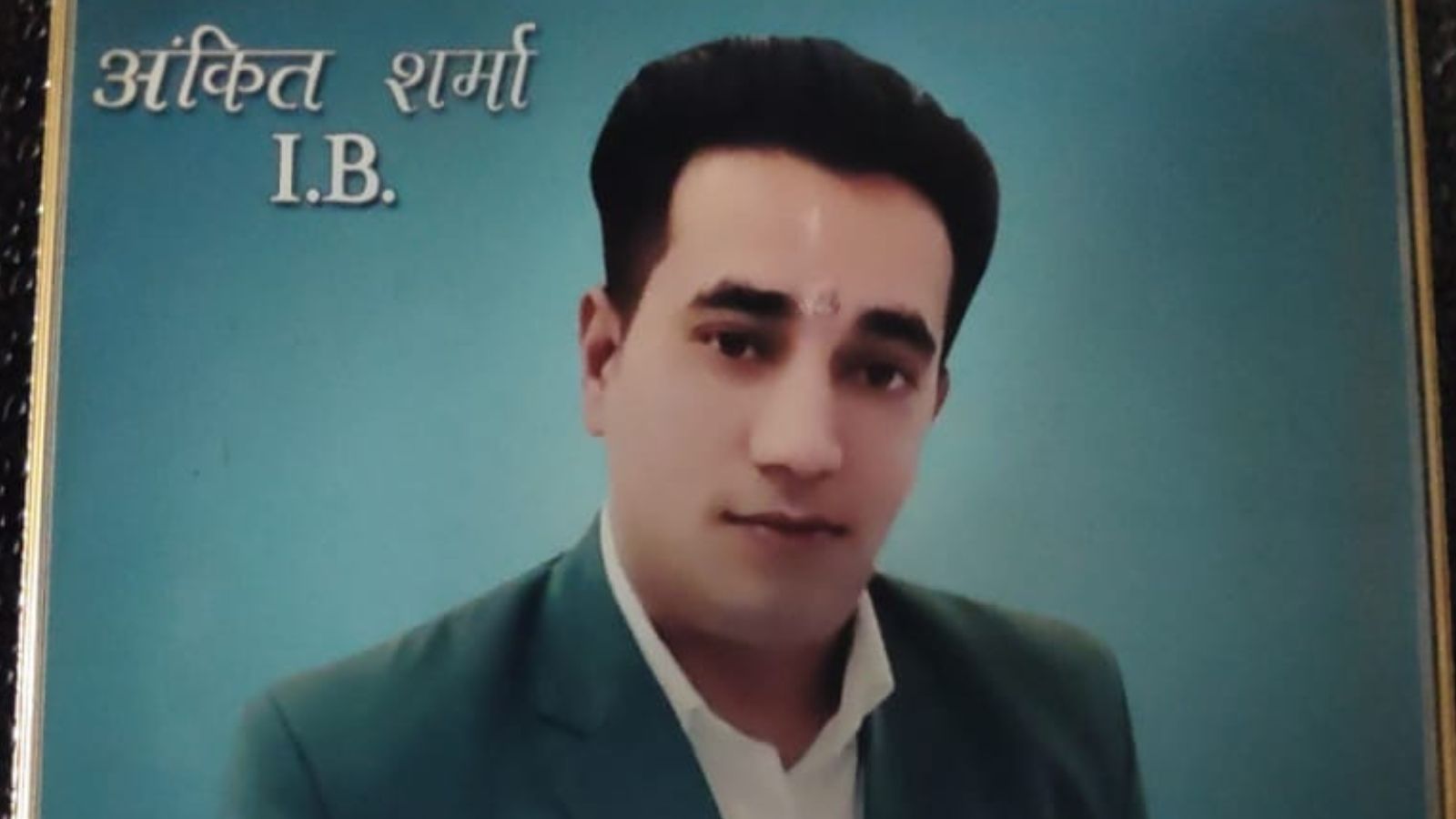
Ankit Sharma's photo at the family home. (Express Photo)
Ankit Sharma’s family no longer lives in the family home in Northeast Delhi’s Khajuri Khas.
The drain where the Intelligence Bureau staffer’s body was found six years ago had become a painful reminder of the incidents of late February 2020, when communal violence swept through Northeast Delhi. Fifty-three people were killed in the riots, and Ankit was among them.
On Monday, after a Delhi court convicted former AAP councillor Tahir Hussain and four others in the case, Sharma’s family said the pain remained fresh as ever.
They alleged Ankit had been targeted because he was Hindu, and demanded the death penalty for all those accused in his killing. “Mere bhai ne desh ke liye balidaan diya hai (my brother sacrificed his life for the nation),” Ankit’s elder brother Ankur said.
On February 25, 2020, Ankit went missing after he left his house to fetch household supplies. Police claimed he was taken away by the mob, murdered, and his body was dumped in a drain.
He was stabbed 52 times, according to the police. His body was retrieved from the drain the next morning.
The family said they moved out soon after the riots because of security concerns and the trauma of living in a place where every street reminded them of their tragedy.
Story continues below this ad
Speaking to The Indian Express, Ankur said, “Every lane we crossed reminded us of what happened. Ek dum mann bhari ho jaata tha naala cross karte huye (Every time we crossed the drain, our hearts would feel unbearably heavy). Those memories never left us. We moved out, and we have been living on rent since then.”
The emotional toll has affected the entire household. The family said Ankit’s parents now suffer from high blood pressure, and every discussion about the riots or the case brings back stress and anxiety.
The family said justice would only be served when all those convicted in the case received the maximum punishment under law.
“They should also go through the same pain that we have gone through. My brother was a friendly person who interacted with both Hindus and Muslims. He had no bias against anyone, but when he was attacked, even his Muslim friends participated in the crime,” Ankur alleged.
Story continues below this ad
He added that the family had become far more concerned about their personal safety since the riots. “We don’t reveal our address to anyone anymore, or do public interactions with the media on camera as we do not want anyone to get our address. We have safety and security concerns… It’s not easy to leave your house and stay elsewhere on rent,” he said.
Sakshi Chand is an Assistant Editor at The Indian Express, based in New Delhi. With over a decade of experience in investigative journalism, she is a leading voice on crime, the prison system, and institutional governance in the National Capital.
Professional Background
Specialization: Her reporting focus includes high-stakes crime, national security, prison reforms, and traffic governance.
Key Coverage: She has been on the frontlines of major events such as the 2G spectrum case, the 2020 North-East Delhi riots, and communal clashes across Uttar Pradesh (Kasganj, Aligarh).
Earlier Career: Before joining The Indian Express, she was a reporter for The Times of India.
Personal Interests: Outside of her career in journalism, Sakshi is a National-level basketball player and coach, bringing a unique sporting discipline to her professional life.
Major Recent Coverage (Late 2025)
Her reporting in the latter half of 2025 has been dominated by a major terror investigation and administrative accountability:
1. The Red Fort Blast Investigation
Throughout November and December 2025, Sakshi led the coverage of a car explosion near Delhi's Red Fort:
Forensic Breakthroughs: She reported on the use of TATP and ammonium nitrate in the IED and identified the shops where raw materials were sourced (Nov 14-16, 2025).
The "i20 Route": She meticulously tracked the journey of the vehicle used in the blast, tracing it to a Pulwama-based resident who entered Delhi via the Badarpur toll plaza (Nov 12, 2025).
Victim Support: She recently reported on the Delhi Police providing a list of damaged vehicle owners to the Finance Ministry to expedite insurance claims for those caught in the blast (Dec 4, 2025).
2. Crime & Police Accountability
"Crackdown on Extortion Gangs": In December 2025, she reported on a syndicate that was blackmailing traffic cops. Following five arrests, the Special CP directed officers to report all such attempts (Dec 12, 2025).
"Corruption in the Ranks": She covered the arrest of five Delhi Police personnel by the Vigilance branch following a wave of public complaints (May 19, 2025).
Cold Cases & International Murders: She has extensively tracked the case of a man who allegedly killed his wife in London and fled to India, reporting on his "Proclaimed Offender" status and the denial of his anticipatory bail (May 2025).
3. Governance & Public Policy
"13,000 Homes for 90,000 Cops": A data-driven feature on why the majority of Delhi Police personnel are forced to live on rent despite the city's housing projects (May 4, 2025).
Traffic Decongestion: Using her interest in urban logistics, she detailed how the Traffic Police eased congestion on Vikas Marg by switching off signals and creating U-turns (April 2, 2025).
Signature Style
Sakshi Chand is known for a data-driven and investigative approach. She frequently uses forensic reports, CCTV analysis, and administrative data to go beyond the "official version" of a crime story. Her work in prison reporting is particularly noted for highlighting the legal and humanitarian conditions of foreign detention centers and local jails. ... Read More
Tags:
Delhi riots 2020
Tahir Hussain
View original source — Indian Express ↗
Related stories

The Punch
WorldJul 14, 2026 · 1 min
FG grants N6bn tax waivers to drug manufacturers
The Punch
The Punch
WorldJul 14, 2026 · 1 min
My path shines brighter because I walk with you, Adeboye celebrates wife at 78
The Punch
CNA
WorldJul 13, 2026 · 1 min
Bus arrival timing system unavailable due to 'technical issues'
CNA

TASS
WorldJul 13, 2026 · 1 min
US military aircraft spotted over Persian Gulf amid Trump’s threats of strikes on Iran
TASS