CNA
Who pays for greener flying? IATA says airlines cannot bear the burden alone
HONG KONG: With international air travel rebounding, attention is turning to the industry’s growing carbon footprint. Aviation accounts for about 2.5 per cent of global carbon dioxide (CO2) emissions.
But as the aviation industry faces increasingly tougher global climate rules, airlines should not be expected to shoulder the cost of decarbonisation alone, according to the International Air Transport Association’s (IATA) Asia-Pacific head of sustainability.
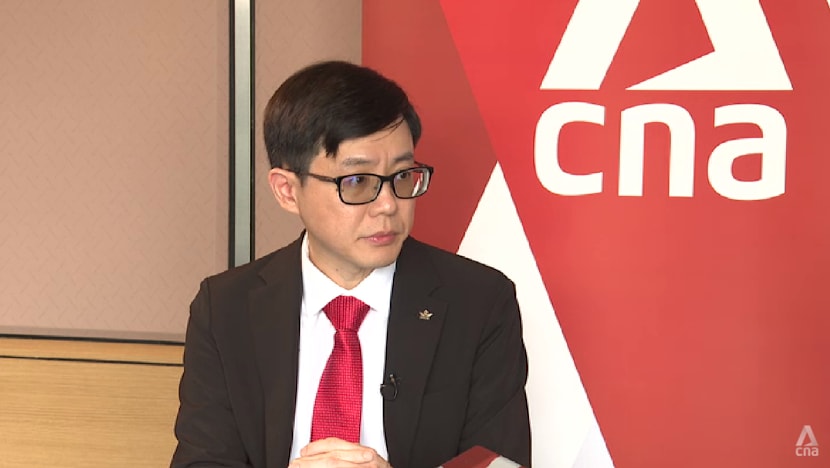
Kelvin Lee said governments, investors and passengers all have a part to play in reducing the sector’s carbon emissions, warning that poorly designed policies could drive up cost without accelerating progress.
“The hard truth is that there is a cost to decarbonisation for the aviation sector,” Lee told CNA on the sidelines of the Asia Climate Summit in Hong Kong last week.
He added that airlines operate on a razor thin margin, with carriers in the Asia-Pacific earning an average profit of only about US$3 per passenger.
“Instead of looking at it from a cost issue, it's maybe one of a shared responsibility. Everyone has a role to play,” he added.
From 2027, most international flights will fall under the Carbon Offsetting and Reduction Scheme for International Aviation (CORSIA), a global market-based scheme to cut and offset carbon emissions.
The scheme aims to decarbonise airline operations using carbon credits and sustainable aviation fuel, amongst other initiatives.
Lee said the outcome will depend largely on how governments implement climate policies.
“What is key … is the government policies, because … if we have policies that are poorly designed or poorly sequenced, it could actually increase the cost to decarbonisation without actually accelerating the progress,” he said.
NET-ZERO GOAL BY 2050
Global airlines adopted a collective goal in 2021 to achieve net-zero carbon emissions by 2050. Airports, navigation service providers and even fuel suppliers have also committed to the pledge.
However, director general of IATA Willie Walsh said last month that “hope was fading fast” and proposed establishing a new “realistic timeline.”
He said that decarbonising aviation would require a combination of technical, energy and policy solutions.
Lee added: “Solutions within the aviation sector itself are insufficient for us to get to net-zero by 2050, and that’s why we have to tap on offsets and also carbon removals from outside the sector to reach that goal.”
He pointed out that introducing separate regional or national carbon schemes could further complicate compliance efforts.
“When (this happens), it becomes a duplicate and a double counting in some ways, in the sense that airlines sometimes have to offset twice for the same flight,” he said.
CARBON CREDITS IN SHORT SUPPLY
Another challenge is ensuring an adequate supply of high-quality carbon credits. IATA estimates that for the first phase of CORSIA, which runs from 2024 to 2026, airlines require around 200 million Eligible Emissions Units (EEUs) to meet compliance requirements.
Airlines use carbon credits to offset their carbon footprint by funding carbon reduction initiatives.
But Lee estimates that there are only about 38 million CORSIA EEUs, or about a fifth of what the market needs.
Beyond carbon credits, sustainable aviation fuel (SAF) is expected to play a key role in helping airlines meet emissions goals. The use of these fuels would mean less dependency on carbon credits.
However, only about 2.4 million tonnes of SAF will be available this year, Lee said, which accounts for around just 0.8 per cent of total jet fuel demand by airlines.
Considered an alternative to conventional aviation fuel, SAF can be produced from various sustainably sourced feedstock such as used cooking oil and biomass waste.
IATA says this could contribute up to 65 per cent of the reduction in emissions that airlines need to reach net zero CO2 emissions by 2050.
Lee said the association's assessment found there is sufficient feedstock to produce SAF, but scaling up technology and expanding production remain among the sector's biggest challenges.
"Asia Pacific is a very diverse region – we have many, many different types of feedstocks that could be tapped to produce sustainable aviation fuel. What we need to focus on is the pace of technology roll out," he said.
The industry body says coordinated action on renewable energy, fuel infrastructure and policy support will be needed.
Related stories

Indian Express
WorldJul 14, 2026 · 1 min
Daily Briefing: Wangchuk’s hunger strike, Hormuz crisis and Assam’s border policy in focus today
Indian Express

Philippine Daily Inquirer
WorldJul 14, 2026 · 1 min
China protests Japan ships sheltering in Taiwan Strait amid Typhoon Bavi
Philippine Daily Inquirer

RNZ
WorldJul 14, 2026 · 1 min
Who is Paul Henry? A look at the veteran broadcaster and ACT’s new candidate
RNZ

Straits Times
WorldJul 14, 2026 · 1 min
Iran shipped 57 million barrels of crude between US blockades
Straits Times