VnExpress
Vietnam to link its digital ID app with Singapore
Party General Secretary and State President To Lam has urged that Vietnam's national digital identity app, VNeID, be linked soon with the electronic identification systems of Singapore and other ASEAN countries to ease cross-border data sharing and digital transactions.
The Office of the Party Central Committee on July 11 released To Lam's conclusions from a session on digital transformation across the political system.
After more than a year under Resolution 57, the Party's flagship policy on science, technology, innovation and digital transformation, the drive has produced solid results, according to the conclusions.
Awareness has risen across all levels of government, the policy framework has improved, and several laws on data, digital transformation and artificial intelligence have been passed.
Key digital platforms and databases have been built and put to use. The handling of electronic documents, online meetings, online public services, and the use of population data and electronic ID has grown steadily more effective.
To Lam said, however, that the resources set aside for digital transformation have not been used to full effect. The disbursement rate stands at just over 12.2%, below the national average for public investment.
Many systems, platforms and databases have been funded, he noted, but linking and sharing the data across them remains limited.
At the commune level, much of the software and many databases remain fragmented and poorly connected.
Officials must run several systems at once, deployed separately by central and local agencies, which creates overlap, adds to their workload and degrades service to the public and businesses.
The pattern points to investment that is scattered and unstandardized, with no clear line of responsibility for integrating or sharing systems.
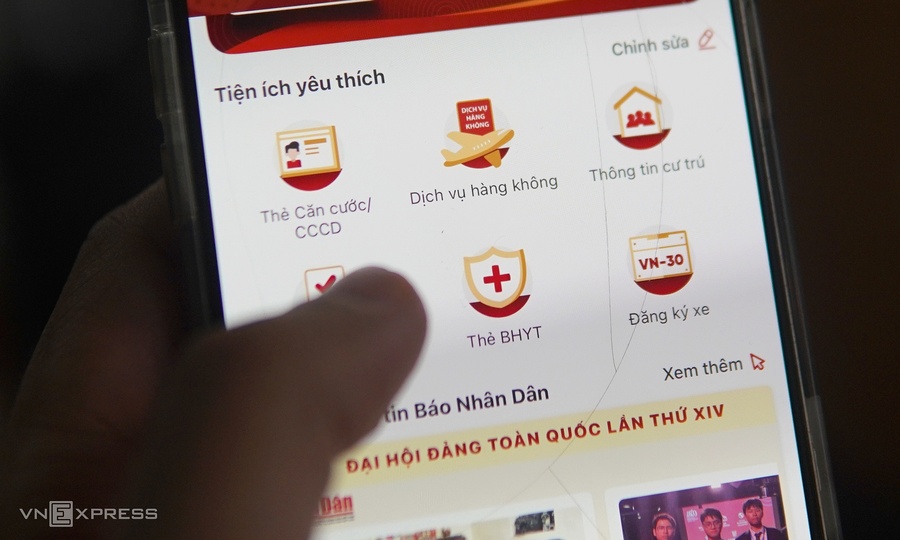
The VNeID app interface on a phone. Photo by VnExpress/Luu Quy
The Vietnamese top leader directed agencies to clear overdue tasks and backlogged paperwork quickly and to press ahead on building and using shared data and common platforms.
Data must be managed, connected and shared on the principle of being "accurate, sufficient, clean, live, unified and shared," he said, to deliver practical value to the public and businesses.
Agencies were also tasked with continuing to roll out digital identification for vehicles and unmanned aerial vehicles, and with linking VNeID to the electronic ID systems of Singapore and other ASEAN countries as soon as possible.
Digital infrastructure from the central level down to the communes needs further work, with enough equipment, connectivity, platforms and staff to run effectively.
Administrative reform should be tied to digital transformation, including completing the National Public Service Portal so that the public and businesses are no longer asked to resubmit information already held in databases that can be tapped and reused.
The quality of online public services, To Lam said, must be judged by how much they are actually used, how convenient they are, and how much time and money they save the public and businesses, rather than by the sheer number of procedures moved online.
He stressed that AI is an important aid but no substitute for human responsibility, authority or judgment. Its use must serve a legitimate purpose, stay within proper authority, remain accountable and avoid overreach.
He also required that every information system, database and digital platform be designed, built and operated with security baked in from the start, with national data and the data of the public and businesses absolutely protected against leaks, illicit sale or unauthorized use.
View original source — VnExpress ↗
Related stories

Philippine Daily Inquirer
PoliticsJul 14, 2026 · 1 min
Pig's head found in Bosnian Muslim cemetery
Philippine Daily Inquirer

TASS
PoliticsJul 14, 2026 · 1 min
Kiev struck Russian territory up to 850 times per day over past week — envoy
TASS

AllAfrica
PoliticsJul 14, 2026 · 1 min
Malawi: Seating Chart 'Coup' Rocks DPP As Chaponda Makes Way for Roza
AllAfrica

South China Morning Post
PoliticsJul 14, 2026 · 1 min
South Korea’s lost Canadian deal; BN’s election win in Malaysia’s Johor: 7 Asia highlights
South China Morning Post